Think You’re Eating Clean? Dr. Leonid Kim Reveals ‘Foods That Cause Fatty Liver’—7 Foods Marketed As Healthy That Secretly Cause It. Learn The Simple Label Pattern To Spot Them Fast.
You cut out soda. You skip the drive-thru. You even read labels that say “high protein,” “natural,” or “low fat.”
So why does your liver still struggle?
Here is the uncomfortable truth: many foods that cause fatty liver are sitting right now in your kitchen, dressed up as health food. They wear pretty packaging, make big promises, and hide a dangerous secret—an overload of fructose and added sugar that sends your liver into fat-storage mode.
In this guide, we break down exactly what Dr. Leonid Kim, a double board-certified physician, warns his patients about. You will learn which “healthy” staples to drop, what to swap in instead, and the one label pattern that makes spotting these foods almost automatic. If you follow these steps, you can start reversing fatty liver in just weeks.
What Is Fatty Liver, and Why Should You Care?
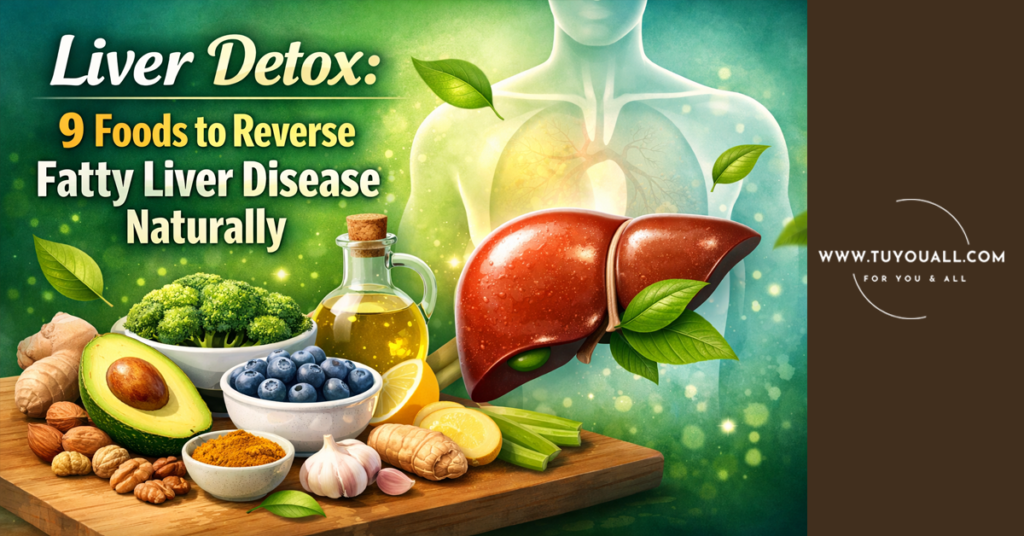
Fatty liver disease happens when fat builds up inside your liver cells. Over time, this can lead to inflammation, scarring, and serious metabolic trouble.
Most people think fatty liver only comes from alcohol. However, non-alcoholic fatty liver disease (NAFLD) now affects roughly one in three adults worldwide. The main driver? Excess sugar—especially fructose.
When you eat more sugar than your body can burn, your liver converts the leftovers into fat. Scientists call this process de novo lipogenesis. In plain English, your liver is literally making new fat from sugar.
Dr. Kim puts it simply: “You can eat clean and cut out junk food and avoid sodas and still be damaging your liver and driving fatty liver disease without even knowing it.” —Dr. Leonid Kim
The good news? Your liver is one of the most forgiving organs in your body. Cut the offending foods, and it can heal remarkably fast.
The Fructose Problem: Why Your Liver Hates Hidden Sugar
Not all sugar behaves the same way inside your body.
Glucose, the sugar in bread and rice, gets used by nearly every cell for energy. Fructose, the sugar in fruit and many sweeteners, is different. Your liver handles almost all of it alone.
Under normal conditions, your small intestine acts like a filter. It clears about 90% of low-dose dietary fructose before the rest ever reaches your liver. But here is the catch: that filter has a limit.
When you flood your gut with a big, fast hit of liquid fructose—like a morning glass of juice—your intestine gets overwhelmed. The unprocessed fructose spills over into your liver. Once there, your liver has no choice but to turn the excess into fat.
Fructose also fails to trigger leptin, the hormone that tells your brain you are full. Therefore, you stay hungry. You eat more. And your liver keeps packing away fat.
A study published in the American Journal of Clinical Nutrition found that just seven days of a high-fructose diet increased liver fat and reduced liver insulin sensitivity. That is how fast damage can start.
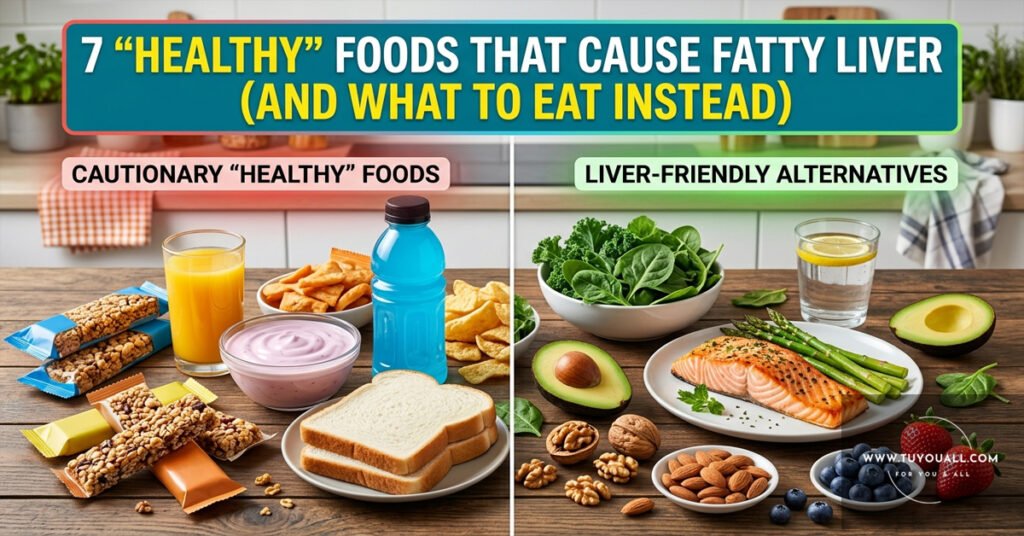
7 “Healthy” Foods That Cause Fatty Liver
Let us walk through the biggest impostors in the health-food aisle. For each one, we will cover why it is risky and what to eat instead.
1. Flavored Yogurt

Plain yogurt is a genuine superfood. It delivers protein, probiotics, and calcium. But flavored yogurt? That is a different story.
Flip over a cup of strawberry, vanilla, or blueberry yogurt and check the label. A single serving often packs 12 to 23 grams of added sugar. The American Heart Association recommends keeping total daily added sugar under 36 grams for men and 25 grams for women. One tiny cup can get you halfway—or even past—your daily limit.
Why does this matter for your liver? Most of that added sugar is either fructose or sucrose. Sucrose breaks down into glucose and fructose. And as we now know, fructose heads straight to your liver for fat production.
Many brands also splash “low fat” or “high protein” across the front. However, when food companies remove fat, they usually add sugar to bring back flavor. You are trading fat for sugar, and your liver pays the price.
Better choice: Buy plain, full-fat yogurt with zero added sugar. Sweeten it yourself with monk fruit or allulose. Toss in fresh berries for flavor and fiber.
2. Fruit Juice (Even 100% Natural)
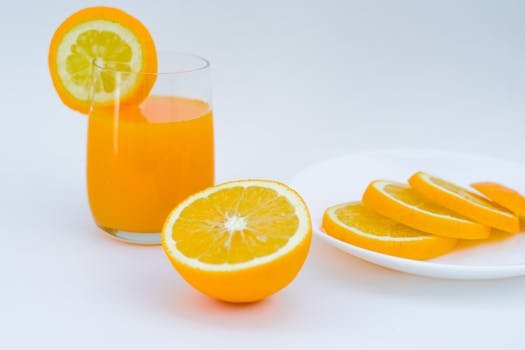
Juice feels innocent. It comes from fruit, right? But drinking juice is not the same as eating fruit.
Even juice labeled “100% natural” or “no added sugar” is highly concentrated. You are consuming the fructose of three or four oranges in seconds—without the fiber that slows everything down.
For example: when you eat an actual orange, the pulp and fiber slow fructose absorption. Your gut has time to process it. When you drink a glass of orange juice in thirty seconds, the fructose hits faster than your intestine can filter. The overflow goes straight to your liver.
Research shows that the same amount of fructose is more likely to promote fatty liver when consumed as a drink rather than as whole food.
Better choice: Eat the whole fruit. If you want a smoothie, blend whole fruits at home and drink them slowly. Blending keeps the fiber intact; juicing throws it away.
3. Store-Bought Granola
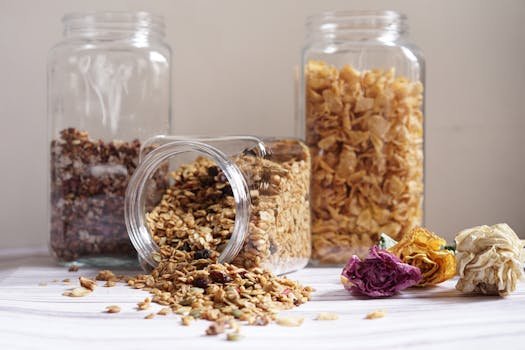
Homemade granola—oats, nuts, seeds, no sweeteners—can be fine. Store-bought granola is often a sugar bomb in hiking-boot packaging.
Many popular brands contain 10 to 15 grams of sugar per serving. And that serving size is usually tiny, around two-thirds of a cup. Most people pour double that into a bowl without thinking.
The front of the box may say “whole grain,” “high fiber,” or “heart healthy.” But flip it over, and the added sugar line tells the real story.
Better choice: Make your own granola, or buy brands with zero added sugar. Plain oats with nuts and cinnamon are a much safer breakfast base.
4. Flavored Oatmeal Packets
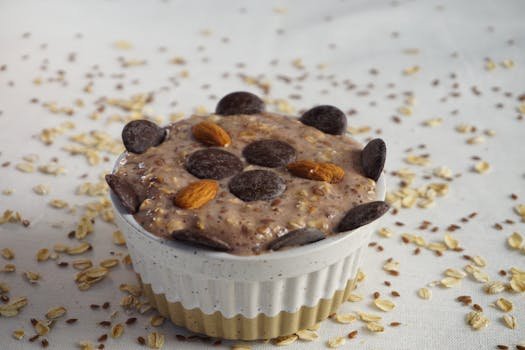
Those little instant packets—apple cinnamon, maple brown sugar, peaches and cream—sound wholesome. But they are basically dessert dressed as breakfast.
Once the flavoring and sugar get added, plain oats become a very different food. The result? A fast-digesting, blood-sugar-spiking bowl that pushes your body toward insulin resistance.
Plain oats, on the other hand, are high in fiber. They digest slowly and do not spike blood sugar the way processed versions can.
Better choice: Buy plain rolled or steel-cut oats. Add your own cinnamon, nuts, and a few fresh berries. You control the sugar, and your liver stays happy.
5. Protein Bars
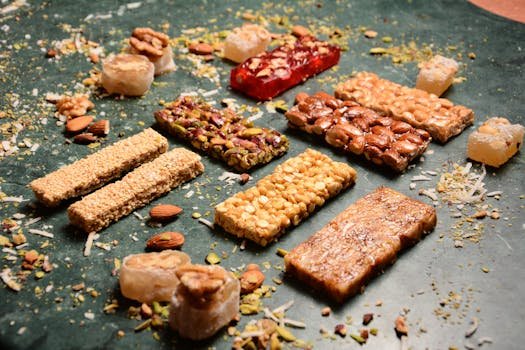
Protein bars are everywhere: gyms, offices, checkout lanes. The protein itself is not the problem. The problem is everything else that comes with it.
Some popular bars contain 15 to 20 grams of added sugar each. At that point, you are holding a candy bar with a protein marketing budget.
But the bigger issue is the whole package. These bars are engineered to be hyper-palatable. They taste amazing, chew fast, and never quite fill you up. That makes overeating easy.
Dr. Kim warns: “A lot of these bars are made to be hyper palatable… they don’t fill you up the same way a real meal does, but they still deliver a concentrated hit of calories and processed ingredients.” —Dr. Leonid Kim
This is the heart of why ultra-processed foods drive fatty liver. They make it effortless to take in more energy than you need. That excess has to go somewhere, and much of it lands in your liver.
Better choice: Get your protein from whole foods—eggs, fish, chicken, Greek yogurt, or legumes. If you need a supplement, use plain protein powder and blend your own shake so you control every ingredient.
6. Sushi Rolls
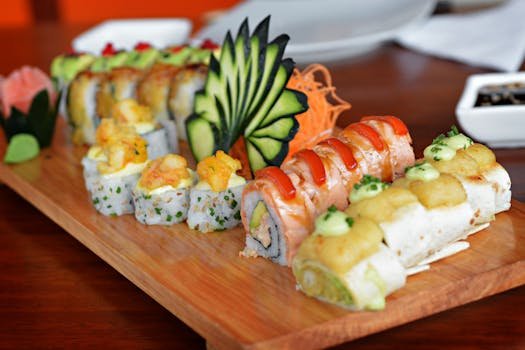
Fresh fish is excellent. It brings protein, omega-3 fats, and minerals. But most sushi rolls are not just fish.
They come loaded with:
- Spicy mayo
- Eel sauce
- Teriyaki glaze
- Crunchy fried toppings
- Large mounds of white rice
What looks like a light, healthy meal quickly becomes a concentrated hit of refined carbs, sugar, and processed fats.
Fatty liver is not about one single nutrient. It is about total metabolic load. Fast-digesting starches, excess calories, and easy-to-overeat foods all push your body toward insulin resistance. And insulin resistance is one of the main engines of liver fat.
Better choice: Order sashimi. You get the fish without the rice and sugary sauces. If you want rolls, pick simpler ones with less rice, less sauce, and more actual fish.
7. Dried Fruit and Sweetened Trail Mix
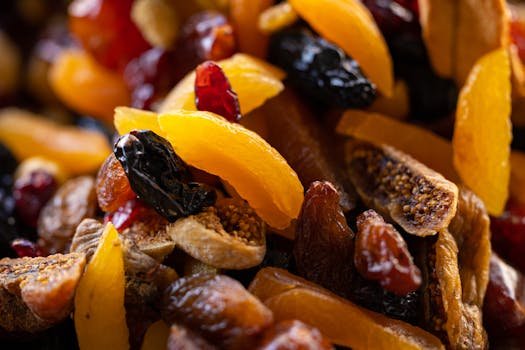
The nuts in trail mix are great. They offer healthy fats, minerals, and fiber. The dried fruit? Not so much.
Whole fresh fruit is one of the healthiest foods on earth. But when fruit is dried, most of the water disappears. The sugar gets packed into a much smaller volume. That makes it incredibly easy to eat a huge dose of fructose in minutes.
Remember: speed matters. When fructose enters too quickly and in large amounts, some spills into your liver. Some also lingers in your gut, where it can weaken your intestinal barrier. A weaker barrier lets inflammatory compounds leak through and reach your liver.
Now your liver is fighting both fat buildup and inflammation. That is a perfect setup for worsening fatty liver disease.
Better choice: Choose trail mix that is mostly nuts and seeds, without dried fruit or candy coatings. If you want fruit, eat it fresh and whole.
The Pattern You Can’t Unsee: How the Food Industry Removes Nature’s Brakes
If you take away only one lesson, make it this: the foods that damage your liver are foods that have been stripped down, concentrated, sweetened, or processed into something very easy to overeat.
That is the pattern.
Real food in nature comes with built-in brakes:
- Fiber slows sugar absorption.
- Water fills your stomach.
- Healthy fats trigger satiety.
- Chewing takes time.
The food industry removes those brakes. It takes something that started out fine—like fruit, oats, or yogurt—and strips away the fiber. Then it concentrates the sugar, adds sweeteners and processed fats, and packages it as “natural” or “high protein.”
Unfortunately, the goal for many companies is not your health. It is to sell as many products as possible. And foods without brakes are easier to sell because they are easier to eat, faster to finish, and harder to stop eating.
Once you see this pattern, you cannot unsee it. The front of the package is marketing. The back of the package—specifically the added sugar line and the ingredient list—is the truth.
How Fast Can You Reverse Fatty Liver?
Here is the best news in this entire article: fatty liver is one of the most reversible conditions we deal with.
Studies show that just nine days of fructose restriction decreases liver fat. That means you can see real results in days to weeks, not months or years.
Dr. Kim emphasizes this point: “If you follow these steps, you’re going to see improvement very quickly and you’ll start reversing your fatty liver in just weeks.” —Dr. Leonid Kim
And this is not just about your liver. The same pathways—insulin resistance, excess fructose, gut barrier damage, and inflammation—are tied to:
- Type 2 diabetes
- Heart disease
- High blood pressure
- Certain cancers
- Even dementia
When you clean up your diet for your liver, you are healing your whole body.
Quick Reference: Swap This for That
| Food to Avoid | Why It Hurts Your Liver | Better Alternative |
| Flavored yogurt | 12–23g added sugar; fructose overload | Plain full-fat yogurt + fresh berries |
| Fruit juice | Concentrated fructose; zero fiber | Whole fruit or home-blended smoothie |
| Store-bought granola | 10–15g sugar per tiny serving | Plain oats + nuts + cinnamon |
| Flavored oatmeal packets | Added sugar spikes blood sugar | Plain oats with your own toppings |
| Protein bars | 15–20g sugar; hyper-palatable | Eggs, fish, chicken, or plain protein powder |
| Sushi rolls | Refined rice + sugary sauces | Sashimi or simple rolls with less sauce |
| Dried fruit/trail mix | Concentrated fructose; easy to overeat | Nut-heavy mix or whole fresh fruit |
Frequently Asked Questions (FAQ)
Q1: Can I eat fruit if I have fatty liver?
Yes. Whole fruit is generally safe and healthy for fatty liver because the fiber slows fructose absorption. The problem arises when fruit is juiced, dried, or processed into concentrate. Stick to fresh, whole fruit and avoid drinking your fructose.
Q2: How much added sugar is safe for someone with fatty liver?
Less is better. Dr. Kim recommends getting your added sugar as close to zero as possible while you are actively reversing fatty liver. The American Heart Association suggests under 25g per day for women and 36g for men, but even those limits may be too high if your liver is already struggling.
Q3: Is all fat bad for fatty liver?
No. The fat in plain dairy, nuts, fish, and avocados is not the main driver of liver fat. In fact, healthy fats help you feel full and can reduce overall calorie intake. The real enemy is excess fructose and refined carbohydrates that spike insulin.
Q4: How quickly can fatty liver improve with diet changes?
Remarkably fast. Research shows measurable drops in liver fat within 9 days of cutting fructose. Many patients see significant improvements within two to four weeks when they remove ultra-processed foods and focus on whole foods.
Q5: Are protein shakes better than protein bars for liver health?
Usually, yes. A protein shake made with plain protein powder, unsweetened nut milk, and whole ingredients gives you control over sugar content. Protein bars are ultra-processed, hyper-palatable, and often loaded with hidden sugar.
Conclusion
You do not need a perfect diet to save your liver. You need a smarter one.
Start by flipping every package over and checking the added sugar line. If a food is marketed as “low fat,” “high protein,” or “natural,” be extra suspicious. Those words are often camouflage for fructose-heavy formulations that turn into liver fat through de novo lipogenesis.
The pattern is clear: processing removes nature’s brakes. Whole foods come with fiber, water, and chewing resistance. Processed foods come with concentrated sugar, stripped nutrients, and an open invitation to overeat.
Choose plain yogurt over flavored cups. Choose whole fruit over juice. Choose sashimi over saucy rolls. Choose oats over packets. These small swaps stack up fast.
Your liver can heal in weeks. Your metabolism will thank you. And your entire body—from your blood pressure to your brain—will run better because of it.
What “healthy” food in your kitchen surprised you the most? Drop a comment below and let us know which swap you are making first.