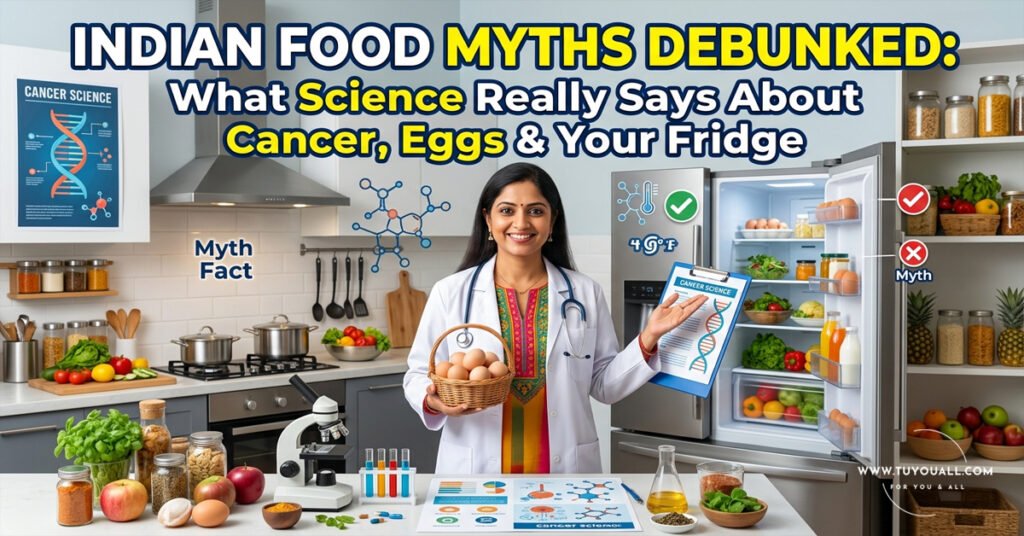
In ‘Indian Food Myths Debunked’, An Expert breaks down common Indian diet myths—from burnt chapati cancer fears to microwave safety—offering science-backed, simple truths for your kitchen.
Have you ever tossed a perfectly good chapati into the bin because it had a dark brown spot? Or stared at your microwave like it was a mini nuclear reactor? You are not alone.
Social media floods us with scary headlines every day. Burnt food causes cancer. Eggs are dangerous. Refrigerated food loses all nutrition. It is exhausting. More importantly, it distracts us from the real problems hiding on our plates.
In this post, we break down a fascinating conversation with Krish Ashok, author of Masala Lab and an engineer who explains the science of everyday Indian food with logic, not fear. He helps us separate kitchen myths from measurable risks. By the end, you will know exactly what to focus on—and what to ignore—so you can eat with confidence and joy.
The “Burnt Food Causes Cancer” Panic (And Why It’s Mostly Clickbait)
Open Instagram and you will find a reel claiming that your tandoori chicken or slightly charred roti is basically cancer on a plate. Krish Ashok calls this the most abused word on the internet.
What Is Acrylamide, Really?
When you burn or char starchy food at high heat, a chemical called acrylamide forms. Yes, scientists have studied it. Yes, in extremely high doses, it can cause problems in lab rats. However, here is the part creators forget to mention: those rats were injected with massive amounts of acrylamide. They were not nibbling on a tandoori roti.
“The right title for those videos should be: If you burn your chapati to complete black and eat that chapati for 10 years, you might have a slightly increased chance of cancer risk. Doesn’t make for a very catchy title,” says Ashok. “It’s easier to say burnt chapati causes cancer.”
The Real Risk Is Tiny
Your body can handle small amounts of acrylamide. Your liver processes it. The real threats are far larger: breathing polluted city air, smoking, or eating a diet overloaded with refined carbs and unhealthy fats. A few blisters on your roti or the char on chicken tikka are trivial compared to these daily dangers.
For example:
If you eat tandoori chicken once a week, the acrylamide exposure is negligible. Meanwhile, the deep-fried chicken curry you order instead packs far more calories from oil, which directly raises your risk of heart disease.
“People forget the denominator size. This is such a trivial risk that people are completely overthinking these things.” —
How to Actually Eat Chicken (and Paneer) Without the Fat Trap
Indian cuisine is delicious, but restaurant versions often hide a secret. The protein you think you are eating is swimming in fat.
Chicken Tikka Beats Chicken Curry
If your goal is protein, chicken tikka is one of the smartest choices available in India. It is grilled, not fried. It does not come coated in bread crumbs or floating in a pool of oil. Steamed or lightly grilled chicken breast would be technically leaner, but most Indians find it bland. Chicken tikka strikes the perfect balance between taste and nutrition.
For example:
Next time you order out, skip the “malai” version. Ask them to hold the extra butter on top. That alone saves you hundreds of fat calories.
The Paneer Surprise
Vegetarians often rely on paneer for protein. Here is the truth: about 70% of paneer’s calories come from fat. It is not a lean protein source. If you eat paneer, you must cut back on fat elsewhere that day. Otherwise, you are simply overloading your system.
Ordering Smart at Restaurants
Restaurants want you to come back. They achieve this by adding fat, sugar, and salt. You can outsmart them.
| Dish | What to Order | What to Skip |
| Dal | Plain yellow dal | Dal makhani (loaded with cream and butter) |
| Chicken | Chicken tikka (dry) | Butter chicken or chicken curry |
| Roti | Plain tandoori roti | Paratha or naan rubbed with butter |
| Vegetables | Steamed or lightly sautéed sabzi | Anything with “double tadka” or extra ghee |
For example:
When ordering dal, say “skip the final tadka.” Restaurants often add oil at the start and ghee at the end. Removing that last layer keeps the dish closer to actual food and further from dessert.
“The restaurant wants to add fat because that’s what makes it delicious. They’re not in the business to give you protein or healthy food.” —
The Invisible Villain: Why Your Diet Is Carb-Heavy and Protein-Poor
Walk into any Indian breakfast scene. Idli, vada, puri, paratha, poha, upma. Notice a pattern? Almost everything is carbohydrates. Name a common Indian breakfast that is primarily protein. It is surprisingly hard.
The “All Carbs” Problem
India has a unique culinary habit: we love deep-fried carbs. A burger elsewhere is carb-protein-carb. In India, it becomes carb-deep-fried-carb. Think aloo tikki burger or a veg patty that is just mashed, breaded, and fried potatoes.
This carb-fat overload is the real driver of lifestyle diseases, not a single ingredient like maida. Switching from maida parotta to atta parotta does not fix the problem if you are still eating 800 calories of low-nutrition carbs.
Dal Is Not Enough Protein
Many Indian families believe dal and sambar cover their protein needs. They do not. Sambar is mostly water, tamarind, tomatoes, and spices. It is a wonderful, low-calorie side dish, but it is not a protein source. Even plain dal is mostly starch with some protein. For vegetarians, the only honest complete protein easily available is dairy—milk, yogurt, and cheese.
For example:
If you are vegetarian and struggle with protein, try switching to Greek yogurt or skyr. These are strained versions that pack far more protein per spoonful than regular curd. Mix it with rice or eat it as a snack. It tastes like yogurt, just slightly thicker.
Eggs: The Misunderstood Superfood
Eggs are perhaps the most versatile and complete protein source on the planet. Yet, in India, they carry strange myths.
The “Vegetarian” Debate
Many vegetarians avoid eggs because they believe an egg could have a chick inside. Modern egg farms house only hens. There are no roosters. Therefore, the eggs are unfertilized. There is no embryo, no chick, and no death involved. Biologically, an unfertilized egg is simply the nutrient-rich enclosure the hen made for a baby that never arrived.
If your religion or family tradition says no eggs, that is absolutely a personal choice. But if you are simply worried about “killing,” rest assured that eating an unfertilized egg kills nothing.
Why Do Boiled Eggs Smell?
The sulfur in the egg white reacts with iron in the yolk when you overboil it. This creates ferrous sulfide, the dull green ring you see, and some hydrogen sulfide gas. That “rotten egg” smell is science, not spoilage.
For example:
If the smell bothers you, try a shorter boil or add a pinch of chaat masala. Interestingly, chaat masala contains volcanic rock salt with natural sulfides, so it shares a similar sulfur note. Once you realize the smell is just chemistry, it becomes far less off-putting.
“If you want to hit your protein goals and don’t want to think, I will almost always go and order chicken tikka… but eggs are the simplest way to just get protein at home.” —
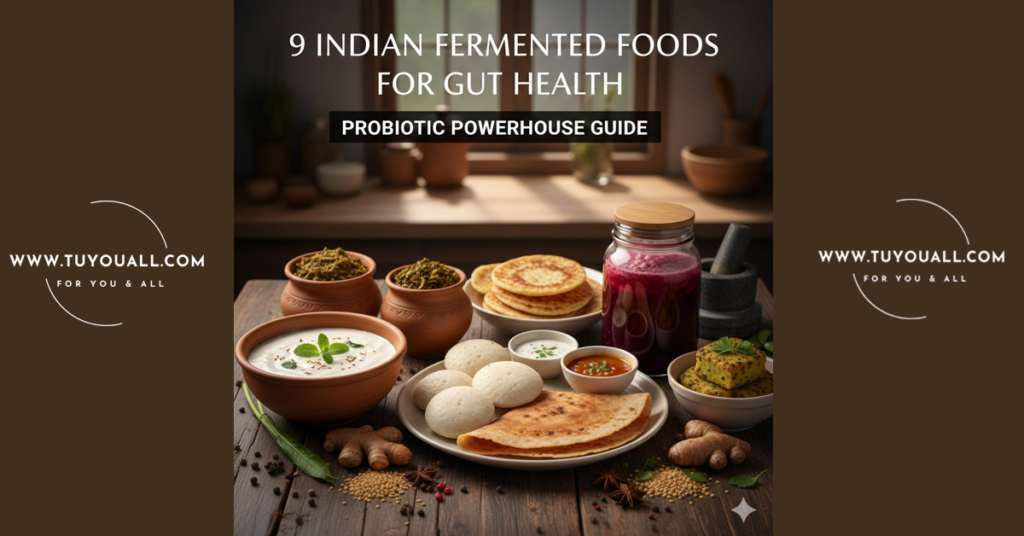
Fermentation: India’s Most Underrated Health Hack
South Indian cuisine gave the world one of its greatest food preservation techniques: fermentation. However, we have not fully tapped its potential.
Why Restaurant Idli Is Barely Fermented
True home-fermented idli has a pleasant sour tang. That sourness comes from beneficial bacteria. However, restaurants rarely ferment idli batter properly. Fermentation is risky for a commercial kitchen. One mistake leads to food poisoning and shutdowns. So they play it safe, giving you largely unfermented, refined carbs with very little urad dal (which is expensive compared to rice).
For example:
The old lady selling idli from a street cart often ferments her batter properly because she makes it fresh, sells it the same day, and does not store it for days in an industrial fridge.
Boosting Protein with Creative Fermentation
You can replace urad dal with other legumes to increase protein while keeping the same process.
| Traditional Ingredient | High-Protein Swap | Result |
| Urad dal | Soybeans | Mildly yellow idli, double the protein |
| Urad dal | Rajma (kidney beans) | Fantastic, coarse texture |
| Urad dal | Chana (chickpeas) | Hearty, filling idli |
For example:
A school midday meal program in Kerala tried replacing urad dal with soybeans in idli. The taste was pleasant, the fermentation process stayed identical, and the children got significantly more protein.
Prebiotics Beat Probiotics
People obsess over “probiotic” foods. However, your stomach acid kills most new bacteria you swallow. The real heroes are prebiotics—the soluble fibers that feed the good bacteria already living in your gut. The simplest prebiotic? Dal, vegetables, and fruits like guava, which is incredibly cheap and loaded with vitamin C and fiber.
“You have to feed your existing bacteria rather than bring new immigrants.” —
Kitchen Tools Under Fire: Refrigerators, Microwaves & Non-Stick Pans
India is perhaps the only place where people fear the microwave more than the sun. Let us fix that.
Is Yesterday’s Rice Dangerous?
There is a bacteria called Bacillus cereus that can grow in cooked rice left at room temperature. The solution is simple: cool your rice to room temperature, then refrigerate it promptly. Eating refrigerated rice the next day is not only safe, it is often healthier. Cooling cooked rice increases resistant starch, which is better for blood sugar control.
For example:
Chinese fried rice is traditionally made with day-old refrigerated rice. It is drier, less sticky, and has more resistant starch than fresh rice.
Microwaves Destroy the Least Nutrients
Reheating food in a pan exposes it to high, direct heat for a long time. This destroys water-soluble vitamins like vitamin C and B. A microwave heats food quickly and evenly by energizing water molecules inside the food. Because the time is short (often 30 seconds), nutrient loss is actually the lowest compared to boiling or steaming for 20 minutes.
The Non-Stick Pan “Toxin” Myth
Every controversy about Teflon has involved the manufacturing process and factory pollution, not the final pan in your kitchen. Teflon is one of the most non-reactive substances on Earth. It is used in surgical sutures implanted inside the human body. If it is safe enough for surgery, it is safe enough for your kitchen.
The real benefit? It lets you cook with almost zero oil. For a country where sabzi and omelettes swim in fat, a non-stick pan is a practical tool for heart health.
“If you have a family history of heart disease and the doctor says cut down on oil, what is the most practical way to do that with Indian cooking? You use a non-stick pan.” —
Air Fryers: A Smart Trade-Off
Yes, air fryers produce tiny amounts of advanced glycation end products (AGEs) because of the high heat. However, the amount is clinically insignificant for a normal Indian diet. Meanwhile, swapping deep-fried samosas for air-fried ones slashes your fat and calorie intake dramatically. When heart disease is one of India’s biggest killers, the trade-off is obvious.
Aluminium, MSG, and the “Chemical” Boogeyman
Aluminium Is Everywhere
Aluminium is the most abundant metal in the Earth’s crust. It is in your groundwater, your vegetables, and even your medicines. Your kidneys remove it daily. The tiny amount that might leach from an aluminium vessel is trivial compared to what you already consume naturally. Unless you have chronic kidney disease, you do not need to worry about the vessel. Worry about the oily curry you are cooking inside it.
MSG Is Just Glutamate
Monosodium glutamate (MSG) contains glutamic acid, an amino acid found in almost every food you eat. Tomatoes, parmesan cheese, curd, and fermented idli are all rich in natural glutamates. Your body already contains about two kilograms of glutamic acid in its tissues. That tiny sprinkle in Chinese food is meaningless. In fact, doctors in some countries use MSG to help elderly patients eat more because it enhances flavor and appetite.
For example:
When an Italian chef grates parmesan over your pasta, you think it is posh. When a Chinese chef sprinkles MSG, you think it is poison. Chemically, they are doing the exact same thing.
“Parmesan is white people MSG.” —
The Bigger Picture: Health Normalization Beats Health Optimization
Here is the single most important takeaway from the entire conversation. Stop chasing “superfoods” and “health hacks.” Focus on health normalization first.
The Four Things That Actually Matter
If you remember nothing else, remember this short list:
- Prioritize protein and fiber.
- Reduce ultra-processed food.
- Keep track of overall calories.
- Move your body regularly.
Everything else is noise. Turmeric lattes, bullet coffee with two tablespoons of ghee, gluten-free millet cookies with extra fat and salt—these are distractions. A single ingredient will never save you or kill you. Your overall pattern of eating is what shapes your health.
Why Ghee Is Not a Magic Potion
Ghee is roughly 50% saturated fat. The American Heart Association recommends keeping saturated fat under 10% of your daily calories. If you drink ghee in the morning, eat biscuits with palm oil, and then have a fatty dinner, you have blown past that limit before lunch. Moderation is not a vague idea; it is a number.
“People confuse content with knowledge. A 90-second Instagram reel does not explain how the human body works.” —
Frequently Asked Questions
Q.1. Is burnt chapati actually dangerous?
Ans. Not in normal amounts. The acrylamide in a lightly charred chapati or tandoori item is trivial compared to risks like air pollution, smoking, or a high-fat diet. You would need to eat heavily burnt food every meal for years to approach any real danger.
Q.2. Does refrigerating food destroy nutrients?
Ans. No. Freezing and refrigeration largely preserve protein, carbs, fats, and minerals. You may lose small amounts of water-soluble vitamins like vitamin C over time, but refrigeration protects far more than it harms. Day-old rice can even develop more resistant starch, which is better for blood sugar.
Q.3. Are eggs safe to eat every day?
Ans. For most people, yes. Eggs are a nutritionally complete protein. If you eat three eggs daily, simply adjust fat elsewhere in your diet. The cholesterol scare is largely outdated for healthy individuals.
Q.4. Is non-stick cookware toxic?
Ans. The final Teflon product in your pan is extremely non-reactive and safe. All documented health issues relate to factory manufacturing pollution, not home cooking. Using a non-stick pan to reduce oil is a net win for heart health.
Q.5. Is dal enough protein for vegetarians?
Ans. No. Dal is mostly starch with some protein, and sambar is mostly water and spices. Vegetarians should rely on dairy (yogurt, cheese), eggs (if acceptable), and legumes in larger quantities to meet protein needs.
Conclusion
We spend too much energy fearing the wrong things. A brown spot on a roti is not the enemy. The real enemy is the daily overload of refined carbs, hidden fats, and ultra-processed snacks we mindlessly consume. Krish Ashok’s message is refreshingly simple: trust science, not scare tactics. Use your refrigerator without guilt. Enjoy your tandoori chicken. Eat your eggs. Focus on the big habits—protein, fiber, movement, and total calories—rather than hunting for a single villain or hero ingredient.
The kitchen is not a chemistry lab full of poisons. It is a place to nourish yourself and your family with joy and logic. So here is a thought to carry with you: What is the one “healthy” rule you have been following blindly that might actually be stealing your peace—and your protein—away?