This blog post is based on insights from Prashant Kirad‘s interview on Raj Shamani’s podcast: “How Average Students Become Toppers”.
The “Leaker of CBSE” Tag: How One Prediction Changed Everything
Have you ever wondered how some educators seem to know exactly what will appear on your exam paper?
Prashant Kirad—fondly known as “Prashant Bhaiya” to millions of students—found himself viral overnight when his predicted topics matched 80-90% of the actual CBSE board exam questions. Students flooded social media with clips from his 4 AM marathon sessions, claiming he had “leaked” the paper.
But here’s the truth: “There was no leak. It was pure logic and research,” Kirad explains.
The real story? He spent 4-5 sleepless nights analyzing 9-10 years of previous papers, mapping topic repetition patterns using basic permutation and combination. When he marked 10-12 crucial topics for students the morning before the exam, 80% of those topics appeared in the paper. The result? A viral sensation and the accidental title: “Leaker of CBSE.”
“I was surprised myself. I knew 50-60% would match—that’s normal. But 80-90%? That was unexpected. It’s just that when you teach for years, you understand what CBSE considers ‘important’ versus ‘supporting theory.'” — Prashant Kirad
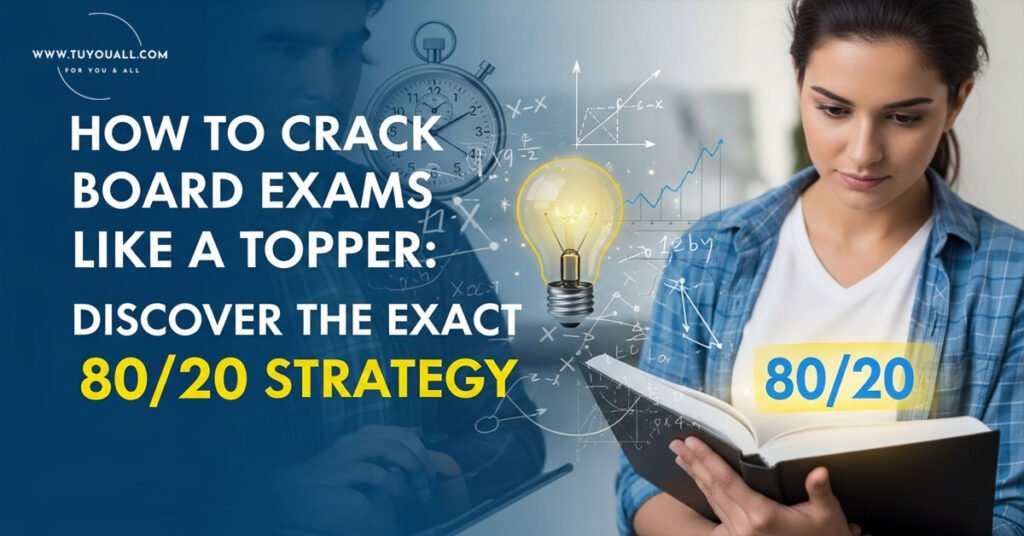
The 80/20 Rule for Students: The “Unfair” Advantage Top Students Don’t Tell You
Let’s address the elephant in the room: Are board exams actually difficult?
According to Kirad, absolutely not. “CBSE board exams—whether 10th or 12th—are among the easiest papers. The hype is manufactured,” he insists. The real challenge? Knowing where to focus.
The Strategy That Beats “Studying Everything”
| What Average Students Do | What Toppers Do |
| Try to cover 100% of the syllabus | Identify the crucial 20% of topics |
| Study chapters sequentially | Analyze 9-10 years of previous papers |
| Memorize everything equally | Focus on “main points” CBSE actually tests |
| Panic about “tough” pre-boards | Understand pre-boards are designed to be harder |
For Example:
Imagine you’re preparing for Physics. Instead of reading every line of Chapter 3, pull out papers from 2015-2024. List every question topic. You’ll notice certain topics repeat like clockwork while others appear once in a blue moon. CBSE knows which concepts you’ll need in 11th, 12th, and college—they test those.
Action Step:
Grab previous year papers (PYQs) for your subject. Create a simple table:
- Column A: Topic name
- Column B: How many times it appeared (2015-2024)
- Column C: Priority level (High/Medium/Low)
Study the “High” priority topics until you can solve them blindfolded. That’s your 20% effort for 80% results.
From Average to Topper: The Three-Step Transformation
Kirad didn’t start as a topper. He describes himself as starting from “minus” or “minor”—below average. His transformation required three non-negotiable elements:
Step 1: Find Your “Why” (The Motivation Anchor)
Before strategy comes emotion. Kirad’s turning point? “I realized—enough is enough. The world had insulted me enough. Now I had to do something.”
For Example:
One student Kirad mentored kept failing despite “studying hard.” When Kirad dug deeper, the student had no emotional reason to succeed—he was doing it for his parents. Everything changed when he connected Physics to his dream of building drones.
Exercise:
Write down your reason. Not “good marks”—the feeling behind them. Freedom? Proving someone wrong? A specific career? Read this daily.
Step 2: Find the Right Path (The Direction Fixer)
Motivation without direction is a car with a full tank but no GPS. Kirad’s hack? Sit next to toppers for 4 days.
“I sat beside the ‘ghisne wale’ students—the ones who grind daily, whose notes are always complete. In 4 days, I understood how to study. Not just what, but the rhythm, the note-taking style, the question-solving approach.”
For Example:
If you’re preparing for JEE, don’t just buy books. Find someone who’s cracked it. Observe their daily schedule. What apps do they use? How do they revise? Copy the system before customizing it.
Step 3: Blind Obsession (The Execution Mode)
Once direction is set, eliminate decision fatigue. Kirad describes his 12th grade mindset: “Blindfolds on. Nothing else matters. People will say ‘he’s crazy, studying till 3 AM’—let them talk. Just keep doing.”
This isn’t unhealthy grind culture—it’s strategic monomania. When you’re catching up from behind, you need concentrated bursts, not scattered efforts.
Brain Hacks: Sharpen Your Mind Without Supplements
When Raj Shamani asked for “three exercises to boost memory,” Kirad surprised him: “Memory doesn’t practically increase. Your thinking skills do.”
The “New Things Daily” Protocol
Your brain develops when forced to adapt. Kirad’s practical examples:
| Normal Habit | Brain-Challenging Twist | Benefit |
| Brushing with right hand | Brush with left hand | Activates opposite brain hemisphere |
| Same morning routine | Take a new route to school/college | Forces spatial adaptation |
| Watching familiar content | Learn one new concept daily | Builds neural flexibility |
The Science:
These aren’t memory tricks—they’re cerebellum exercises. The cerebellum (balance/coordination center) connects to cognitive function. Dancers and athletes have sharp minds because they constantly challenge coordination.
For Example:
Kirad brushes with his right hand in the morning, left hand at night. “The part of the brain that gets activated for coordination becomes stronger. Thinking skills increase—not how much you can memorize, but how deeply you can think.”
The A/B Paper Technique: How to Stop Overthinking in 5 Minutes
“Overthinking is the biggest problem. Everyone says ‘my mind is stressed, my mind overthinks.'” Kirad’s solution is almost embarrassingly simple—but requires physical action.
The Method:
- Take a blank paper. Draw a line down the middle.
- Left side (A): “Things I can control”
- Right side (B): “Things I cannot control”
- Dump every worry into these columns
For Example:
-
- A (Actionable): “My fight with my friend” → Can call and apologize
- B (Uncontrollable): “What if I fail?” “Past mistakes” “Future uncertainty”
- Physically cross out Column B. Tear it if needed.
- Focus only on Column A. These are your actual life problems.
“When I write it down and cross out B, I realize: ‘This is not my life’s problem. My life’s problem is THIS’—pointing to A. Now I work on those.” — Prashant Kirad
This works because overthinking thrives on vagueness. When you categorize worries as actionable vs. imaginary, your brain stops looping.
Distraction Destruction: The Deadline Method
Kirad admits he gets distracted too—scrolling reels, losing track of time. His fix? Deadlines.
But not vague “I’ll finish by evening” deadlines. Specific, non-negotiable time blocks.
The “Regret Loop” Trap (And How to Escape It)
Most students (and adults) fall into this pattern:
- Plan to study at 1 PM
- 1:10 PM: “Just 10 more minutes”
- 2 PM: “I’ve already wasted 1 hour. Might as well start at 3 PM properly”
- 3 PM: “Only 4 hours left before sleep. I ruined my day.”
Result:
4 hours of regret + 0 hours of study
Kirad’s Interruption Strategy:
The moment you realize you’re distracted, don’t regret. Instead:
- Check actual remaining time (e.g., “It’s 2 PM, I have 5 hours”)
- Take a 10-minute “reset walk” (no phone)
- Start fresh at 2:10 PM with full intensity
- Remove the regret narrative entirely
For Example:
Before his own exams, Kirad would catch himself at 2 AM having wasted 2 hours. Instead of panicking (“Only 5 hours left!”), he’d calculate: “5 hours of focused study is still 5 hours. Let’s go.”
Body-Mind Sync: The Elephant and Rider Metaphor
Kirad uses a vivid analogy: Your body is an elephant. Your mind is the rider.
Most people assume the rider (mind) controls the elephant (body). Wrong. If the elephant wants to go left, it goes left—rider be damned.
Training Required:
- Daily physical exercise isn’t for abs—it’s for mind control
- When you push through a 5th rep at the gym, you’re training the rider to command the elephant
- Over time, “the elephant starts listening”
For Example:
Kirad notes that bodybuilders often have exceptional life discipline. “They’re doing what the brain hates—pushing limits daily for years. That creates mind control others don’t have.”
Practical Application:
Don’t skip exercise during exam prep. A 20-minute run creates more mental clarity than 20 more minutes of groggy studying.
The Power of Visualization: How to Hack Your Subconscious
Kirad is a “strong, strong believer” in visualization—but with a specific technique most people miss.
The Two-Step Process:
Step 1: Write the Goal (50% of work)
Don’t just think it. “When I was cracking exams, I had a beautiful diary. I wrote: ‘This exam, on this date, I will score X marks.’ I summarized my feelings there. That emotion is crucial.”
Step 2: The Nighttime Image (The Multiplier)
Every night before sleep:
- Imagine one image of your “ultra-successful” self
- Not vague—specific: Are you helping millions? In a specific car? With family?
- Feel the emotion of already being there
- Drift to sleep with that image
Why it works:
Your subconscious processes this during sleep. “Automatically, your dreams start aligning. Next morning, you get ideas in that direction. You unknowingly move toward it and take those decisions.”
For Example:
Kirad’s visualization wasn’t “be rich.” It was specific: “Reaching every village in India with quality education.” That clarity helped him reject a ₹15-20 crore acquisition offer (more on that below).
The EdTech “Dark Side”: What They Don’t Show You
When Kirad’s channel grew, the offers came fast: ₹15-20 crore to join major EdTech platforms. He rejected them. Here’s the hidden industry reality:
The Teacher Acquisition Game
| What You See | What Happens Behind Closed Doors |
| “Star educator joins Platform X” | Teacher’s channel becomes Platform X’s property (forever) |
| Huge signing bonuses | 2-4 year contracts with strict non-competes |
| “Better reach for students” | Restrictions on free content, forced paid batches only |
The Poaching Cycle:
- Platform A hires Teacher Z for ₹10 crore (4-year contract)
- Teacher Z teaches 1 year, builds trust
- Platform B offers ₹25 crore
- Teacher Z breaks contract (legal battles ensue, students left hanging)
- Students lose: Course incomplete, trust broken, money wasted
“Contracts are breakable. No matter how much you try to hold a teacher, if another platform offers more, they’ll leave. And the company handles legal issues—the teacher just moves.” — Prashant Kirad
Negative PR Wars:
When competition heats up, platforms circulate “mistake clips”—moments when a teacher erred in class. “Everyone makes mistakes. We correct them. But these clips are extracted and circulated: ‘Look, your teacher is teaching wrong!'”
Kirad’s stand? “I could never give away my channel. We built it with sleepless nights. It’s like giving away your child.”
Fixing India’s Education: The Real Problems
With millions of students watching him, Kirad has ground-level insights most policymakers miss:
Problem 1: The “Practical Use” Gap
Textbooks are boring because we never explain the “why.” Students mock education because they don’t see applications. An engineering student finally understands 10th-grade Physics concepts in college—that’s too late.
Problem 2: Exams = Only Judgment Criteria
We celebrate marks, not learning. “How many marks? Which rank? We never ask: ‘What did you understand?'” This creates cheating culture and surface-level knowledge.
Problem 3: The Hidden Subject Menu
Shocking fact:
CBSE offers 10x more subjects than schools actually provide. Robotics is a legitimate CBSE subject. Why don’t schools offer it? No teachers, low student demand, revenue focus.
Kirad’s team is building an “Interest Mapping” product (launching end of 2024) to help students discover their actual aptitudes before choosing streams—addressing the “PCM because parents said so” epidemic.
FAQ: Your Burning Questions Answered
Q1: Is the 80/20 rule really accurate for CBSE?
Yes. CBSE papers are designed around “main points” you’ll need in higher studies. Supporting theory exists but isn’t heavily tested. Previous year analysis reveals clear patterns.
Q2: How do I stop regretting wasted study time?
Use the “reset method”: Calculate remaining time objectively, take a 10-minute walk, start fresh without narrative. Never add regret-time to wasted-time.
Q3: Can brain exercises really improve my thinking?
Absolutely. Novelty forces neural adaptation. Simple switches (left-hand brushing, new routes, learning one new thing daily) strengthen coordination centers linked to cognitive function.
Q4: Why do pre-boards feel harder than actual boards?
They’re designed that way. Teachers intentionally make them tough so you study harder. Unfortunately, this demotivates sincere students while unmotivated students weren’t going to study anyway.
Q5: How do I find my motivation when I feel “average”?
Connect studying to a specific emotion, not just outcomes. Kirad’s trigger was “enough humiliation.” Yours might be freedom, proving someone wrong, or a specific career vision. Write it. Read it daily.
Conclusion: The Commitment-Keeping Revolution
Here’s the uncomfortable truth Kirad leaves us with: The highest sin is breaking commitments to yourself. The highest virtue is keeping them.
Every time you say “I’ll wake up at 6 AM” then don’t, you’re training your brain that your word doesn’t matter. Do this daily, and you lose self-trust—the foundation of all achievement.
But reverse it? “If you keep commitments, you’re training every cell: ‘What I say goes.’ Then finance improves, relationships improve, health improves—because you’re in control.”
The board exam is just a battle. The war is becoming someone who does what they say they’ll do.
What’s one commitment you’ve been breaking to yourself? Write it down. Fix it tomorrow morning. That’s where toppers are made—not in grand strategies, but in 5-second decisions to get up when the alarm rings.
Source & Credit
This blog post is based on insights from Prashant Kirad‘s interview on Raj Shamani’s podcast: “How Average Students Become Toppers”.
The original content has been translated, expanded, and repurposed for educational purposes. All direct quotes are attributed to Prashant Kirad from the interview transcript.
Watch the original: Search “Raj Shamani Prashant Kirad” on YouTube for the full episode with additional context and visual examples.