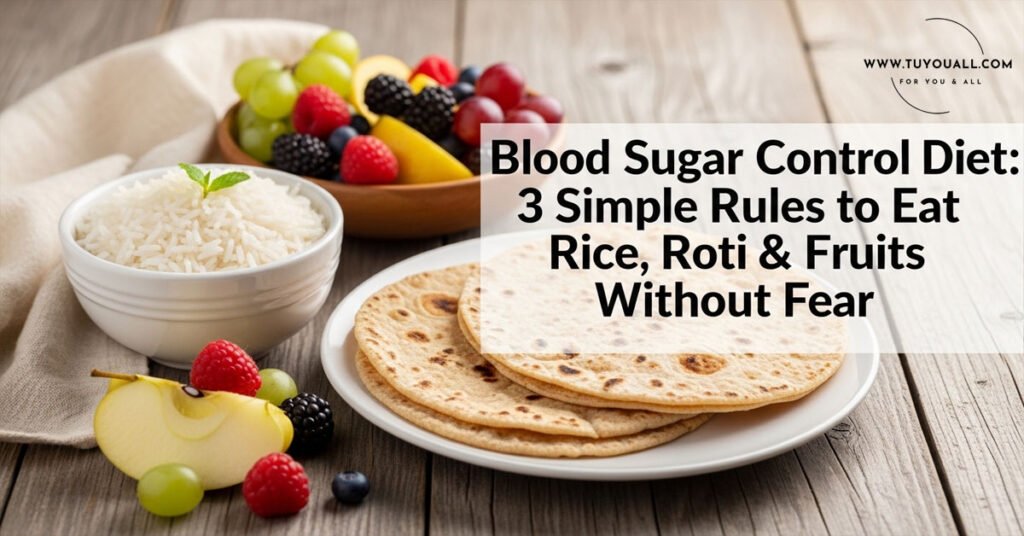
This blog post is based on insights from Dr. Saleem’s YouTube video: “3 Simple Rules for Blood Sugar Control”
Introduction: Can You Really Control Diabetes Without Giving Up Carbs?
What if I told you that you don’t have to quit sweets entirely to keep your blood sugar in perfect control? Yes, you read that right—you can still enjoy your roti, have your rice, and eat fruits too. The secret? Just three simple rules.
If you’re tired of restrictive diets that make you feel like you’re missing out on life, this guide is for you. I’m going to break down exactly how to manage your diabetes through smart meal planning and food pairing—not through elimination.
Think about it: How many times have you wondered, “Can I eat this?” or felt guilty after a meal? The truth is, diabetes management isn’t about saying “no” to everything. It’s about knowing what to eat, how much to eat, and when to eat it.
Ready to take control of your blood sugar without giving up the foods you love? Let’s dive into the three fundamental rules that will change how you approach your plate forever.
Rule #1: Master Your Plate and Portion (The Foundation of Blood Sugar Control)
Understanding Refined vs. Whole Foods
Here’s the deal: The more a grain is processed, the faster it spikes your blood sugar.
When you eat highly refined foods like maida (all-purpose flour) or fine sooji (semolina), your body digests them super quickly. It’s like pouring sugar directly into your bloodstream—your glucose levels shoot up almost instantly.
But when you choose whole foods or less refined options, magic happens:
| Refined Foods (Avoid) | Whole Food Alternatives (Choose) | Why It Matters |
| Maida (white flour) | Whole wheat atta with bran | Higher fiber slows digestion |
| Fine sooji | Broken wheat (daliya) | Gradual glucose release |
| White bread | Whole grain roti | Better glycemic control |
| Sticky white rice | Long-grain Basmati rice | Lower glycemic index |
“The more a grain is refined, the faster it raises your blood sugar. Whole foods with fiber slow down digestion and make blood sugar control easier.” —Dr. Saleem
Practical Kitchen Swaps You Can Make Today
For Roti Lovers:
- Switch to whole wheat atta mixed with bran
- Better yet, add millet flour (ragi, bajra, or jowar) to your wheat dough
- This simple change boosts your fiber content significantly
For Rice Enthusiasts:
- Don’t quit rice—just cook it smarter!
- Parboil first, then drain the water (removes excess starch)
- Choose long-grain Basmati rice over sticky, short-grain varieties
- Keep portions to ½ to ¾ cup cooked rice maximum
For Breakfast Fans:
- Love upma? Replace sooji with daliya (broken wheat)
- Add vegetables to increase fiber and volume
The Power of Food Pairing
This is where most people go wrong. They eat carbs alone, then wonder why their sugar spikes. Here’s the secret formula:
The Ideal Diabetes Plate:
- ½ plate: Non-starchy vegetables (lauki, tori, tinda, bhindi, cabbage, cucumber, carrots, salad)
- ¼ plate: Protein (dal, chana, rajma, paneer, tofu, eggs, chicken, or fish)
- ¼ plate: Carbohydrates (either rice OR roti—not both!)
- Plus: A spoonful of healthy fat (desi ghee, olive oil, or nuts like peanuts, almonds, walnuts)
Why this works:
When you pair carbohydrates with protein and fiber, your body absorbs sugar much more slowly. Add healthy fats on top, and the absorption slows down even further.
Stop Guessing, Start Monitoring
Dr. Saleem emphasizes one critical point: “Tracking your sugar properly is a million times better than guessing.”
You have two powerful options:
- CGM (Continuous Glucose Monitor): Shows real-time blood sugar 24/7
- Home Glucometer: Check before and 2 hours after meals
Pro tip: Keep a food diary for 7 days. Write down:
- What you ate
- Portion sizes
- Blood sugar readings before and after
This data becomes your personal blueprint. For example, if ¾ cup rice keeps your sugar stable, great! Try ½ cup the next day and see if it gets even better. You’ll discover exactly what your body can handle.
Rule #2: Create Your Carbohydrate Budget and Master Meal Timing
What Is a Carbohydrate Budget?
Think of it like a monthly money budget, but for your meals. Just as you decide how much to spend and save, you need to decide how many carbs to “spend” per meal.
Your Daily Carb Budget:
- Women: 30-45 grams of carbohydrates per meal
- Men: 45-60 grams of carbohydrates per meal
Important:
If your sugar isn’t well-controlled, always start at the lower end (30-45g) and monitor closely.
Carbohydrate Content Cheat Sheet
Save this table for quick reference:
| Food Item | Portion Size | Carbohydrate Content |
| Medium roti (fulka) | 1 piece | 15-18 grams |
| Cooked white rice | ½ cup | 20-25 grams |
| Cooked white rice | ¾ cup | 30-35 grams |
| Cooked daliya or oats | 1 bowl | 25-30 grams |
| Apple/medium fruit | 1 piece | 15-20 grams |
Practical Examples:
- Women’s meal: 2 rotis (30-36g carbs) + vegetables + protein
- Men’s meal: 3 rotis (45-54g carbs) + vegetables + protein OR ¾ cup rice + dal + vegetables
The Golden Rules of Carb Timing
1. One Carb at a Time Never mix different types of carbohydrates in one meal. This is crucial:
- ❌ Don’t eat: Roti + Rice + Poha together
- ✅ Do eat: Choose ONE—either roti OR rice OR poha
2. Fruits Belong WITH Meals, Not Alone Contrary to Ayurvedic advice, diabetics should eat fruits with meals, not on an empty stomach. Here’s why:
- Eating fruit alone causes quick sugar spikes
- Eating fruit with protein and fiber slows absorption
Pro tip: Reduce your roti or rice portion slightly when adding fruit to that meal
3. Sequence Your Eating This is a game-changer that most people don’t know about:
4. First: Eat vegetables and protein
5. Last: Eat your carbohydrates
Starting with veggies and protein creates a “buffer” in your stomach. When carbs enter later, they’re absorbed much more slowly, preventing those dangerous sugar spikes.
6. The Post-Meal Walk Take a 10-15 minute light walk immediately after eating. This simple habit significantly reduces post-meal blood sugar spikes by helping your muscles use up glucose.
Three Ready-to-Use Meal Templates
Option A: The North Indian Classic
- 2 whole wheat rotis
- 1 bowl dal/rajma/chole
- 1 large bowl vegetable curry
- Side salad
Option B: The Rice Lover’s Choice
- ½ to ¾ cup parboiled Basmati rice
- 1 bowl dal/rajma/chole
- 1 large bowl vegetable curry
Option C: The Healthy Breakfast
- 1 bowl daliya (broken wheat)
- Paneer or egg
- 1 large bowl vegetables
Mix and match these templates based on your preferences. The key is consistency in portion sizes.
Safety Warning:
If you take insulin or diabetes medications, reducing carbs increases your risk of low blood sugar (hypoglycemia). Always discuss dosage adjustments with your doctor before changing your portions.
Rule #3: Prioritize Protein for Satiety and Muscle Health
Why Protein Is Your Secret Weapon
Most people underestimate protein in diabetes management, but it’s actually your best defense against post-meal sugar spikes. Here’s why protein matters so much:
- Keeps you full longer – Reduces cravings and overeating
- Slows digestion – Creates a steady, gradual glucose release
- Protects muscle mass – Stronger muscles = better glucose utilization
- Prevents sugar crashes – Stabilizes energy throughout the day
How Much Protein Do You Really Need?
The Formula: 1 to 1.2 grams of protein per kilogram of body weight daily
Example: If you weigh 60 kg, you need 60-72 grams of protein per day.
Distribution Strategy: Divide this across three meals:
- Breakfast: 20-24g protein
- Lunch: 20-24g protein
- Dinner: 20-24g protein
Protein Content Reference Guide
| Food Source | Serving Size | Protein Content |
| Egg | 1 whole | 6 grams |
| Paneer (cottage cheese) | 100 grams | 18-20 grams |
| Chicken | 100 grams | 25-27 grams |
| Fish | 100 grams | 20-22 grams |
| Dal (lentils) | 1 bowl | 8-10 grams |
| Rajma/Chana (beans) | 1 bowl | 10-12 grams |
Quick Calculation Example:
- Breakfast: 2 eggs (12g) + 1 bowl daliya with milk (8g) = 20g
- Lunch: 100g paneer (20g) + 1 bowl dal (10g) = 30g
- Dinner: 100g chicken (25g) + vegetables = 25g
- Total: 75g protein ✓
Vegetarian Protein Strategies
Don’t eat meat? No problem! Combine these throughout the day:
- Breakfast: Milk, yogurt, eggs (if you eat them), or protein-rich sprouts
- Lunch: Paneer, tofu, or a combination of dal + rajma/chana
- Dinner: Lentils, chickpeas, or soybean preparations
Pro tip: Vegetarian proteins often come with carbs (like dal or rajma), so account for those in your carbohydrate budget.
FAQ: Your Blood Sugar Control Questions Answered
Q.1. Can I really eat rice if I have diabetes?
Yes, absolutely! The key is choosing the right type (long-grain Basmati), proper cooking method (parboiling and draining), and correct portion size (½ to ¾ cup). Always pair rice with plenty of vegetables and protein, and monitor your blood sugar response.
Q.2. Why should I eat fruits with meals instead of as snacks?
When eaten alone, fruits cause rapid sugar spikes because the natural sugars absorb quickly. Eating them with meals slows this absorption due to the presence of protein, fiber, and fats. Just remember to reduce your grain portion slightly to accommodate the fruit’s carbohydrates.
Q.3. How do I know if my carbohydrate budget is working?
Monitor your blood sugar using a glucometer or CGM. Check before meals and 2 hours after. If your post-meal readings stay within your target range (typically under 140-180 mg/dL depending on your doctor’s advice), your budget is appropriate. If not, reduce portions and retest.
Q.4. Is walking after meals really that effective?
Yes! A 10-15 minute walk after eating helps your muscles absorb glucose from the blood without needing extra insulin. This simple habit can reduce post-meal spikes by 20-30% and is one of the easiest diabetes management tools available.
Q.5. What if I’m vegetarian and struggle to get enough protein?
Focus on dairy products (paneer, Greek yogurt, milk), legumes (dal, rajma, chana), soy products (tofu, soy chunks), and combine different plant proteins throughout the day. You might need slightly larger portions of legumes, so adjust your carb budget accordingly.
Conclusion: Your Path to Guilt-Free Eating Starts Now
Managing diabetes doesn’t mean living in a world of “no.” It means living in a world of “know”—knowing what works for your body, knowing how much you can handle, and knowing when to eat what.
Let’s recap the three life-changing rules:
- Master your plate with whole foods, smart pairing, and strict portion control
- Create your carb budget based on your gender and activity level, timing your meals strategically
- Prioritize protein to stay full, protect your muscles, and stabilize your sugar
Remember, your diabetes journey is unique. What works for your neighbor might not work for you. That’s why continuous monitoring is your superpower—it transforms guesswork into precise, personalized knowledge.
Start with one rule this week. Master it. Then add the next. Within 21 days, you’ll have a completely new relationship with food—one where you feel empowered, not restricted.
What’s the first change you’re going to make to your plate today? Share your thoughts in the comments below, and let’s build a community of people who control their diabetes without letting it control them!
Credit and Disclaimer
This blog post is based on insights from Dr. Saleem’s YouTube video: “3 Simple Rules for Blood Sugar Control”
The original content has been translated, expanded, and repurposed for educational purposes.
This article is intended for informational purposes only and does not constitute medical advice. Always consult with your healthcare provider before making changes to your diabetes management plan, especially if you take insulin or other medications.