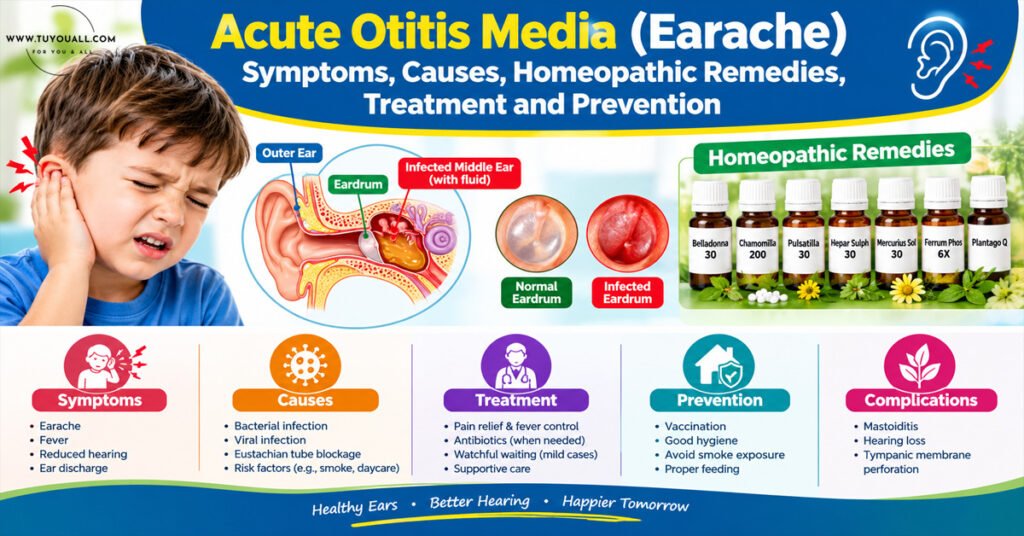
Learn About Acute Otitis Media, Including Earache Symptoms, Causes, Diagnosis, Homeopathic Remedies, Medical Treatment, Complications And Prevention.
Have you ever experienced sudden, severe ear pain, fever, or difficulty hearing? These symptoms may indicate Acute Otitis Media (AOM), commonly known as a middle ear infection.
Acute otitis media is a common ear condition, especially among babies and young children. It develops when the middle ear becomes inflamed and infected, often after a cold or upper respiratory infection.
Although many children recover well, untreated or complicated infections can sometimes lead to hearing problems and other serious conditions.
In this article, we will explore the symptoms, causes, diagnosis, treatment, complications, and prevention of acute otitis media. We will also discuss the seven homeopathic medicines mentioned in the supplied reference image and explain their traditional uses and medical limitations.
What Is Acute Otitis Media (AOM)?
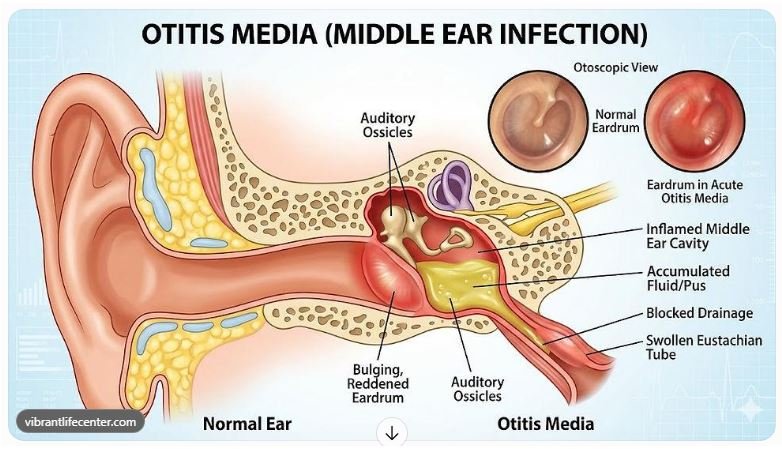
Acute Otitis Media (AOM) is a sudden infection or inflammation of the middle ear.
The middle ear is the air-filled space behind the eardrum. It contains three tiny bones that help transmit sound vibrations to the inner ear.
The infection often develops when fluid collects behind the eardrum. Bacteria or viruses can then cause inflammation and pressure in the middle ear.
This pressure may cause earache, fever, irritability, and temporary hearing difficulties.
Why Is Acute Otitis Media Common in Children?
Children are more likely to develop middle ear infections because their Eustachian tubes are shorter and more horizontal than those of adults.
The Eustachian tubes connect the middle ear to the back of the nose and throat. They help balance ear pressure and drain fluid.
When a child catches a cold, these tubes may become swollen or blocked. Fluid can then collect inside the middle ear.
For Example:
A three-year-old child develops a common cold. A few days later, the child starts crying, holds one ear, and develops a fever. These symptoms may suggest acute otitis media.
Main Causes of Acute Otitis Media
Acute otitis media usually develops after an upper respiratory infection.
Both bacteria and viruses can cause the condition.
1. Bacterial Infection
Some common bacteria associated with acute otitis media include:
- Streptococcus pneumoniae
- Haemophilus influenzae (non-typeable)
- Moraxella catarrhalis
These organisms can enter the middle ear when normal drainage and ventilation become impaired.
2. Viral Infection
Respiratory viruses can also cause middle ear inflammation.
Common examples include:
- Influenza virus.
- Respiratory syncytial virus (RSV).
- Rhinovirus
- Adenovirus
Viral infections may also make it easier for bacteria to cause a secondary infection.
3. Eustachian Tube Blockage
The Eustachian tube helps remove fluid from the middle ear.
However, a cold, allergies, or inflammation can block this tube. As a result, fluid may collect behind the eardrum.
4. Other Risk Factors
Certain factors increase the chance of developing middle ear infections.
- Exposure to cigarette smoke.
- Attending daycare or crowded childcare settings.
- Bottle-feeding while lying flat.
- Frequent upper respiratory infections.
- Not receiving recommended vaccinations.
- A family history of recurrent ear infections.
Signs and Symptoms of Acute Otitis Media
The symptoms of acute otitis media can develop quickly. Some patients experience mild discomfort, while others suffer from severe ear pain and fever.
The most common symptoms include the following.
1. Severe Earache
Ear pain is one of the main symptoms of acute otitis media.
Fluid buildup and inflammation create pressure behind the eardrum. This pressure can cause sharp, throbbing, or continuous pain.
Children may hold, rub, or pull the affected ear.
2. Fever
A patient may develop a fever as the body responds to infection.
The fever may occur with ear pain, irritability, tiredness, and reduced appetite.
A high fever needs medical attention, especially in young children.
3. Reduced Hearing
Fluid behind the eardrum can interfere with sound transmission.
As a result, the patient may experience temporary hearing loss or muffled hearing.
Children may also appear less responsive when someone calls their name.
4. Ear Discharge
Sometimes, pressure inside the middle ear causes the eardrum to develop a small tear.
This may allow pus or fluid to drain from the ear.
Ear discharge can indicate a perforated eardrum and requires medical examination.
5. Irritability in Children
Young children cannot always explain their ear pain.
Instead, parents may notice:
- Frequent crying.
- Poor sleep.
- Reduced feeding.
- Restlessness
- Loss of interest in playing.
- Repeatedly touching the affected ear.
Other Possible Symptoms
Some patients may also experience:
- Headache
- Nausea
- Vomiting
- Loss of appetite.
- Difficulty sleeping.
- A feeling of fullness inside the ear.
For Example:
A two-year-old child wakes up crying at night, repeatedly touches the right ear, and develops a fever. These symptoms may indicate an ear infection.
However, a proper examination is necessary to confirm the diagnosis.
How Is Acute Otitis Media Diagnosed?
An accurate diagnosis is important because not every earache is caused by acute otitis media.
A doctor usually examines the ear and checks for signs of middle ear inflammation and fluid buildup.
1. Otoscopic Examination
An otoscope is a small medical instrument with a light and magnifying lens.
The doctor uses it to examine the ear canal and eardrum.
Important findings may include:
- Bulging of the eardrum.
- Redness and inflammation.
- Fluid behind the eardrum.
- Reduced movement of the eardrum.
- A perforated eardrum with discharge.
A red eardrum alone does not confirm acute otitis media. The doctor must consider other findings.
2. Pneumatic Otoscopy
This examination helps assess how well the eardrum moves.
The doctor gently changes the air pressure inside the ear canal using a special otoscope.
Reduced eardrum movement may indicate fluid in the middle ear.
3. Tympanometry
Tympanometry measures how the eardrum responds to changes in air pressure.
It can help identify fluid or pressure problems in the middle ear.
It is particularly useful when the examination findings are unclear.
4. Hearing Assessment
A hearing test may be recommended when:
- Hearing difficulties continue.
- Ear infections occur repeatedly.
- Fluid remains behind the eardrum.
- Speech or language development becomes a concern.
5. Other Investigations
Most uncomplicated ear infections do not require blood tests or imaging.
A CT scan or other imaging may be necessary if the doctor suspects a serious complication.
Acute Otitis Media Treatment: What Really Works?
The main goals of treatment are to reduce pain, control fever, manage infection, and prevent complications.
Not every patient needs antibiotics immediately. The treatment depends on age, symptoms, severity, and examination findings.
1. Pain Relief and Fever Management
Pain relief is an important part of treatment.
Doctors may recommend:
- Paracetamol (acetaminophen).
- Ibuprofen, when suitable for the patient’s age and medical condition.
These medicines help reduce pain and fever.
Parents should follow the correct age- and weight-based instructions from a healthcare professional.
Never give aspirin to children unless specifically directed by a specialist.
2. Antibiotic Treatment
Antibiotics may be necessary when a bacterial middle ear infection is suspected or confirmed.
Amoxicillin is commonly used as a first-choice antibiotic when appropriate.
Doctors may consider amoxicillin-clavulanate or another suitable antibiotic in certain situations, such as recent amoxicillin use, treatment failure, or specific associated infections.
The choice and duration depend on the patient’s age, severity, allergies, and local treatment guidelines.
Do not start leftover antibiotics or stop a prescribed course without medical advice.
3. Watchful Waiting
Some mild cases of acute otitis media improve without antibiotics.
In suitable patients, doctors may recommend watchful waiting for 48–72 hours.
During this period, parents monitor symptoms and provide appropriate pain relief.
Antibiotics may be started if symptoms worsen or fail to improve within the agreed period.
Watchful waiting is not appropriate for every patient. It requires proper medical assessment and reliable follow-up.
4. Supportive Care at Home
Simple measures can help make the patient more comfortable.
- Encourage adequate rest.
- Provide enough fluids.
- Continue age-appropriate feeding.
- Keep the ear clean and dry.
- Avoid inserting cotton buds or other objects into the ear.
- Avoid smoke exposure.
- Follow the doctor’s instructions.
Do not use ear drops unless a healthcare professional confirms they are safe. Some drops are unsuitable when the eardrum has ruptured.
Comparison of Treatment Approaches
| Treatment | Main purpose | Important consideration |
| Paracetamol | Relieves pain and fever | Use the correct dose |
| Ibuprofen | Relieves pain and inflammation | Not suitable for everyone |
| Amoxicillin | Treats susceptible bacterial infections | Requires medical prescription |
| Amoxicillin-clavulanate | Treats selected bacterial infections | Used when clinically indicated |
| Watchful waiting | Avoids unnecessary antibiotics | Requires follow-up |
| Hospital treatment | Manages severe complications | Needed in serious cases |
Homeopathic Remedies for Acute Otitis Media
The supplied reference image mentions seven homeopathic medicines traditionally associated with different earache symptoms.
These medicines are commonly discussed in traditional homeopathic practice. However, the available research does not establish that they reliably treat acute middle ear infections.
A 2024 systematic review found that the available studies were too limited and varied to establish whether homeopathy effectively treats otitis media. Therefore, it should not replace proven medical care.
Homeopathic Medicines Listed in the Reference Image
| Medicine | Traditional homeopathic symptom association |
| Belladonna 30 | Sudden, throbbing ear pain with redness and heat. |
| Chamomilla 200 | Earache with marked irritability and crying in children. |
| Pulsatilla 30 | Ear discomfort with a clingy or tearful temperament. |
| Hepar Sulph 30 | Traditionally associated with extreme sensitivity and suppurative symptoms. |
| Mercurius Sol 30 | Traditionally associated with foul-smelling discharge and increased salivation. |
| Ferrum Phos 6X | Traditionally used in early inflammatory conditions. |
| Plantago Q | Traditionally used as an external ear preparation for ear discomfort. |
The above descriptions explain traditional homeopathic associations only. They are not proven indications or recommendations for treating an ear infection.
Important Safety Advice About Homeopathic Ear Remedies
Before using any complementary medicine, consider these precautions:
- Do not delay an otoscopic examination.
- Never replace prescribed antibiotics with homeopathic remedies.
- Do not put Plantago Q, herbal preparations, oils, or other unprescribed liquids into the ear.
- Avoid all unapproved ear drops when the eardrum may be perforated.
- Seek medical care if pain, fever, or discharge continues.
Remember: A perforated eardrum requires special care. The wrong ear drops can cause harm.
Complications of Acute Otitis Media
Most patients recover without serious problems. However, complications can occur, particularly when infection becomes severe or spreads beyond the middle ear.
The reference image highlights three important complications.
1. Mastoiditis
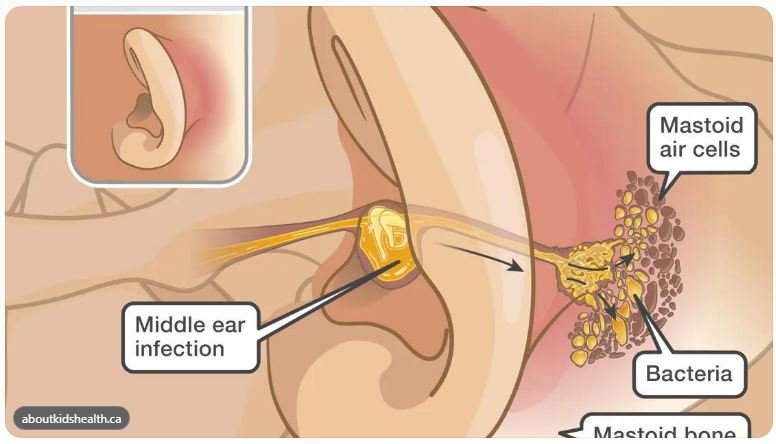
Mastoiditis is an infection of the mastoid bone, located behind the ear.
It may develop when a middle ear infection spreads into the surrounding bone.
Warning signs include:
- Pain behind the ear.
- Redness and swelling behind the ear.
- Tenderness over the mastoid bone.
- The ear appearing pushed outward.
- Fever and feeling very unwell.
Mastoiditis requires urgent medical assessment and often hospital treatment.
2. Hearing Loss
Fluid in the middle ear can temporarily reduce hearing.
In most cases, hearing improves when the fluid clears.
However, repeated infections or persistent fluid can affect hearing for longer periods.
In young children, prolonged hearing difficulties may affect speech and language development.
3. Tympanic Membrane Perforation
The tympanic membrane is another name for the eardrum.
Pressure from infected fluid may cause a small hole or tear in the eardrum.
Possible symptoms include:
- Ear discharge.
- Sudden reduction in ear pain.
- Reduced hearing.
- A feeling of fluid coming from the ear.
Many small perforations heal naturally. However, medical follow-up is important to confirm healing.
Other Possible Complications
In rare cases, acute otitis media may lead to:
- Facial nerve weakness.
- Labyrinthitis
- Chronic middle ear infection.
- Meningitis
- Intracranial abscess.
Prevention of Acute Otitis Media
Preventing every ear infection is not possible. However, certain healthy habits can reduce the risk.
1. Follow Recommended Vaccinations
Vaccination helps protect children against infections associated with middle ear disease.
Important vaccines include:
- Pneumococcal conjugate vaccine (PCV).
- Influenza vaccine.
- Other routine childhood vaccines.
Follow the recommended immunization schedule in your country. In India, consult your pediatrician or local health centre about the National Immunization Schedule.
2. Avoid Exposure to Cigarette Smoke
Secondhand smoke can increase the risk of ear infections.
Keep children away from smoking areas. Maintain a smoke-free home and vehicle.
3. Practice Proper Feeding Habits
Feeding practices can influence ear infection risk.
For babies:
- Encourage breastfeeding when possible.
- Hold babies in an upright or semi-upright position during bottle-feeding.
- Avoid feeding babies while they lie flat.
- Do not put a baby to sleep with a feeding bottle.
4. Maintain Good Hygiene
Simple hygiene habits help reduce the spread of respiratory infections.
- Wash hands regularly.
- Cover the mouth while coughing.
- Clean frequently touched surfaces.
- Avoid close contact with people who have respiratory infections.
- Keep indoor spaces well ventilated.
5. Manage Allergies and Respiratory Infections
Nasal allergies and frequent respiratory infections may contribute to Eustachian tube problems.
Seek medical advice if a child frequently experiences nasal congestion, ear discomfort, or repeated ear infections.
When Should You Consult a Doctor?
Not every earache requires emergency treatment. However, some symptoms need prompt medical attention.
Warning signs – Do not ignore
Seek prompt medical attention if you notice:
- Severe or worsening ear pain.
- Fever of 39°C or higher.
- Pus, blood, or fluid coming from the ear.
- Reduced or sudden hearing loss.
- Swelling or redness behind the ear.
- The ear appearing pushed outward.
- Persistent vomiting or unusual drowsiness.
- Symptoms that do not improve within 2–3 days.
Emergency care: Seek immediate help if the patient develops severe headache, neck stiffness, facial weakness, confusion, seizures, or signs of serious illness.
Babies younger than three months with a temperature of 38°C or higher need immediate medical assessment.
Practical Example: Recognising an Ear Infection in a Child
Consider a four-year-old child who develops a common cold.
After three days, the child starts complaining of right-sided ear pain. The child also develops a fever and becomes restless at night.
The parents notice that the child does not respond normally when spoken to.
What should the parents do?
- Arrange a medical examination.
- Explain the fever, ear pain, and hearing changes.
- Allow the doctor to examine the eardrum using an otoscope.
- Follow the recommended pain-relief treatment.
- Discuss whether antibiotics or watchful waiting are appropriate.
- Return for reassessment if symptoms worsen or fail to improve.
This example shows why proper diagnosis matters. Early medical attention can prevent unnecessary treatment and identify complications.
Frequently Asked Questions (FAQs)
- What is the main cause of acute otitis media?
Acute otitis media commonly develops after a viral respiratory infection. Bacteria such as Streptococcus pneumoniae and non-typeable Haemophilus influenzae can also cause middle ear infections.
- What are the main symptoms of acute otitis media?
The main symptoms include severe earache, fever, reduced hearing, ear discharge, and irritability in children. Some patients may also experience vomiting and difficulty sleeping.
- Which antibiotic is commonly used for acute otitis media?
Amoxicillin is commonly recommended as a first-choice antibiotic when antibiotic treatment is needed. However, the doctor must determine the correct medicine and dose based on the patient’s condition.
- Which homeopathic medicines are traditionally used for earache?
The reference image lists Belladonna, Chamomilla, Pulsatilla, Hepar Sulph, Mercurius Sol, Ferrum Phos, and Plantago Q. Their traditional symptom associations are not proof of effectiveness against ear infections.
- Can acute otitis media cause permanent hearing loss?
Most hearing problems caused by acute otitis media are temporary. However, repeated infections, persistent fluid, or damage to the eardrum or middle ear structures can cause longer-lasting hearing difficulties.
References & Further Learning:
For additional clinical insights, materia medica explanations, and practical perspectives on homeopathic management, the information in this article/page has been cross-referenced with educational resources shared by qualified homeopathic practitioners and researchers in their YouTube Channel (Links given Below). Readers seeking deeper guidance on remedy selection, potencies, and holistic care may explore video lectures and case discussions by established homeopathic doctors as listed below with their YouTube Channel Link :
| SL No. | Channel / Doctor Name | Primary Focus & Clinical Background | YouTube Link |
| 1 | Dr. Kirti Vikram Singh | Covers disease-specific remedies, mother tinctures, German combinations, and daily live Q&A sessions. | https://www.youtube.com/drkirtivikramsingh |
| 2 | Dr. Pranjali Srivastava | Registered BHMS physician and certified nutritionist focusing on holistic disease management and lifestyle care. | https://www.youtube.com/@drpranjalihomeopathy
|
| 3 | Dr. Swapnil Sagar Jain | BHMS consultant at Niramay Homeopathy offering remedy guides for acute and chronic conditions. | https://www.youtube.com/@DrSwapnilSagarJain-NIRAMAY |
| 4 | Dr. Umang Khanna | Focuses on natural homeopathic treatments, chronic illness management, and educational health guides in Hindi. | https://www.youtube.com/@drumangkhanna |
| 5 | Shree Radhey Homeopathy | Hosted by Dr. Chakshu; features remedy explanations, patient case stories, and live consultation Q&As. | https://www.youtube.com/@ShreeRadhey |
| 6 | Dr. P.S. Tiwari | Senior D.M.S. homeopath with 36+ years of experience explaining classical Materia Medica and therapeutics. | https://www.youtube.com/@DrPSTiwari |
| 7 | Dr. Varun Kanwadia | BHMS, DNHE consultant sharing practical homeopathic solutions for skin, hair, respiratory, and digestive issues. | https://www.youtube.com/@varunkanwadia |
| 8 | Dr. Arpana Samanta | Gold Medalist BHMS (Delhi) & PGD (London) with 20+ years of experience covering chronic diseases like thyroid, PCOS, and skin disorders. | https://www.youtube.com/@dr.arpanasamanta |
| 9 | Dr. Rukmani Choudhary | Focuses on root-cause homeopathic treatments, comparative remedy selection, and live Q&A sessions. | https://www.youtube.com/@Dr.Rukmani-HomeopathyClinic |
| 10 | Dr. Santosh Kumar Padhy | Provides accessible homeopathic remedy suggestions and general health guidance for everyday ailments. | https://www.youtube.com/@dr.santoshkumarpadhy8888 |
Medical Disclaimer:
This article is for educational and informational purposes only. It is not a substitute for professional medical advice, diagnosis, or treatment. Always seek the guidance of a qualified healthcare provider and a licensed homeopathic practitioner before starting any treatment for pneumonia or any other medical condition.