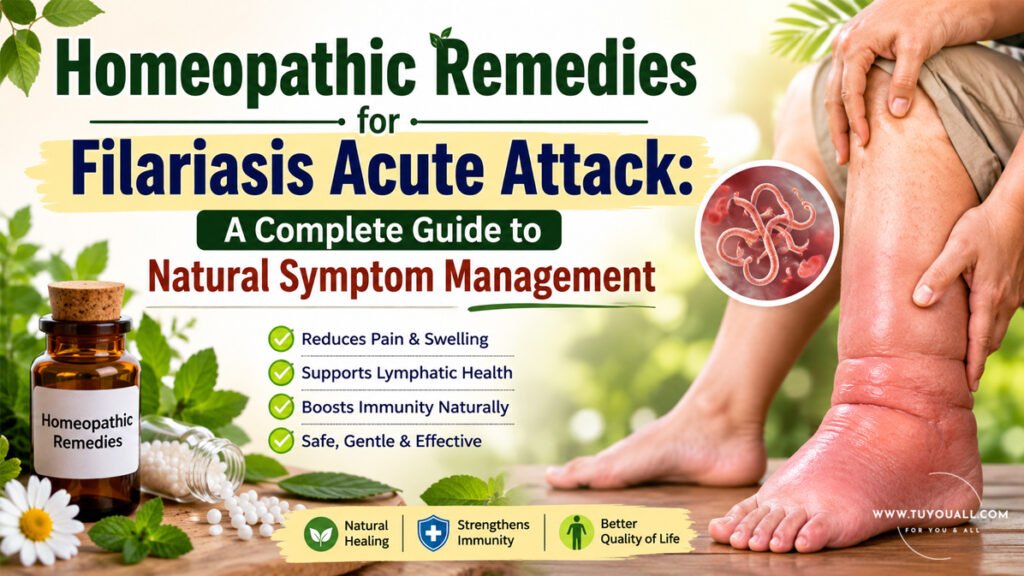
Discover Effective Homeopathic Remedies For Filariasis Acute Attacks. Learn About Natural Symptom Management, Key Medicines Like Apis Mellifica And Belladonna, And Lifestyle Tips.
Introduction: When Your Legs Swell and the Fever Won’t Quit
Have you ever woken up with a burning fever, a swollen limb, and lymph nodes so tender that even touching them hurts? If you live in a tropical region, these symptoms might point toward something more serious than a simple infection. Acute lymphatic filariasis — a mosquito-borne parasitic disease — affects over 120 million people worldwide, mostly in Asia, Africa, and parts of South America.
While conventional medicine focuses on antifilarial drugs, many patients seek homeopathic remedies for filariasis to manage painful acute episodes and support long-term recovery. Homeopathy doesn’t “kill” the parasite directly. Instead, it works with your body’s natural defenses to reduce inflammation, ease fever, and prevent complications like lymphedema and elephantiasis.
In this guide, you’ll learn exactly which homeopathic medicines match specific filariasis symptoms, how to use them safely, and what lifestyle changes actually help. No medical jargon. No confusing terms. Just clear, practical information you can use today.
What Is Acute Lymphatic Filariasis? (And Why It Matters)
Before diving into remedies, let’s understand what you’re dealing with. Filariasis is caused by thread-like parasitic worms (Wuchereria bancrofti, Brugia malayi, or Brugia timori) transmitted through mosquito bites. These worms settle in your lymphatic system — the body’s drainage network.
How an Acute Attack Happens
When adult worms trigger inflammation, your lymphatic vessels swell. Your body responds with:
- Acute fever that comes and goes
- Limb swelling (usually legs, sometimes arms or genitals)
- Painful, enlarged lymph nodes in the groin or armpits
- Red streaks along lymph vessels (lymphangitis)
- Recurrent episodes that worsen over time without proper care
For Example:
Imagine Rajesh, a 34-year-old farmer from rural India. Every monsoon season, his right leg swells to twice its size. He gets shaking chills, a temperature of 102°F, and can’t walk for days. These are classic signs of an acute filariasis attack — and exactly where homeopathic symptom management can provide real relief.
Diagnostic Tests You Should Know About
Getting the right diagnosis matters. If you suspect filariasis, your doctor may recommend these tests:
| Test Name | What It Does | When to Take It |
| CBC (Complete Blood Count) | Checks for eosinophilia (high white blood cells linked to parasites) | Anytime during symptoms |
| Peripheral Blood Smear | Looks for microfilariae (baby parasites) in blood | Night sample (between 10 PM – 2 AM) when parasites are most active |
| Filarial Antigen Test | Detects adult worm proteins in blood | Can be done anytime; highly accurate |
Important: These tests help confirm filariasis, but homeopathic treatment is selected based on your individual symptom picture — not just the lab report.
Top 7 Homeopathic Remedies for Filariasis Acute Attack
Homeopathy follows the principle of “like cures like.” Each remedy below matches a specific set of symptoms. Your homeopath will choose the one that fits your unique case.
1. Apis Mellifica 30 — For Burning, Stinging Edema
When to use it:
- Sudden, puffy swelling with a stinging, burning sensation
- Skin feels tight and shiny
- Symptoms improve with cold applications
- Restlessness and irritability
Dosage: 4 pills, four times daily (QID).
Why it works: Apis (made from honeybee venom) is the go-to remedy for inflammatory swelling with burning pain. Think of a bee sting — hot, red, swollen, better with cold. That’s the Apis picture.
2. Belladonna 30 — For Sudden, Hot Inflammation
When to use it:
- Sudden onset of symptoms
- Skin is bright red, hot, and throbbing
- High fever with a flushed face
- Sensitivity to touch, light, and noise
Dosage: 4 pills, four times daily (QID).
Why it works: Belladonna addresses acute inflammatory states where everything appears red, hot, and intense. It’s perfect for early-stage filariasis attacks before pus forms.
3. Bryonia 30 — For Pain That Worsens with Movement
When to use it:
- Swollen, painful lymph nodes that hurt more when you move
- Patient wants to lie completely still
- Irritable mood; prefers to be left alone
- Thirsty for large amounts of cold water
Dosage: 4 pills, three times daily (TDS).
Why it works: Bryonia is the “motion aggravation” remedy. If your limb pain spikes the moment you shift position, this medicine fits perfectly.
4. Mercurius Solubilis 30 — For Suppurative (Pus-Forming) Phase
When to use it:
- Lymph nodes become soft and ready to discharge pus
- Excessive sweating, especially at night
- Foul-smelling discharges or body odor
- Sensitivity to both heat and cold
Dosage: 4 pills, three times daily for 5 days (TDS × 5 days).
Why it works: Mercurius helps when infection sets in and the body tries to expel pus. It manages the septic phase while supporting natural drainage.
5. Pyrogenium 200 — For Septic Fever and Chills
When to use it:
- Septic fever that rises and falls intermittently
- Fever with chills and profuse sweating
- Feeling of internal heat with cold extremities
- Rapid pulse and weakness
Dosage: 4 pills, twice daily for 5 days (BD × 5 days).
Why it works: Pyrogenium is specifically indicated for blood poisoning and septic states. It’s invaluable when filariasis triggers recurrent fevers with a toxic, weak feeling.
6. Eupatorium Perfoliatum 30 — For Bone-Breaking Pain and Chills
When to use it:
- Intense body ache — feels like your bones are breaking
- Fever with shaking chills
- Nausea or vomiting during fever episodes
- Sweating provides slight relief
Dosage: 4 pills, four times daily (QID).
Why it works: Eupatorium is famous for “bone pain” fevers. If your filariasis attack feels like severe dengue or malaria with deep muscular and skeletal pain, this remedy brings significant comfort.
7. Hydrocotyle Q (Mother Tincture) — For Chronic Skin and Lymph Thickening
When to use it:
- Chronic skin thickening or hardening
- Lymphatic congestion that won’t resolve
- Early signs of lymphedema or elephantiasis
- Dry, leathery skin over swollen areas
Dosage: 10 drops, three times daily (TDS).
Why it works: Hydrocotyle (Gotu Kola) is a powerful botanical known for improving lymphatic circulation and softening fibrotic tissue. It’s your long-term ally for preventing permanent damage.
Quick Reference Table: Match Your Symptoms to the Right Remedy
| Remedy | Key Symptom | Best For | Dosage |
| Apis Mellifica 30 | Stinging, burning swelling; better with cold | Acute edema, hot inflammation | 4 pills QID |
| Belladonna 30 | Sudden red, hot, throbbing pain | Early acute attack | 4 pills QID |
| Bryonia 30 | Pain worse with motion; wants to stay still | Painful lymph nodes | 4 pills TDS |
| Mercurius Sol 30 | Pus formation; foul sweat; offensive odor | Suppurative phase | 4 pills TDS × 5 days |
| Pyrogenium 200 | Septic intermittent fever; chills | Recurrent fever episodes | 4 pills BD × 5 days |
| Eupatorium Perfoliatum 30 | Bone-breaking pain; fever with chills | Severe body ache | 4 pills QID |
| Hydrocotyle Q | Chronic skin/lymph thickening | Long-term lymphatic support | 10 drops TDS |
Essential Lifestyle Advice: What Actually Helps
Medicines alone won’t solve everything. These practical steps speed recovery and prevent complications:
Daily Habits That Make a Difference
- Elevate the swollen limb above heart level for 30 minutes, 3–4 times daily. Gravity helps drain excess fluid.
- Maintain strict hygiene — wash swollen areas daily, dry thoroughly, and treat any skin breaks immediately.
- Wear comfortable, loose clothing to avoid restricting lymph flow.
- Do gentle ankle and wrist exercises to keep lymph moving (but avoid strenuous activity during acute attacks).
- Stay hydrated — water supports your lymphatic system’s natural cleansing process.
What to Avoid
- Walking barefoot in contaminated water
- Tight socks, bands, or anything that compresses swollen limbs
- Ignoring early skin cracks or fungal infections
Complications You Must Watch For
Without proper management, filariasis can lead to serious long-term problems. Here’s what to monitor:
| Complication | Warning Signs | Prevention Strategy |
| Lymphedema | Persistent limb swelling that doesn’t reduce with elevation | Early homeopathic treatment + limb elevation + compression |
| Elephantiasis | Massive, hardened limb enlargement; thickened skin | Long-term lymphatic support (Hydrocotyle Q) + hygiene + exercise |
| Secondary Infection | Fever spikes, redness spreading, pus, foul odor | Prompt Mercurius/Pyrogenium use + medical attention for antibiotics if needed |
Remember: Homeopathy manages symptoms and supports recovery, but severe infections may require conventional antibiotics. Always consult a qualified healthcare provider for integrated care.
FAQ: Your Top Questions About Filariasis and Homeopathy
Q.1. Can homeopathy cure filariasis completely?
Homeopathy helps manage acute symptoms, reduce inflammation, and prevent complications like lymphedema. However, filariasis is a parasitic infection, and evidence-based antifilarial medications (like DEC or albendazole) are essential for eliminating the worms. The best approach is integrative — combining conventional treatment with homeopathic symptom support.
Q.2. How long does it take to see results with homeopathic remedies?
Most patients notice reduced pain and fever within 24–72 hours during an acute attack. Chronic swelling and skin thickening may take 2–6 weeks of consistent remedy use alongside lifestyle changes. Always review progress with your homeopath every 2 weeks.
Q.3. Is filariasis contagious from person to person?
No. Filariasis spreads only through mosquito bites — not through direct contact, sharing food, or touching an infected person. However, if you live in an endemic area, use mosquito nets, repellents, and wear long sleeves to prevent bites.
Q.4. What is the best time to get tested for filariasis?
The peripheral blood smear should be taken between 10 PM and 2 AM because microfilariae (baby parasites) circulate in the blood mainly at night. The filarial antigen test can be done at any time and is highly reliable.
Q.5. Can I take these homeopathic medicines alongside conventional drugs?
Yes. Homeopathic remedies generally do not interact with conventional antifilarial medications. However, inform both your homeopath and medical doctor about all treatments you’re using for coordinated care.
When to Seek Immediate Medical Help
While homeopathy supports recovery, do not delay emergency care if you experience:
- Sudden difficulty breathing
- Swelling that turns black or blue
- High fever (above 104°F / 40°C) that doesn’t respond to treatment
- Confusion, severe weakness, or fainting
- Rapidly spreading redness with intense pain
Final Thoughts: A Balanced Approach to Filariasis Care
Homeopathic remedies for filariasis offer a gentle, symptom-specific way to manage acute attacks and protect your lymphatic health over time. Remedies like Apis Mellifica, Belladonna, and Bryonia address the immediate crisis — burning swelling, sudden inflammation, and motion-sensitive pain. Meanwhile, Pyrogenium and Mercurius tackle the septic phases, and Hydrocotyle Q supports long-term tissue health.
However, the smartest strategy is integration, not isolation. Use homeopathy to ease symptoms and prevent complications. Use conventional medicine to eliminate the parasite. And use lifestyle habits — limb elevation, hygiene, and mosquito protection — to keep future attacks at bay.
If you’re struggling with recurrent filariasis episodes, consult a qualified homeopath who can individualize your remedy selection. Your body deserves a care plan that’s as unique as your symptoms.
Disclaimer:
This article is for educational purposes only and does not constitute medical advice. Filariasis is a serious parasitic disease requiring professional medical diagnosis and treatment. Always consult a licensed healthcare provider and a qualified homeopath before starting any new treatment protocol.