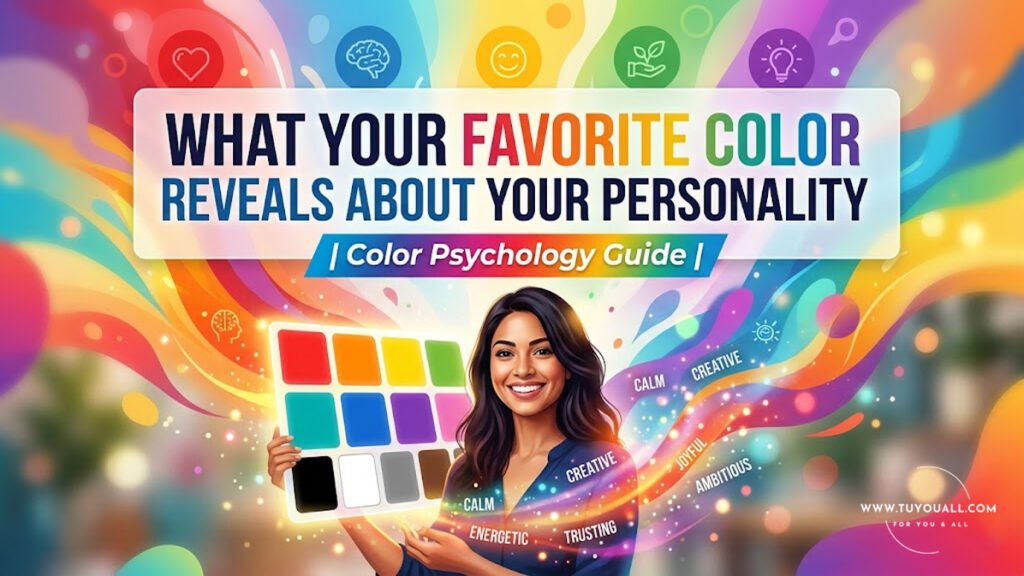
Discover What Your Favorite Color Says About Your Personality. Learn Color Psychology Secrets Brands Use To Influence Your Mind And Decisions.
Introduction: Have You Ever Wondered Why You’re Drawn to Certain Colors?
What if I told you that the color of your favorite t-shirt, the shade of your phone case, or even the hue of your bedroom walls isn’t just a random choice?
Color psychologist Angela Wright says that every single one of us has a favorite color. And here’s the kicker—that color reveals a lot about who we really are.
Big brands know this secret. That’s why they carefully pick colors for their logos, apps, and advertisements to psychologically track and influence us. For example, using red on a “Sale” button can boost clicks by up to 80%. Facebook, Friendster, and HP use blue in their logos to build trust in our minds.
Most people don’t know about color psychology. But psychologists say understanding it is super important. Why? Because it helps you understand your own personality. Plus, you can learn a lot about someone just by asking their favorite color!
In this guide, you’ll discover what your favorite color reveals about you. You’ll also learn how to apply color psychology in business, friendships, branding, and art. And importantly, you’ll know when to use which color—and when not to.
Let’s dive in.
What Is Color Psychology?
Color psychology is the study of how colors affect human behavior and emotions. Different colors trigger different feelings, memories, and reactions in our brains.
Brands and marketers have used this science for decades. They choose specific colors to:
- Build trust
- Create urgency
- Boost productivity
- Influence buying decisions
For example:
When you see a red “Buy Now” button, your brain feels a sense of urgency. When you see a blue bank logo, you feel safe and secure.
Now, let’s explore what each color says about your personality.
Black: The Color of Power and Mystery
Black is a color that instantly makes any environment feel serious and formal.
Psychologists say black represents power, control, and intelligence. That’s exactly why graduation gowns are black—it symbolizes achievement and authority.
What Black Says About You
If black is your favorite color, here’s what it reveals:
- You’re a serious person who takes life thoughtfully
- You’re highly ambitious and purpose-driven
- You’re sensitive and emotional deep down
- You maintain a mysterious personality
People who love black don’t overshare. They keep their private life private. That’s why in movies, mysterious characters often wear black suits and dresses. Reporters and businessmen also use black to present themselves as powerful and rich.
“Black represents power, control, and intelligence.” — Angela Wright
When to Use Black
| Situation | Why It Works |
| Job interviews | Shows authority and professionalism |
| Formal events | Creates a serious, elegant impression |
| Luxury branding | Signals premium quality |
Red: The Color of Passion and Attention
Red is one of the most important colors in psychology. It has two sides:
- Love, passion, and desire
- Power, aggression, and anger
What Red Says About You
If red is your favorite color, you likely have:
- A strong personality and intense emotions
- A love for adventure and risk-taking
- A desire to be the center of attention
Red lovers aren’t afraid to take risks. They put themselves out there without hesitation. Because red connects to blood and fire, it also boosts aggression.
Here’s why brands love red: it stands out from all other colors. That’s why big companies use red in phone notifications and advertisements—to grab your attention instantly.
“Red is the color that commands attention like no other.” — Angela Wright
When to Use Red
- Sales and promotions: Creates urgency
- Call-to-action buttons: Increases clicks
- Warning signs: Grabs immediate attention
When NOT to use red: In calming environments like bedrooms or meditation spaces.
Blue: The Color of Trust and Calm

Blue is often called the “corporate color.” It’s the most popular color worldwide.
Blue represents peace, trust, and reliability. That’s why major brands like Facebook, HP, and LinkedIn use it—they want you to trust them.
What Blue Says About You
If blue is your favorite color, you are:
- A calm and peaceful person
- Someone who values mental peace above all
- Trustworthy and loyal
- A person who minds their own business
Blue lovers don’t think badly of others. They just want peace everywhere they go. Everyone loves a blue personality because they stay in their lane and enjoy their work.
Pro tip: If you’re going for an interview or an important meeting, wear a blue shirt under a black suit. It makes you appear loyal and trustworthy.
“Blue creates an environment where you feel more calm, reliable, and productive.” — Angela Wright
When to Use Blue
| Situation | Effect |
| Corporate websites | Builds trust with customers |
| Healthcare branding | Creates a sense of safety |
| Office spaces | Boosts productivity and calm |
Green: The Color of Growth and Positivity
Green is the color of nature. It represents money, luck, and health.
Overall, green is a highly positive color. It’s the opposite of red—while red triggers strong emotions, green promotes safety and healing.
What Green Says About You
If green is your favorite color, you are:
- A positive person who sees the good in everything
- Someone who values health and well-being
- Likely to be helpful and supportive
Studies show that green light environments increase productivity and ability. On the flip side, red light environments decrease them. That’s why health and organic products are mostly promoted in green packaging.
“Green is the color of safety, healing, and positivity.” — Angela Wright
When to Use Green
- Health and wellness brands: Signals natural and safe products
- Financial services: Represents money and growth
- Study or work spaces: Boosts focus and productivity
Yellow: The Color of Happiness and Creativity

Just hearing the word “yellow” probably brings happy thoughts to your mind. Maybe it’s the warm sunshine on a cold day or a fresh mango in summer.
Yellow represents happiness, sunshine, and brightness.
What Yellow Says About You
If yellow is your favorite color, you are:
- A light-hearted and positive person
- Creative and full of ideas
- Someone with high self-esteem and confidence
Studies show that yellow reduces depression, boosts metabolism, and makes us feel good. Dr. Wright says yellow also helps with creativity and memory. Even a small touch of yellow can boost your confidence and self-esteem.
However, too much yellow can increase anxiety and nervousness. That’s why many people avoid wearing yellow clothes in professional settings.
“Yellow boosts creativity, memory, and self-esteem.” — Angela Wright
When to Use Yellow
| Situation | Effect |
| Creative workspaces | Sparks innovation and ideas |
| Children’s products | Feels fun and energetic |
| Call-to-action buttons | Grabs attention (use sparingly) |
When NOT to use yellow: In large amounts in bedrooms or places where you want to relax.
Purple: The Color of Royalty and Creativity
In ancient times, purple was the symbol of power, royalty, and luxury. Only rich and royal families could afford purple clothes.
Today, purple is known for creativity and artistic nature.
What Purple Says About You
If purple is your favorite color, you are:
- Emotional and sensitive
- Highly creative and humorous
- Always ready to help others
- Searching for emotional stability in life
Purple is a unique color made by mixing several colors together. People who love purple often have a true friend in art—they stay involved in some artistic work through good times and bad.
“Purple represents creativity, artistic nature, and emotional depth.” — Angela Wright
When to Use Purple
- Beauty and skincare brands: Signals luxury and creativity
- Artistic portfolios: Shows originality
- Spiritual or wellness spaces: Creates a mystical feel
Orange: The Color of Energy and Motivation
Do you see yourself as a productive person? Someone who finishes work on time and then enjoys peaceful rest? Then orange might be your color.
Orange represents energy, warmth, and enthusiasm.
What Orange Says About You
If orange is your favorite color, you are:
- Highly energetic and motivated
- Able to tackle difficult tasks with ease
- Connected to spirituality and meditation
A 2018 study published in Frontiers in Psychology found that orange color fans have very high energy levels. They feel more motivated, which helps them complete difficult tasks easily.
Orange is also linked to spiritual practices and meditation. Monks often wear orange to represent simplicity and a non-materialistic lifestyle.
Pro tip: Keep something orange around your workspace. It will make you feel more energetic and motivated.
“Orange fans have very high energy levels and feel more motivated.” — Research, Frontiers in Psychology (2018)
When to Use Orange
| Situation | Effect |
| Fitness brands | Boosts energy and enthusiasm |
| Productivity apps | Increases motivation |
| Food packaging | Stimulates appetite |
Pink: The Color of Love and Playfulness
Let’s bust a myth right now: pink is NOT just for girls. Many men love pink too, and that’s perfectly fine.
Pink defines love, care, and playfulness.
What Pink Says About You
If pink is your favorite color, you are:
- Romantic and caring
- Socially active and love talking to people
- Someone who does everything from the heart
Pink also represents innocence and sweetness. However, it can sometimes be seen as immature. So you might want to avoid it in very professional or formal settings.
“Pink defines love, care, and playfulness.” — Angela Wright
When to Use Pink
- Beauty and fashion brands: Appeals to a wide audience
- Romantic products: Signals love and care
- Children’s products: Feels soft and playful
When NOT to use pink: In corporate or serious business presentations.
White: The Color of Purity and Simplicity

White represents cleanliness, freedom, innocence, and simplicity.
What White Says About You
If white is your favorite color, you are:
- Pure at heart
- Someone who doesn’t think badly of others
- Always ready to help people
- Organized and neat
White connects our mind to space and openness. That’s why in the US, most people paint their homes and doors white—it makes the space feel bigger and cleaner.
Just like white things get dirty quickly and need extra cleaning, white lovers are very particular about cleanliness. They like to keep themselves and their surroundings neat and organized.
“White connects our mind to space, cleanliness, and simplicity.” — Angela Wright
When to Use White
| Situation | Effect |
| Minimalist websites | Creates a clean, modern look |
| Healthcare spaces | Signals hygiene and purity |
| Small rooms | Makes space feel larger |
Gray: The Color of Balance and Maturity

Gray is the color of balance. It’s neither dark nor light.
What Gray Says About You
If gray is your favorite color, you are:
- Introverted and don’t like being the center of attention
- Mature and practical
- Someone who prefers a simple, straightforward life
Gray lovers don’t see anything as completely right or completely wrong. They change their opinions with time and prefer to follow a set pattern. They live a secure, safe life without taking too many risks.
“Gray represents balance, maturity, and a practical approach to life.” — Angela Wright
When to Use Gray
- Professional websites: Looks sophisticated and modern
- Background colors: Makes other colors pop
- Tech products: Signals sleekness and innovation
How Brands Use Color Psychology to Influence You
Now that you know what colors say about personality, let’s see how brands use this knowledge:
| Brand | Color | Why They Use It |
| Blue | To build trust and reliability | |
| Coca-Cola | Red | To create excitement and urgency |
| Starbucks | Green | To signal health and nature |
| McDonald’s | Yellow & Red | Yellow for happiness, red for urgency |
| Apple | White/Silver | To show simplicity and innovation |
| Nike | Black | To represent power and determination |
For example:
Next time you see a “50% OFF” sale sign, notice the color. It’s probably red. That’s because red triggers urgency and makes you act fast.
Practical Tips: How to Apply Color Psychology in Your Life
1. In Your Wardrobe
- Job interview: Blue shirt + black suit = trustworthy and professional
- First date: Red or pink = passionate and romantic
- Creative meeting: Purple or yellow = innovative and original
2. In Your Home
- Bedroom: Blue or green = calm and restful sleep
- Home office: Orange or green = productivity and focus
- Living room: Yellow or white = open and welcoming
3. In Your Business
- Logo design: Choose colors that match your brand values
- Website buttons: Red for urgency, green for confirmation, blue for trust
- Product packaging: Green for organic, black for luxury, pink for beauty
Psychological Traits and Meanings of Favourite Colours
| Colour | Key Representations | Personality Traits | Behavioural Characteristics | Practical Uses or Benefits | Associated Emotions | Negative Associations (Inferred) |
| Red | Passion, love, lust, power, aggression, anger | Strong-willed, adventurous, risk-taker, highly emotional | Enjoys being the centre of attention, acts assertively, can exhibit aggression | Grabbing attention in adverts and notifications; increases sales by up to 80% | Excitement, passion, anger | Impulsiveness or hostility |
| Blue | Mental peace, trust, reliability, coolness, calmness | Calm, loyal, peace-loving, trustworthy | Focuses deeply on work, prefers tranquility, builds trust easily, keeps to themselves | Corporate branding (e.g. Facebook, HP) and interviews to project loyalty | Calmness, relaxation, productivity | Passivity or lack of emotion |
| Green | Nature, money, luck, health, safety | Positive, optimistic, security-oriented | Always looks for the good in situations, focuses on maintaining safety | Marketing health products; improves participant performance in studies | Positivity, relaxation, safety | Envy or stagnation |
| Yellow | Happiness, sunshine, laughter, creativity, memory | Light-hearted, positive, confident, high self-esteem | Acts creatively, stands out from others, possesses a high metabolism | Evoking freshness; boosting self-esteem and confidence in small doses | Happiness, joy, anxiety | Anxiety, nervousness, or instability |
| Purple | Power, royalty, luxury, creativity, artistic nature | Creative, artistic, emotional, sensitive, humorous | Seeks emotional stability, engages in artistic pursuits, helpful towards others | Signifying high-end products or creative brand identities | Creativity, sense of luxury | Loneliness or impracticality |
| Orange | Energy, warmth, enthusiasm, spirituality, simplicity | Productive, motivated, simple, non-materialistic | Finishes tasks on time, prefers peace after work, enjoys meditation | Increasing energy and motivation; assisting in completing difficult tasks | Motivation, energy, compassion | Overwhelming nature or lack of seriousness |
| Pink | Kindness, playfulness, calmness, peace | Sincere, socially active, values relationships | Acts affectionately, is talkative and social, does things from the heart | Creating soothing or playful atmospheres | Love, peace, kindness | Immaturity or lack of professional maturity |
| White | Purity, freedom, innocence, simplicity, cleanliness | Pure-hearted, organised, helpful, clean | Takes extra care of possessions, prefers neatness, helpful to others | Home decor to enlarge spaces; signifying new beginnings | Freedom, clarity | Sterility, coldness, or being overly critical |
| Black | Power, control, intelligence, seriousness | Ambitious, purposeful, serious, sensitive, emotional | Maintains a mysterious persona, prefers a private life, avoids oversharing | Graduation gowns and corporate branding for high-status imagery | Seriousness, sense of authority | Coldness, detachment, or excessive secrecy |
| Grey | Balance, maturity, security, neutrality | Introverted, mature, simple, straightforward | Avoids the centre of attention, risk-averse, changes opinions over time | Professional settings to demonstrate neutrality and balance | Stability, security | Indecisiveness, boredom, or lack of energy |
Frequently Asked Questions (FAQ)
Q.1. : What is the most trustworthy color?
Blue is considered the most trustworthy color. That’s why banks, social media platforms, and healthcare brands widely use it.
Q.2. :Can my favorite color change over time?
Yes, absolutely. Your favorite color can change based on your life experiences, mood, and personal growth. What you loved at 15 might not be what you love at 30.
Q.3. : Do brands really use color psychology?
Yes, big brands invest millions in color research. They know that the right color can increase sales, build trust, and create brand recognition.
Q.4. : Is there a “best” color for productivity?
Green and orange are great for productivity. Green keeps you calm and focused, while orange boosts energy and motivation.
Q.5. : Can colors affect my mood?
Definitely. Colors directly impact your emotions. Warm colors (red, orange, yellow) energize you. Cool colors (blue, green, purple) calm you down.
Conclusion: What Does Your Favorite Color Say About You?
Colors are more than just visual elements—they’re powerful psychological tools that shape our emotions, decisions, and identities.
Here’s a quick recap of what we learned:
- Black lovers are ambitious, mysterious, and private.
- Red fans are passionate, bold, and attention-seeking.
- Blue people are calm, trustworthy, and peace-loving.
- Green enthusiasts are positive, healthy, and helpful.
- Yellow lovers are creative, happy, and confident.
- Purple fans are artistic, emotional, and sensitive.
- Orange people are energetic, productive, and motivated.
- Pink lovers are romantic, caring, and playful.
- White fans are pure, organized, and helpful.
- Gray people are balanced, mature, and practical.
Understanding color psychology helps you in every area of life—from personal relationships to professional success. You can now choose colors that match your goals, whether you’re dressing for an interview, designing a room, or building a brand.