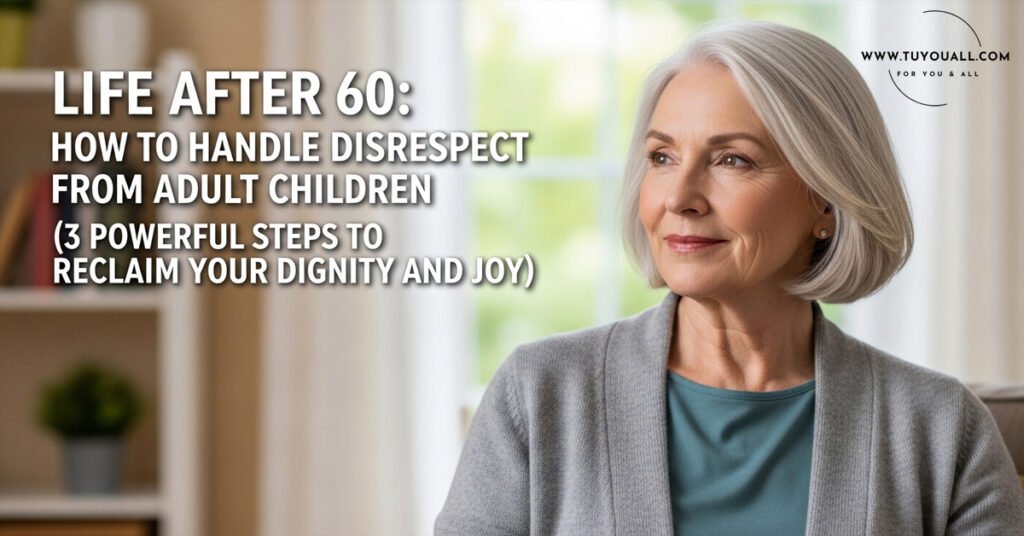
Feeling Ignored By Your Adult Children? Discover 3 Proven Steps For Life After 60 To Stop Chasing Respect, Find Inner Peace, And Rebuild Family Bonds With Grace.
Have you ever stared at your phone, waiting for a call that never comes?
You’re over 60. You’ve spent decades raising your children, sacrificing sleep, savings, and sometimes your own dreams. And now? They rarely call. They dismiss your advice. They seem too busy with their careers, their phones, their own lives to notice you.
That silence hurts. Deeply.
But what if I told you that the path to feeling respected again doesn’t run through confrontation, guilt, or begging for attention? What if the solution starts inside you?
This isn’t about giving up on your family. It’s about reclaiming your power. Research from the National Institutes of Health shows that seniors with a strong sense of purpose enjoy better mental health, lower stress, and even longer lives . Another study found that psychological factors like acceptance and perceived usefulness account for up to 50% of wellbeing in older adults—far more than health or money .
Today, I’m sharing a three-step journey that has helped countless seniors transform feelings of neglect into unshakable peace. These steps aren’t theories. They’re lived wisdom from real people who chose grace over bitterness.
Step 1: Accept Reality—Stop Chasing Respect After 60
Why Acceptance Is Your Superpower
Let’s start with a hard truth: You cannot control your children’s behavior. But you can control your response.
Mr. Sharma understood this. At 68, the retired schoolteacher watched his children drift away—too busy with careers and smartphones to return his calls. The pain was real. But instead of confrontation, he remembered an old lesson: “You cannot control others’ behavior, but you can control your response.”
He chose acceptance.
Here’s what acceptance is NOT:
- It is not giving up.
- It is not becoming passive or silent.
- It is not pretending the hurt doesn’t exist.
Here’s what acceptance IS:
- Acknowledging reality without adding extra suffering.
- Releasing the grip of unrealistic expectations.
- Choosing peace over the exhausting war of “shoulds.”
Think of acceptance like calm water in a storm. The winds may rage around you, but the water inside stays steady.
The Science Behind Letting Go
Research on Acceptance and Commitment Therapy (ACT) shows that embracing difficult feelings—rather than fighting them—reduces regret and cultivates meaning in later life . When you stop resisting reality, you free up enormous mental energy.
For Example:
Mr. Kumar, a retired engineer, spent his 65th birthday waiting for a call that never came. He tried reminding, complaining, even scolding. The result? More tension, more distance. When he finally paused and accepted that he couldn’t control his children’s actions, something shifted. The resentment lost its grip. He slept better. He smiled more.
Why Demanding Respect Backfires
Respect cannot be demanded. It must be earned through consistent calm behavior and dignity.
When you chase validation, you hand over the keys to your happiness. Every ignored text becomes a personal attack. Every missed visit feels like rejection. But when you stop chasing? You cultivate an internal sense of self-worth that no external behavior can shake.
This quiet strength becomes magnetic. Children often recognize it subconsciously. Respect begins to follow naturally—not because you asked for it, but because you stopped needing it.
“Acceptance doesn’t mean giving up. It means acknowledging what is, and then responding wisely.” —
Key Takeaway: Acceptance is the first step toward liberation from the emotional rollercoaster of unmet expectations.
Step 2: Shift Focus to Purposeful Living
Your Golden Years Are an Opportunity, Not an Ending
Once you accept reality, the next step is simple but transformative: Stop waiting for your children to make you happy. Build your own joy instead.
Life after 60 is not a time to sit idle or lament what’s missing. It’s an opportunity to rediscover yourself. Research from the Journal of the American Medical Association found that older adults with a strong sense of purpose are more likely to live longer and enjoy better physical health . Another study showed that purposeful living can even alleviate loneliness .
Mrs. Mehta understood this perfectly. At 72, the widow felt invisible to her busy children. Instead of complaining, she joined a senior citizens group, started mentoring neighborhood students, and began writing her memoirs. She became so radiant, so full of life, that her children couldn’t help but reconnect—not out of guilt, but out of genuine admiration and love.
The Joy List: Your Practical Starting Point
Purposeful living doesn’t require grand gestures. It requires consistent, meaningful action.
Create Your Joy List right now. Write down five activities that make your heart sing. Here are some ideas to get you started:
| Category | Activity Examples | Time Needed |
| Creative | Painting, writing, music, knitting | 30 min daily |
| Physical | Yoga, morning walks, swimming, gardening | 20-45 min daily |
| Social | Senior clubs, book groups, community events | 1-2x per week |
| Service | Volunteering, mentoring, helping neighbors | Flexible |
| Spiritual | Meditation, prayer, spiritual study | 15-30 min daily |
For Example:
Mr. Sharma didn’t just accept his situation—he transformed it. He dove into morning walks, spent hours in the local library reading books he’d always wanted to explore, and started volunteering. Slowly, he became calmer, happier, and more self-assured. And here’s the beautiful part: his children began noticing. They started calling more. Visiting more willingly. Treating him with the respect they had unintentionally forgotten.
The shift didn’t come from force. It came from calm, graceful action.
Why Purpose Is Magnetic
When you live purposefully, your happiness becomes self-sustaining. You’re no longer dependent on external validation to feel worthy. This independence is magnetic.
People—including your children—are naturally drawn to those who exude joy and contentment. Purposeful living transforms:
- Loneliness into opportunity
- Resentment into gratitude
- Emptiness into engagement
“Life after 60 is not a time to sit idle. It is an opportunity to rediscover ourselves, pursue passions, and contribute meaningfully.” —
Key Takeaway: Your joy is your responsibility. When you invest in activities that enrich your life, you stop being a victim of neglect and start being the author of your own happiness.
Step 3: Lead by Example Through Calm and Grace
The Silent Power of Emotional Mastery
The final principle is perhaps the most powerful: Actions speak louder than words. When children witness their parents responding to neglect with patience and composure, it teaches them a lesson no lecture can convey.
Mr. Sharma (yes, the same retired teacher) became a silent teacher. His calm demeanor, unwavering patience, and self-respect spoke volumes. Slowly, his children began reaching out—not from guilt, but because they were inspired by the grace with which he handled life.
This is emotional mastery. It’s choosing responses that elevate rather than degrade your spirit.
What Grace Looks Like in Real Life
Grace under pressure is magnetic. It not only restores relationships but also nurtures self-respect and inner peace.
Here’s how to practice it:
- Pause before reacting. When you feel the sting of disrespect, take three deep breaths. Ask: “Will anger improve this situation?”
- Speak with kindness. Even when hurt, choose words that heal rather than wound.
- Listen without judgment. Your children have their own pressures. Understanding doesn’t mean agreeing—it means opening a door.
- Engage without expecting immediate reciprocity. Give without keeping score.
- Maintain your dignity. Dress well. Eat well. Keep your home welcoming. Your environment shapes your mindset.
For Example:
Consider how water behaves. It doesn’t fight the rock. It flows around it, over time shaping even the hardest stone. Your calmness works the same way. It softens resistance without force.
The Long Game: Seeds Take Time to Grow
Children notice. Even if they don’t say it, your calmness, grace, and self-respect plant seeds in their hearts. They may not respond immediately. But seeds of respect, love, and understanding are being sown.
Research from Harvard’s School of Public Health confirms that older adults who maintain purpose and emotional balance show better physical agility and lower stress reactivity over time . Your inner work has real, measurable benefits.
“Calmness radiates strength. It demonstrates that your worth does not depend on anyone else’s behavior.” —
Key Takeaway: Leading by example is a spiritual practice. It transforms challenges into opportunities for growth, neglect into lessons in patience, and frustration into wisdom.
The Transformation: What Happens When You Apply These Three Steps
When you combine acceptance, purposeful living, and graceful leadership, something remarkable happens. You stop being a victim of circumstance and become the architect of your own peace.
| Before | After |
| Waiting anxiously for phone calls | Engaged in fulfilling daily activities |
| Feeling hurt by every ignored message | At peace with what you cannot control |
| Arguing and demanding attention | Radiating calm that draws people in |
| Bitterness and loneliness | Joy, gratitude, and meaningful connections |
| Dependent on others for happiness | Self-sustaining inner richness |
Your calmness becomes a magnet. Children notice. They return—not from guilt, but from genuine admiration.
Frequently Asked Questions (FAQ)
Q1: Does accepting reality mean I should stop communicating with my children entirely?
No. Acceptance means releasing the need to control their behavior while keeping communication channels open. You can still express love and set healthy boundaries without demanding validation.
Q2: What if my children never change, even after I follow these steps?
Then you will have still won. Why? Because your peace and joy will no longer depend on their actions. You will have built a rich, fulfilling life regardless. That is true freedom.
Q3: How long does it take to see changes in family relationships?
There’s no fixed timeline. Some parents notice shifts within weeks. For others, it takes months or even years. The key is consistency. Seeds grow in darkness before they sprout.
Q4: Is it selfish to focus on my own happiness instead of my family?
Not at all. Taking care of your emotional wellbeing is like putting on your own oxygen mask first. When you are whole, you have more genuine love to give—not resentment disguised as duty.
Q5: What if I feel too depressed or anxious to start any new activities?
Please seek professional support. Talking to a counselor who specializes in aging or life transitions can help you process these emotions and start feeling like yourself again . There is no shame in asking for help.
Conclusion: Your Joy Is Your Choice
Life after 60 is too precious to waste on bitterness. Instead of asking, “Why don’t my children respect me?” ask yourself, “How can I live fully, joyfully, and gracefully today?”
When you do that, respect follows naturally.
Remember these three pillars:
- Accept reality—Stop fighting what you cannot control.
- Shift to purpose—Build a life that fills your own cup.
- Lead with grace—Let your calmness teach what words cannot.
Mr. Sharma found his peace in library books and morning walks. Mrs. Mehta discovered radiance in mentoring and memoirs. Your path will be unique to you. But the destination is the same: unshakable joy.
So if you ever feel ignored, if you feel unappreciated, don’t react with anger or sadness. Breathe. Smile. And do something beautiful for yourself.
Your joy is your responsibility. Your peace is your power.
What is one small step you can take today to reclaim your peace? Share your thoughts in the comments below—we’d love to hear your journey.