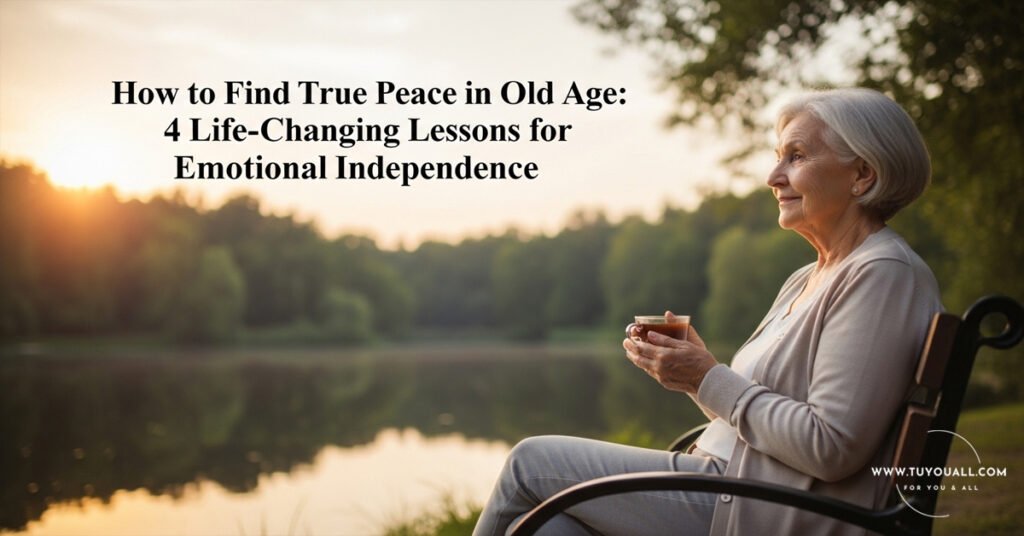
Discover How To Find True Peace In Old Age Through Inner Stillness, Acceptance, Purpose, And Faith. Practical Wisdom for Emotional Independence and Graceful Aging.
Have you ever wondered what keeps some elderly people calm and content, even when they live alone?
Most of us believe that happiness comes from the people around us. When we are young, we think our friends, partner, and children will stay with us forever. We imagine that as long as they are near, life will feel complete.
But life has other plans.
Children grow up and build their own lives. Friends get busy. Partners may pass away. Slowly, the house that once echoed with laughter becomes quieter. And then, a question many elders ask themselves at night becomes impossible to ignore:
“If everyone is gone, what will give me peace?”
Today, I want to share with you four things that give true peace in old age. These are not theories from a book. They are lessons from real life. I once met an old man at a railway station in Rishikesh. He was sitting peacefully, feeding birds. I asked him, “Baba, where are your children?” He smiled and said, “They are busy building their lives.” I asked, “Don’t you feel lonely?” He laughed softly and replied, “No. Loneliness comes when you expect someone to fill you. Peace comes when you learn to be full.”
That sentence stayed with me.
1. Inner Stillness: Your Greatest Companion
In old age, silence becomes louder than noise.
Your body slows down. Conversations reduce. The world that once demanded your attention suddenly moves on without waiting. At this stage of life, the greatest companion you can have is not another person — it is a peaceful mind.
What Is Inner Stillness?
Inner stillness is the ability to sit with yourself without feeling restless, afraid, or empty. Most people fear loneliness because they have never befriended their own thoughts. When external stimulation fades, unresolved emotions begin to surface:
- Regrets
- Guilt
- Anger
- Fear
These emotions start speaking all at once. That is why inner stillness is not a luxury in old age. It is a necessity.
A Real-Life Example
I once met a retired government officer who lived alone after his wife passed away. His children were settled abroad. Initially, he filled his days with television news and phone scrolling. Yet the more noise he consumed, the more anxious he felt.
One day, he decided to switch everything off for one hour each morning. He simply sat quietly, breathing deeply, observing his thoughts without fighting them. At first, it was uncomfortable. But slowly, something changed. His mind became calmer. His sleep improved. And his fear of being alone disappeared.
He told me: “I realized the problem was never loneliness. The problem was my untrained mind.”
How to Develop Inner Stillness
Inner stillness comes when you stop running away from silence and start entering it consciously. Many elderly people keep themselves constantly busy not because they enjoy activity, but because they are afraid of stillness. Yet stillness is where healing happens.
When the mind becomes calm:
- Memories stop hurting
- The future stops frightening you
- You begin to live in the present moment
You start appreciating simple things like sunlight, fresh air, and quiet mornings.
Practices that help:
- Meditation — even 10 minutes daily
- Mindful breathing
- Prayer or silent reflection
- Quiet walks in nature
These practices are not religious requirements. They are mental hygiene. Just as you bathe your body daily, you must clean your mind regularly.
A peaceful mind does not mean the absence of problems. It means the ability to remain balanced despite them. In old age, when people come less often and calls reduce, inner stillness becomes your shelter. It gives you emotional independence. You stop expecting others to entertain you or validate you. You start enjoying your own presence.
And when you can sit alone without feeling lonely, you have achieved something most people never do in their entire lifetime. That calm becomes your strength, your comfort, and your constant companion.
2. Acceptance of Life as It Is
One of the hardest lessons life teaches us is acceptance.
Not acceptance as surrender or helplessness. But acceptance as understanding reality without resistance.
Why Acceptance Matters in Old Age
In old age, suffering increases not because life becomes cruel, but because expectations remain unrealistic. People expect the same health, attention, respect, and control they once had. When life does not meet these expectations, frustration grows.
Acceptance is the bridge between what life gives and inner peace.
A Story of Transformation
I once met an elderly woman who had lost her husband and lived alone. Her children visited once or twice a year. When asked how she managed emotionally, she said something profound: “I stopped fighting what I cannot change.”
She explained that earlier she would cry, complain, and compare her life with others. Over time, she realized that resistance only doubled her pain. The day she accepted her circumstances, her suffering reduced dramatically. Her life did not change. But her experience of life did.
What Acceptance Really Means
Acceptance does not mean you stop caring. It means you stop arguing with reality.
Consider this comparison:
| Resistant Thinking | Accepting Thinking |
| “This should not have happened.” | “This is how life is right now.” |
| “They should behave differently.” | “People behave according to their priorities, not my expectations.” |
| “My body should be stronger.” | “My body is changing, and I can adapt.” |
The body will weaken. Energy will reduce. People will behave according to their priorities, not your expectations. When these truths are accepted deeply, emotional peace follows naturally.
The Freedom in Acceptance
There is immense freedom in acceptance. You conserve energy that would otherwise be wasted on resentment and complaint. That energy can then be used for gratitude, reflection, and calm living.
- Accepted pain hurts less than resisted pain.
- Accepted loneliness feels lighter than complained loneliness.
- Accepted limitations feel manageable.
Acceptance also brings humility. You stop seeing life as something that owes you comfort. Instead, you see life as a journey that gave you experiences, lessons, and growth. This perspective transforms disappointment into maturity.
Many elders who live peacefully are not those with perfect families. They are those with a realistic understanding of life. When acceptance becomes natural, comparison ends. You stop measuring your life against others. You realize every life unfolds differently:
- Some have companionship; some have solitude.
- Some have health; some have wisdom.
Peace comes when you respect your unique path. In old age, acceptance is not giving up on life. It is embracing life fully, exactly as it is. And when you accept life without bitterness, life responds with unexpected calm. That calm becomes the foundation of true peace.
3. A Sense of Purpose: Why You Still Matter
Purpose is not connected to age. It is connected to relevance.
Many people believe that retirement means withdrawal from meaningful contribution. In reality, the moment a person stops feeling useful, emotional decline begins.
Purpose vs. Productivity
In old age, purpose becomes more important than productivity. You may not be earning money, but you can still create value. Purpose gives you a reason to wake up with interest instead of obligation.
A Heart-warming Example
I once met an elderly man who volunteered at a small library in his neighborhood. He helped children with reading and homework every evening. When asked why he did this despite poor health, he smiled and said: “As long as someone waits for me, I feel alive.”
That feeling of being needed kept his spirit young, even when his body felt tired.
Purpose Does Not Need a Grand Stage
Purpose can take many forms:
- Caring for plants
- Teaching skills to younger people
- Mentoring neighbors or family members
- Writing memories or life stories
- Maintaining discipline in daily life
Purpose gives structure to time. Without it, days feel long and empty. With it, even simple routines feel fulfilling.
Why Purpose Protects Mental Health
In old age, people often feel invisible. Society celebrates youth and speed. Purpose counters this invisibility by reminding you that your presence still matters. When you focus on contributing instead of complaining, emotional strength increases. Purpose shifts attention away from personal loss toward collective benefit.
A sense of purpose also protects mental health. Depression often arises when people feel they no longer matter. Purpose restores dignity. It reminds you that:
- Experience has value
- Wisdom has relevance
- Compassion has impact
You may not run fast, but you understand deeply.
Purpose Reduces Dependence
When your happiness depends solely on people visiting or calling, disappointment becomes frequent. When your happiness depends on meaningful action, peace becomes internal. Purpose makes solitude productive instead of painful.
Importantly, purpose in old age should be gentle, not exhausting. It should energize, not pressure. The goal is not achievement, but contribution. Even listening patiently to someone can be a purpose. Even praying for others can be a purpose.
When life gives fewer roles, purpose creates a new identity. You stop seeing yourself as retired, lonely, or aging. You see yourself as useful, engaged, and alive. And when purpose guides your days, peace follows naturally — regardless of who is around you.
4. Relationship with a Higher Power: Trust Beyond the Temporary
As life progresses, one realization becomes unavoidable: everything temporary eventually leaves.
Relationships change. Possessions fade. Strength reduces. Even identity shifts with time. In old age, this realization becomes deeply personal. That is why a relationship with a higher power becomes a source of immense peace.
What This Relationship Really Means
This relationship is not about rituals alone. It is about trust, surrender, and inner connection.
A Story of Unshakable Faith
I once met an elderly widow who lived alone in a small house. She had limited income and declining health. Yet her face carried calm confidence. When asked where she found strength, she replied: “I stopped asking ‘why’ and started trusting ‘who.’ That trust freed me from fear.”
She believed that life was not random and that she was never truly alone.
The Emotional Security of Faith
Faith provides emotional security when worldly support weakens. People may forget. Circumstances may fail. But the sense that something greater is watching over you creates deep reassurance.
This connection reduces anxiety about the future. You stop trying to control outcomes and start accepting guidance.
Letting Go Through Faith
A relationship with a higher power also helps in letting go. Old age demands letting go of control, expectations, and attachment. Faith makes this process gentler. You learn to hand over worries instead of carrying them endlessly.
Surrender does not mean passivity. It means inner relief.
This connection also brings forgiveness. As people reflect on life, regrets surface. Faith teaches compassion toward oneself. It reminds you that mistakes were part of growth. Forgiveness lightens emotional burdens accumulated over decades.
Importantly, faith does not require perfection. It requires sincerity. Even simple prayer, gratitude, or silent remembrance creates emotional grounding. This grounding becomes a refuge during illness, loss, and uncertainty.
Faith Transforms Your Inner Dialogue
In old age, when conversations reduce, inner dialogue increases. Faith transforms that dialogue from fear to reassurance.
Instead of asking: “What will happen to me?”
You begin to feel: “Whatever happens, I will be supported.”
A relationship with the higher power brings perspective. You stop seeing life only through personal achievements or losses. You see it as a journey of learning. This broader view reduces bitterness and increases acceptance.
Ultimately, faith provides companionship beyond physical presence. When everyone leaves, this connection remains. It does not age, weaken, or forget. And when a person feels held by something greater than themselves, peace becomes natural, deep, and lasting.
FAQ: Common Questions About Finding Peace in Old Age
1. Can you really be happy living alone in old age?
Yes, absolutely. Happiness in old age does not depend on having people around you constantly. It depends on inner stillness, acceptance, purpose, and faith. Many elders who live alone report deep contentment once they stop expecting others to fill their emotional needs and start building peace from within.
2. What if I have never practiced meditation or prayer before? Is it too late to start?
It is never too late. Inner stillness practices like meditation, mindful breathing, or prayer do not require prior experience. Start with just 5–10 minutes a day. The goal is not perfection. It is consistency. Even small steps toward quieting the mind bring noticeable peace over time.
3. How do I find purpose if I can no longer work or move around easily?
Purpose does not require physical strength or a job. It only requires sincere intention. You can find purpose in listening to others, sharing wisdom, caring for a plant, writing letters, or even maintaining a daily routine. The key is feeling that your presence still matters to someone or something.
4. Does acceptance mean I should stop trying to improve my situation?
No. Acceptance is not resignation. It is understanding reality without resistance. You can still take positive steps for your health, relationships, or living situation. But you stop wasting energy fighting things you cannot change. This frees you to focus on what you can control.
5. Do I need to follow a specific religion to feel spiritually peaceful?
Not at all. A relationship with a higher power is personal. It can be rooted in any faith tradition, or simply in a sense of trust in life, nature, or the universe. What matters is the sincerity of your connection, not the label you give it.
Summary: Your Roadmap to True Peace in Old Age
Finding true peace in old age is not about having the perfect circumstances. It is about building the right inner foundation. Here are the four pillars once more:
| Pillar | Core Idea | Key Practice |
| Inner Stillness | Befriend silence, not fear it | Daily meditation or quiet reflection |
| Acceptance | Stop fighting what you cannot change | Replace “should” with “is” |
| Purpose | Feel needed and relevant | Contribute gently, in any form |
| Higher Power | Trust something greater than yourself | Prayer, gratitude, or silent trust |
These four elements transform the solitude of old age from a source of loneliness into a powerful state of emotional independence and grace.
Conclusion: The Peace That Stays
True peace in old age is not found in crowded rooms or busy schedules. It is found in the quiet moments when you sit with yourself and feel complete. It grows when you accept life as it is, not as you wish it to be. It deepens when you discover that your life still has meaning and value. And it becomes unshakable when you trust that you are never truly alone.
The old man at the railway station taught me something I will never forget: Loneliness comes when you expect someone to fill you. Peace comes when you learn to be full.
You do not need more people. You need a fuller self.
Start today. Sit in silence for five minutes. Accept one thing you have been resisting. Find one small way to be useful. And whisper a word of trust to whatever you believe holds this world together.
What is one small step you can take today to build more peace in your own life, or in the life of an elder you love?