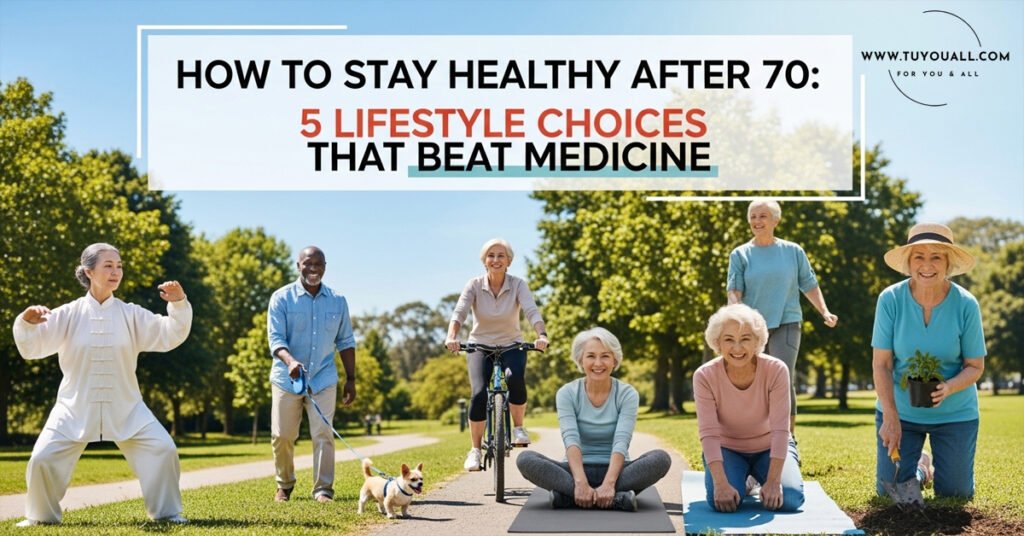
Discover How To Stay Healthy After 70 With 5 Proven Lifestyle Choices. Learn Why Movement, Food, And Purpose Outperform Pills For Senior Wellness.
What if I told you that the secret to a vibrant life after 70 isn’t found in a pharmacy?
Most people assume that turning 70 means a future filled with pill bottles, hospital visits, and slowing down. But I have met seniors—some 80, even 90 years old—who are full of life, laughter, and energy. Their secret? It isn’t medicine. It’s lifestyle choices.
Yes, the small daily habits we choose matter more than any pill. In this guide, I will share five proven lifestyle choices that show you exactly how to stay healthy after 70. These aren’t expensive therapies or complicated routines. They are simple, joyful habits that protect your body, sharpen your mind, and fill your heart with purpose.
1. Movement Is Magic: Why Daily Activity Beats Pills
After 70, many people believe it is time to sit back and let life happen. But the truth is simple: movement is magic. It keeps your body alive, your heart strong, and your mind alert.
The Science of Staying Active
Movement keeps your muscles strong, your joints flexible, and your heart pumping. Even a short walk improves circulation, reduces inflammation, and keeps your bones strong. But the benefits go beyond the physical.
When you move, your brain releases endorphins—your body’s natural “happiness hormones.” These chemicals make you feel alive and joyful every single day.
For Example:
I met Romesh Uncle, who was 75 at the time. Every morning, he walked around his neighborhood for half an hour. But he didn’t stop there. He did light stretches, some yoga, and then danced with his grandchildren. He told me, “I don’t take my age seriously; I take my energy seriously.”—
Romesh Uncle’s doctor was amazed. While most of his peers needed multiple medications for blood pressure and joints, Romesh Uncle was healthier than many 50-year-olds. Why? Because he moved.
Simple Ways to Move Every Day
You don’t need gym memberships or fancy equipment. Here are easy ways to build an active aging lifestyle:
- Walk in the morning sun for 20 minutes
- Dance in your living room to your favorite music
- Stretch your arms and legs while watching TV
- Play with grandchildren in the park
- Do light yoga or tai chi for balance
Movement teaches you to respect your body. It reminds you that age is just a number. Your spirit remains young when your body keeps moving. People who move are more confident, independent, and mentally resilient.
Key Takeaway: Medicine can help repair, but movement prevents deterioration. Move for life, not against it.
2. Food Is Your True Medicine: Eat to Heal After 70
Now let’s talk about something we all love: food. After 70, what you eat becomes your medicine. Every meal is an opportunity to heal, energize, and protect your body.
Build Your Plate Like a Pharmacy
Modern medicine can manage symptoms, but it cannot teach your body to heal itself the way the right food does. A healthy diet for seniors should include:
| Food Group | Benefits for Seniors | Best Examples |
| Vegetables | Antioxidants that fight cell damage | Spinach, carrots, broccoli |
| Lentils & Beans | Plant-based protein for muscle strength | Moong dal, chickpeas, kidney beans |
| Whole Grains | Steady energy and fiber for digestion | Oats, brown rice, whole wheat |
| Fruits | Essential vitamins and natural sweetness | Apples, berries, oranges |
| Nuts & Seeds | Healthy fats for brain and heart health | Almonds, walnuts, flaxseeds |
Avoid processed foods and sugary snacks. Think of it this way: eating junk is like dumping toxic garbage into your body. Eating wholesome food is like watering a garden. What you feed today blooms tomorrow.
For Example:
I met Salah Auntie, age 78, who had been diagnosed with high cholesterol. Most people would panic and reach for pills. But Salah Auntie made a small, conscious change. She cooked simple meals with fresh vegetables, lentils, whole grains, and fruits. She avoided processed foods and sugary snacks. Within months, her cholesterol improved, her energy returned, and her overall happiness increased.
The Power of Mindful Eating
What you eat matters, but how you eat matters just as much.
For Example:
I met Mr. Desai, an 80-year-old gentleman, who would sit quietly before his meals, thank the food, and eat slowly. He said, “When I savor my food, my body absorbs it better, and my mind feels peaceful.”—
The science behind this is beautiful. Slow, mindful eating reduces stress, aids digestion, and enhances immunity. After 70, many diseases—diabetes, heart problems, and obesity—can be managed or even prevented with the right diet.
Key Takeaway: Your kitchen is your pharmacy. Treat food as medicine and life as a gift.
3. Mental Fitness Over Medicines: Keep Your Brain Young
Medicine can treat many physical ailments, but it cannot restore curiosity, creativity, or mental clarity. After 70, keeping your brain active is critical for overall wellness.
Daily Habits for a Sharp Mind
Mental activity is like watering a plant. If you stop, it withers. If you keep it nourished, it blossoms. Here are simple ways to maintain mental fitness for elderly adults:
- Read every day—books, newspapers, or magazines
- Solve puzzles—crosswords, Sudoku, or brain teasers
- Write letters to grandchildren or journal your memories
- Learn something new—a language, instrument, or hobby
- Recall old memories and share stories with friends
For Example:
I met Mr. Kapoor, a retired teacher of 82 years, whose mind was as sharp as a 20-year-old. I asked him his secret. He said, “I read every day, solve puzzles, write letters to my grandchildren, and even learn new things. My brain feels alive, and I feel alive.”—
There is a powerful ripple effect. Mental activity reduces the risk of memory loss, improves problem-solving skills, and keeps your emotional health strong.
Emotional Wellness Through Mindfulness
Mental fitness is not just intellectual. It is emotional, too. Practices like meditation, gratitude journaling, and mindfulness sharpen focus, reduce anxiety, and bring peace of mind.
For Example:
I met a group of elderly friends who would meet twice a week for storytelling sessions. They shared personal experiences, discussed books, and debated philosophy. They were happier, healthier, and more connected than most people half their age. Their secret? Mental engagement.
Technology can also help. Learning to use a smartphone, connecting with friends online, or exploring documentaries keeps the brain resilient.
Key Takeaway: Pills may help your body, but mental fitness rejuvenates your life. A sharp mind is more powerful than any prescription.
4. Purpose Keeps You Alive: Find Your Reason to Wake Up
Perhaps the most powerful medicine of all is purpose. Without it, life is just passing time. With it, every morning feels like a gift.
Why Meaning Matters More Than Medicine
Purpose gives meaning to life after 70. It is not enough to exist; you must thrive. Whether it is helping others, mentoring younger people, writing your memoirs, or gardening, having something to live for keeps depression away, prevents loneliness, and gives you mental and emotional strength.
Science even shows that people with purpose live longer and healthier lives.
For Example:
I met Shanti Auntie, age 79, who volunteers at a local old age home every morning. She wakes up with energy and joy. When I asked her why, she said, “I have a reason to wake up. A purpose keeps me alive. Without it, life is just passing time.”—
Small Acts, Big Impact
Purpose also gives clarity. You stop worrying about trivial problems and start focusing on what truly matters. Even small acts—a kind word, helping a neighbor, sharing knowledge—become monumental.
For Example:
I met another gentleman, age 82, who spends his mornings mentoring young entrepreneurs. He said, “I don’t just teach them business; I teach them life. And in return, I feel energized, wanted, and alive.”—
Purpose is invisible medicine. It heals faster than pills, energizes faster than coffee, and strengthens faster than exercise. It creates a ripple effect, impacting your community and inspiring those around you.
Key Takeaway: Life after 70 is not a countdown. It is a chance to leave a legacy, to love without fear, and to live fully.
5. Relationships Are Better Than Any Medicine
Finally, let’s talk about relationships. I have seen countless elderly people who are physically healthy but deeply lonely. Loneliness is more dangerous than any disease. But the opposite is equally true: love, friendship, and social connection are incredibly protective.
The Science of Social Connection
Relationships release oxytocin, reduce stress, and even prevent heart problems. The human heart thrives on connection. After 70, family, friends, and community become essential medicines.
For Example:
I met a couple married for 55 years. They laughed together, argued together, and supported each other. They told me, “We are healthy because we have each other, and we never stop nurturing our bond.”—
Even friendships matter deeply.
For Example:
I met a group of seniors who met weekly for tea, discussions, and storytelling. Their mental health was vibrant, and their physical health was robust. Their secret? They invested in relationships.
Building Your Circle of Care
Here are simple ways to strengthen your social connections:
- Call a friend just to check in
- Hug your grandchildren every chance you get
- Share memories with your spouse over coffee
- Join a club—book clubs, walking groups, or volunteer circles
- Attend community events at local centers or places of worship
Social interactions maintain emotional health, improve cognitive function, and increase life satisfaction. Pills can fix symptoms, but relationships fix the heart. They heal emotional wounds, make you feel loved, and bring joy every single day.
Key Takeaway: Love deeply, nurture bonds, and never underestimate the healing power of human connection.
Frequently Asked Questions (FAQ)
Q.1. What is the most important habit for staying healthy after 70?
Ans. There is no single “most important” habit because wellness works best when habits work together. However, daily movement is often the foundation. It improves physical strength, mental clarity, and emotional well-being all at once.
Q.2. Can lifestyle choices really replace medication after 70?
Ans. Lifestyle choices do not always replace necessary medication, but they often reduce the need for it. Always consult your doctor before changing any prescriptions. Think of lifestyle as your first line of defense and medicine as backup support.
Q.3. What foods should seniors avoid to stay healthy?
Ans. Seniors should limit processed foods, sugary snacks, excessive salt, and fried items. These foods increase inflammation, raise blood pressure, and contribute to chronic diseases like diabetes and heart disease.
Q.4. How can seniors improve mental fitness at home?
Ans. Seniors can read books, solve puzzles, learn new skills online, practice meditation, and stay socially connected through phone or video calls. Even 15 minutes of brain activity daily makes a significant difference.
Q.5. Why do relationships matter so much for senior health?
Ans. Strong relationships reduce stress hormones, boost immunity, and lower the risk of depression and cognitive decline. Social connection is scientifically proven to increase lifespan and quality of life.
Conclusion
So, my friends, remember this: how to stay healthy after 70 comes down to five powerful choices—movement, mindful food, mental fitness, purpose, and relationships. Medicine may manage illness, but these choices create wellness, joy, and vitality.
Life after 70 is not about surviving. It is about thriving. Move your body. Nourish it with wholesome food. Keep your mind curious and sharp. Live with purpose that excites you every morning. And surround yourself with people who make you feel loved and valued.
Move. Eat. Think. Love. Live with purpose. And above all, cherish every single moment. Because life is not about adding years to your life, but adding life to your years.
What is one small habit you will start today to add more life to your years? Share your thoughts in the comments below—I would love to hear your story.