Discover why your gut health depends on fiber rich foods and fermented foods. Learn from Dr. Pal and Chef Venkatesh Bhat how to balance your gut bacteria naturally.
Have you ever opened a food delivery app at midnight and ordered a pizza you didn’t actually need? You promised yourself you’d eat salad, but somehow your fingers tapped “add to cart” for biryani instead. Here’s the shocking truth: it might not be your fault. According to Dr. Palaniappan, a leading gastroenterologist, the culprit could be the trillions of tiny organisms living in your intestines.
In a fascinating conversation with celebrated South Indian Chef Venkatesh Bhat, Dr. Pal revealed something that sounds like science fiction: your gut is home to 100 trillion bacteria, and these microscopic creatures are either working to keep you healthy or slowly making you sick. If you’ve been struggling with weight, cravings, or digestive issues, this guide will change everything you thought you knew about gut health.
The 100 Trillion Guests Living in Your Gut
Let’s start with a mind-blowing fact. Your body contains approximately 100 trillion individual bacteria. If you lined them all up, they would stretch from Earth to the Moon. Even more amazing? Your bacterial fingerprint is completely unique—no one on Earth has the same gut bacteria as you.
“Every bacteria is a life,” Dr. Pal explained in the conversation. “We think we are the hosts, but really, we are ecosystems walking around.”
These bacteria arrived on Earth long before humans. If Earth’s entire history were compressed into a single 24-hour day, bacteria showed up at 4:00 AM, while humans only appeared at 11:50 PM—just ten minutes before midnight. We’ve been sharing our bodies with them since birth.
For example, when a baby travels through the birth canal, it swallows bacteria from the mother. This is the baby’s first “immunization”—the foundation of its digestive health for life. As Dr. Pal noted, “If we don’t preserve those bacteria, that baby becomes like me!” he joked, referring to his own past health struggles.
Good Bacteria vs. Bad Bacteria: The War Inside You
Inside your intestines, a constant battle rages between good and bad bacteria. Think of it like a tug-of-war. When the good guys win, you feel energetic, your skin glows, and your immune system fights off diseases. When the bad guys take over, you face serious trouble.
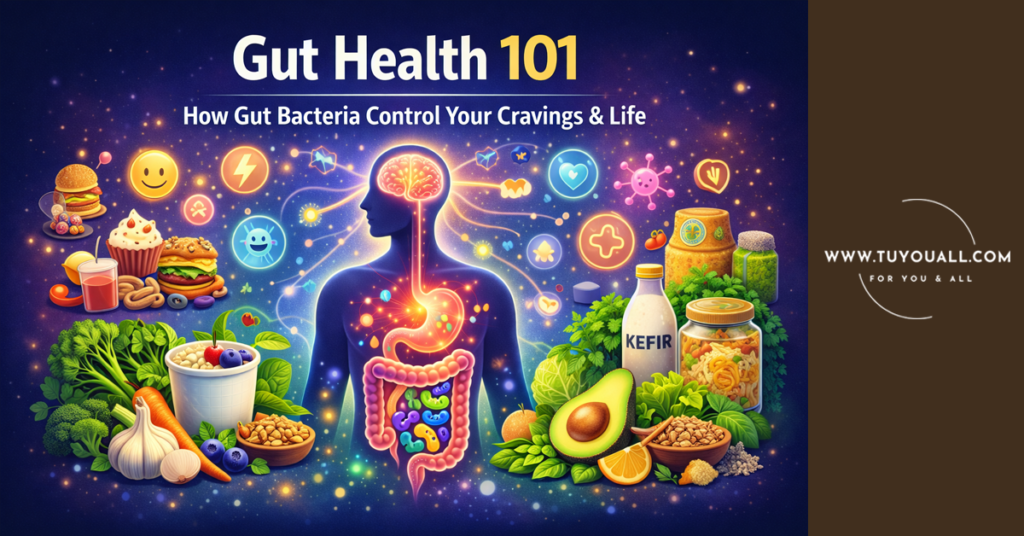
Bad bacteria love junk food. Pizza, white bread, sugary drinks, and processed snacks are like five-star meals for harmful gut microbes. But here’s the creepy part: these bad bacteria can actually control your brain.
“They secrete a hormone called dopamine,” Dr. Pal explained. “This hormone creates cravings. You think you want pizza, but it’s actually the bad bacteria ordering it for you.”
Chef Bhat admitted his own weakness: “When I see biryani or Gobi Manchurian, I can’t stop. I used to eat with such strong emotion.” This dopamine-driven cycle keeps you reaching for unhealthy foods, which feeds the bad bacteria, which makes you crave more junk—a vicious circle that destroys your gut bacteria balance.
The consequences go beyond weight gain. Dr. Pal warned that an imbalance can lead to:
- Diabetes
- Heart disease
- Obesity
- Even cancer
Fiber Rich Foods: The Only Language Good Bacteria Understand
So how do you feed the good guys? The answer is surprisingly simple: fiber.
“Good bacteria hate pizza,” Dr. Pal stated bluntly. “They need fiber.”
Here’s the science: when you eat simple sugars like white bread or biscuits, your small intestine absorbs everything quickly. The food never reaches your large intestine, where most of your gut bacteria live. Your good microbes starve while the bad ones thrive on the sugar rush.
Fiber acts differently. It passes through your small intestine undigested and reaches your large intestine, where good bacteria feast on it. This process creates compounds that reduce inflammation, regulate blood sugar, and even improve your mood.
How Much Fiber Do You Actually Need?
According to Dr. Pal, the daily targets are:
- Women: 25 grams per day
- Men: 35 grams per day
Sounds easy? Consider this: one cup of cooked vegetables contains only 3-4 grams of fiber. One apple has about 3 grams. A plate of white rice? Less than 0.5 grams.
For example, if you eat a typical meal of chicken biryani made with white basmati rice, you’re getting almost zero fiber. The chicken provides protein, but “there is no fiber in non-veg food,” Dr. Pal clarified. “That’s muscle fiber, not dietary fiber.”
To hit your daily goal, you need a variety of fiber rich foods:
- Banana stem (a South Indian superfood)
- Millets (foxtail, barnyard, little millet)
- Legumes (rajma, chana dal)
- Vegetables (sweet potatoes, colocasia, spinach)
- Fruits (raspberries are particularly high)
Fermented Foods: Your Gut’s Recovery Team
If fiber is the fuel, fermented foods are the reinforcements. These foods contain live beneficial bacteria that replenish your gut army, especially after you’ve taken antibiotics (which kill both good and bad bacteria).
Chef Bhat, despite being a non-vegetarian chef, follows what he calls the “3F Rule”:
- Fiber (vegetables and fruits)
- Fermented foods
- Fun (enjoying life without digestive distress)
“Fermented food is not related to fiber,” Dr. Pal clarified, “but it’s good for bacteria.”
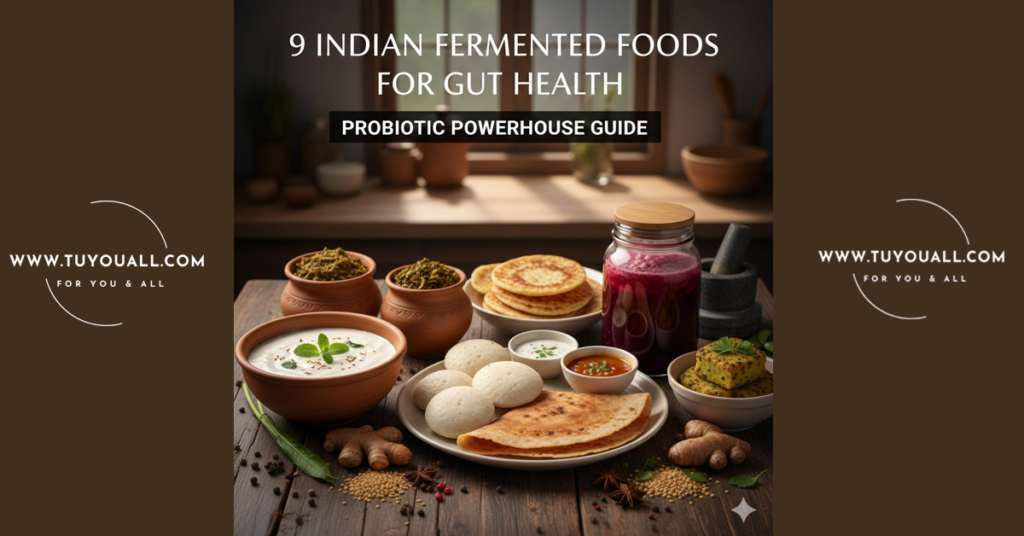
India is actually a treasure trove of fermented foods. Unlike Western countries where people pay premium prices for probiotic pills, Indian kitchens have been culturing healthy gut bacteria for centuries:
- Curd (yogurt): The most accessible source of probiotics
- Idli and Dosa: Fermented rice and lentil batters that are low calorie, low carb, and high in beneficial bacteria
- Appam: Fermented rice pancakes from Kerala
- Dhokla: Fermented chickpea batter from Gujarat
- Kanji: Fermented black carrot drink from Punjab
- Enduri Pitha: Fermented dish from Odisha
“Idli is super good for health,” Dr. Pal emphasized. “It’s low calorie, low carb, high fiber, and fermented.”
Chef Bhat’s Wake-Up Call: When Your Gut Fights Back
Sometimes it takes a health scare to wake us up. Chef Venkatesh Bhat shared his personal story as a cautionary tale about ignoring digestive health.
For 20 years, he ate dinner at 1:00 AM after his restaurant closed. He skipped regular meals, ate processed foods, and ignored his body’s signals. The result? A medical nightmare:
- Gallbladder removal: His gallbladder turned gangrenous (completely black) from stones and infection
- Diverticulitis: Pockets formed in his intestine where waste collected, causing dangerous infections
- Fatty liver: Without a gallbladder to store bile, his liver worked overtime
“The doctor showed me my gallbladder after removal,” Chef Bhat recalled. “He said, ‘Look at your gallbladder. Whatever food you have eaten, your gallbladder has become like that.'”
Even after surgery, he experienced “phantom pain”—his brain still sent pain signals when he ate trigger foods like roasted peanuts. It took him 18 months to learn what his body could tolerate.
His advice now? “Eat on time. Eat fiber. Don’t wait for the doctor to scare you.”
The Poop Check: How to Know Who’s Winning
How can you tell if your gut bacteria balance is healthy? Dr. Pal has a simple, if uncomfortable, answer: look at your stool.
“Your stool should be soft, silky, and smooth,” he said, comparing it to a chocolate advertisement. While the comparison might make you laugh, the message is serious.
The “Three S” Rule for Healthy Stool:
- Soft: Not hard or pellet-like
- Silky: Easy to pass without straining
- Smoothy: Well-formed, not liquid
Frequency matters too. Traditional Indian wisdom suggests you should “poop twice daily” for optimal health. If you’re going days without a bowel movement, or if your stool is consistently hard, your bad bacteria are winning.
Chef Bhat learned this the hard way. After his gallbladder surgery, doctors wouldn’t discharge him until he confirmed: “Did you have evacuation of the bowels?” When he finally said yes, “Ten junior doctors started shouting ‘Yeah!'” he laughed. “The senior doctor said, ‘Shit! We cannot extend him for two days in the hospital.'”
Cookware Matters: The Hidden Danger in Your Kitchen
Here’s something nobody talks about: your pots and pans might be poisoning you. Chef Bhat, who recently launched his own cookware line (VBDS), explained why digestive health starts before food even hits your plate.
The Problem with Modern Cookware:
- Aluminum: When heated, aluminum leaches into food. “Half the hotels cook in aluminum vessels,” Chef Bhat warned. “That’s why we insist not to eat hotel food.”
- Non-stick coatings: Once scratched, these release microplastics and carcinogenic particles into your food. “I don’t care if it causes cancer or not,” Chef Bhat stated. “I know nothing good is in it.”
Better Alternatives:
| Cookware Material | Benefit |
| Iron (Cast Iron) | Adds iron to food over time, excellent heat retention |
| Clay/Mud Pots | Natural taste enhancement, alkaline properties |
| Bronze (Kansa) | Traditional Ayurvedic recommendation, improves digestion |
| Tri-ply Steel | Even heating, durable, no chemical coating |
“The vessel is the catalyst,” Chef Bhat explained. “If you cook in a thin vessel and keep burning the food until it becomes carbon, that’s not cooking—that’s exploiting the ingredient.”
Can You Really Change Your Gut Health at Any Age?
If you’ve spent 50 years eating poorly, is it too late? Absolutely not.
“Everybody can change it,” Dr. Pal assured. “Even at the age of 70.”
The key is the “Fiber First” Hack:
- Eat your fiber-rich foods (vegetables, lentils, fruits) before you eat anything else
- The fiber fills you up, making it physically difficult to overeat junk food
- You naturally eat less biryani or pizza because your stomach is already full
For example, if you know you’re going to a party where you’ll eat biryani, eat a bowl of banana stem curry or millet salad first. “You can eat biryani after fiber,” Dr. Pal said, “but you can’t eat full stomach.”
This simple switch—prioritizing fiber rich foods and fermented foods—can reverse years of damage. As Chef Bhat discovered, “Even our gut bacteria will tell us to go to the healthy restaurant” once you retrain them.
Frequently Asked Questions
Q: Can I just take a fiber supplement instead of eating vegetables? A: While psyllium husk supplements exist, Dr. Pal recommends getting fiber from whole foods. “You can put fiber in a pill,” he said, “but we cannot replace the natural fiber which is present in banana stem.” Whole foods provide additional nutrients and feed bacteria better than isolated fiber.
Q: I eat chicken and fish daily. Is that bad for my gut? A: Not bad, but incomplete. “Chicken is a good source of protein,” Dr. Pal clarified, “but no fiber.” You must pair non-vegetarian meals with plenty of vegetables to feed your good gut bacteria.
Q: My child is only 8 years old. Is it too early to worry about gut health? A: Actually, the first 10 years are critical. “If we build up good bacteria in the first 10 years,” Dr. Pal explained, “we will not get diabetes later.” Childhood obesity and early puberty (now happening at age 8-9 instead of 11-12) are directly linked to poor gut bacteria balance.
Q: Can gut bacteria really make me depressed or happy? A: Yes. Bad bacteria secrete hormones that affect your brain chemistry. Dr. Pal mentioned “fecal transplants” where stool from a healthy, happy person is transferred to a depressed patient—and the depression lifts. “Gut bacteria have so much power,” he said. “They control everything from strokes to obesity.”
Q: Is it true that C-section babies have weaker gut health? A: Babies born vaginally swallow beneficial bacteria from the birth canal, giving them a head start. C-section babies miss this, but Dr. Pal assures, “Even though a baby born by caesarean section will have fewer gut bacteria, we can improve by giving good fibre and fruits.”
Conclusion: Your Gut is Your Garden
Think of your body as a garden. You can either grow weeds (bad bacteria) by feeding them pizza, white bread, and late-night biryani, or you can grow flowers (good bacteria) by watering them with fiber, fermented foods, and regular meal times.
The choice is yours, and it’s never too late to start. As Chef Bhat—who survived gallbladder gangrene and intestinal surgery—proved, you can turn your health around at any age by respecting your gut health.
Will you take the 30-day fiber challenge? Try eating 25-35 grams of fiber daily for one month and notice how your cravings change, your energy improves, and your digestion transforms. Your 100 trillion bacterial guests are waiting for you to feed them right.