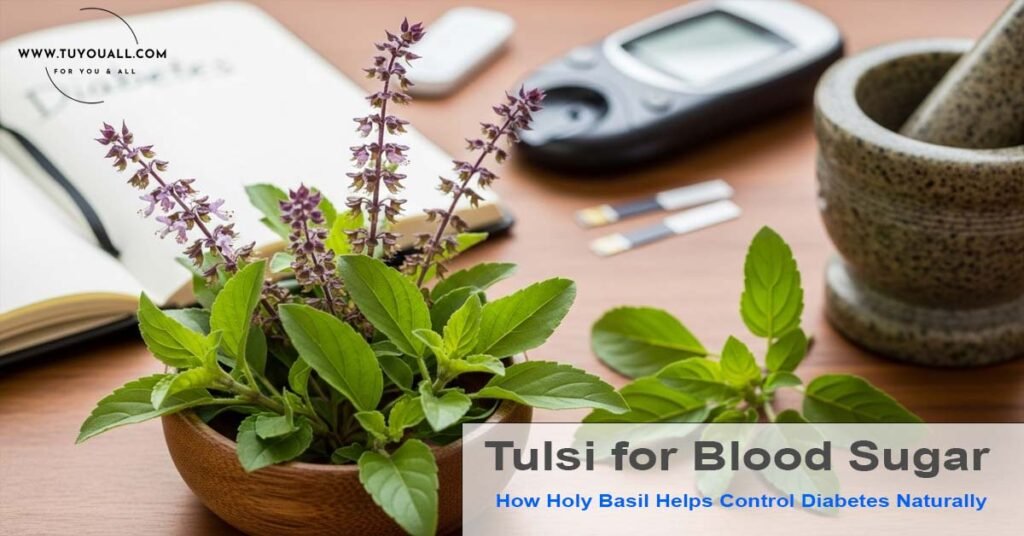
This blog post is based on insights from Dr. Salim’s YouTube video about using tulsi for blood sugar management.
Are you tired of seeing those high numbers on your glucometer every morning? If you’re searching for a natural blood sugar remedy that doesn’t come with a long list of side effects, you might not need to look further than your own backyard—or even your kitchen window.
There’s a humble green plant sitting in millions of Indian homes that is now turning heads in medical labs across the world. Holy basil, or tulsi as we lovingly call it, has been worshipped for centuries for its spiritual significance. But modern science is discovering something even more exciting: this sacred herb might hold the key to keeping your blood sugar levels in check naturally.
In this guide, we’ll break down exactly how this works, what the latest research says (including a major study from the University of Nottingham), and three simple ways you can start using tulsi today—even if you’ve never managed an herb in your life.
What Makes Tulsi a Powerful Natural Remedy for High Blood Sugar?
Tulsi isn’t just folklore. As Dr. Salim explains, this herb works on multiple levels to help your body manage glucose better. Think of it as a multitasking assistant for your metabolism.
It Wakes Up Your Pancreas
Inside your pancreas are tiny cells called beta cells. Their job? To produce insulin, the hormone that helps sugar move from your blood into your cells where it’s used for energy. When these cells get lazy or damaged, your blood sugar spikes.
Dr. Salim notes that tulsi acts as a natural stimulant for these beta cells: “Tulsi stimulates your pancreas’s beta cells—the cells where your insulin production happens. When stimulation occurs there, your body produces the proper amount of insulin after eating.” —Dr. Salim
It Fixes “Insulin Resistance”
Here’s a term you need to know: insulin resistance. This happens when your body’s cells stop listening to insulin’s instructions. Even though your pancreas is pumping out insulin, your cells ignore it, leaving sugar to build up in your bloodstream. This is one of the biggest reasons people develop type 2 diabetes.
Tulsi helps by making your cells more sensitive to insulin again. It’s like turning up the volume so your cells can finally hear the message: “Hey, let that sugar in!”
It Calms Internal Inflammation
High blood sugar doesn’t just sit there quietly—it causes inflammation throughout your body, damaging your nerves, blood vessels, and organs over time. Since tulsi has strong anti-inflammatory properties, it helps protect your body from this diabetes-related damage while it’s working to lower your sugar levels.
The Nottingham University Study: Real Science Behind the Sacred Leaf
You might be thinking, “This sounds nice, but where’s the proof?” Let’s talk about real numbers.
Researchers at the University of Nottingham wanted to see if tulsi could actually make a difference for people with high blood sugar. Here’s what they did:
| Study Detail | Group A (Medication Only) | Group B (Medication + Tulsi) |
| Number of People | 30 participants | 30 participants |
| Treatment | Continued their regular diabetes medicines | Regular medicines + 250mg tulsi extract |
| Duration | 90 days | 90 days |
| Results | Moderate improvement | Significantly better blood sugar control |
The results were clear. After three months, the group taking tulsi alongside their regular medication showed much better glucose control than those taking only conventional drugs.
“It was found that in people who were given tulsi extract along with medicines, a much better effect was seen—meaning their raised blood sugar reduced much better and came under control” —Dr. Salim
This doesn’t mean tulsi replaces your doctor’s prescription, but it does mean you have a powerful, natural ally that can make your current treatment work better.
Three Simple Ways to Use Tulsi for Blood Sugar Control
You don’t need to be an Ayurvedic expert to get the benefits. Here are three methods Dr. Salim recommends, ranging from super-simple to slightly enhanced:
Method 1: The Raw Leaf Routine (Easiest)
If you have a tulsi plant at home, this takes less than a minute.
- Pluck 4 fresh tulsi leaves in the morning
- Wash them gently
- Chew them on an empty stomach
- Drink a glass of water afterward
That’s it. The natural compounds get absorbed directly into your system through your mouth’s tissues before they even hit your stomach.
Method 2: The Comforting Decoction (Kadha)
Not a fan of chewing leaves? Turn it into a warm, comforting tea.
Ingredients:
- 4-5 fresh tulsi leaves (or 1 tsp dried leaves)
- 1 cup water
Instructions:
- Boil the water in a small pan
- Add the tulsi leaves
- Let it boil for 2-3 minutes (you’ll see the color change)
- Strain and drink
Best time:
Empty stomach in the morning, or in the evening. For example, if you find yourself reaching for sugary chai at 4 PM, swap it with this decoction instead.
Method 3: The Overnight Power Combo (Most Effective)
Want to supercharge the effect? Add fenugreek seeds (methi) to the mix.
Instructions:
- Take 4-5 tulsi leaves and 1 tablespoon of fenugreek seeds
- Soak them in a glass of water overnight
- In the morning, strain and drink the water on an empty stomach
Why does this work better? Fenugreek seeds are another well-known natural blood sugar remedy. When combined with tulsi, they create a synergistic effect—meaning they boost each other’s power. Dr. Salim explains that this combination specifically enhances the “frequency” and strength of blood sugar reduction.
Important Safety: Should You Stop Your Diabetes Medication?
Here’s a critical point that could save you from a health emergency.
If you have been formally diagnosed with diabetes and are taking prescribed medications, do not stop taking them just because you started using tulsi. This herb is a supplement, not a replacement.
Dr. Salim is very clear about this distinction:
“If you have been diagnosed with diabetes—if your blood sugar remains very high—in that case, you must continue the medicines that are running. Along with those medicines, you can start taking tulsi leaves or tulsi extract as a supplement.” —Dr. Salim
However, if you’re in the pre-diabetes stage (borderline high sugar, or just starting to show signs), tulsi might be enough to bring your numbers back to normal, especially when combined with diet changes.
The danger zone:
- Stopping insulin suddenly
- Replacing metformin with leaves without doctor supervision
- Assuming “natural” means “weak”—tulsi is potent and can lower your sugar too much if combined improperly with drugs
Always monitor your levels closely and consult your doctor if you notice your readings dropping significantly.
How Long Until You See Results?
Patience is key when working with ayurvedic herbs for diabetes. Unlike pharmaceutical drugs that might show results in days, natural supplements work gradually to repair and rebalance your system.
Dr. Salim recommends a minimum commitment:
Use tulsi consistently for 2-3 months before judging its effectiveness. Most natural supplements need this average timeframe to show noticeable results because they work by gradually repairing cellular function rather than forcing an immediate chemical change.
For example, if you start the overnight soak method today, mark your calendar for 90 days from now. Check your fasting blood sugar levels at the start and compare them at the end of this period. Many people report seeing their morning numbers drop by 15-20 points within this window.
Frequently Asked Questions (FAQ)
Q: Can tulsi cure diabetes completely?
A: No, tulsi cannot “cure” diabetes, especially Type 1. It helps manage blood sugar levels and can support insulin function, but it’s a management tool, not a cure. For Type 2 diabetics in early stages, it may help achieve normal readings when combined with lifestyle changes, but medical supervision remains essential.
Q: How many tulsi leaves should I eat daily for blood sugar?
A: Start with 4 fresh leaves on an empty stomach once daily. If you’re using the decoction or overnight water method, 4-5 leaves per day is the standard dose. Don’t exceed this without consulting an Ayurvedic practitioner, as more isn’t necessarily better.
Q: Can I drink tulsi water on an empty stomach?
A: Yes, and that’s actually the best time. Taking tulsi on an empty stomach allows for maximum absorption of its active compounds. However, if you experience mild stomach upset, try having it 30 minutes after a light breakfast instead.
Q: Is it safe to take tulsi with metformin or other diabetes medicines?
A: Generally yes, but you must monitor your blood sugar closely. Since both tulsi and diabetes medications lower glucose, combining them without supervision could lead to hypoglycemia (dangerously low blood sugar). Never adjust your medication dosage without your doctor’s approval.
Q: What happens if I take tulsi for more than 3 months?
A: Tulsi is safe for long-term use. Many people in India consume it daily for years as a general health tonic. After the initial 3-month period, you can continue taking it to maintain your blood sugar levels and boost immunity.
Conclusion
Managing blood sugar doesn’t always require complicated protocols or expensive supplements. Sometimes, the most powerful solutions have been growing in our courtyards all along. Tulsi offers a gentle, scientifically-backed way to support your pancreas, reduce insulin resistance, and protect your body from inflammation—provided you give it time and don’t abandon your prescribed treatments.
Have you ever tried using tulsi for health reasons beyond the common cold?
Credit Section:
This blog post is based on insights from Dr. Salim’s YouTube video about using tulsi for blood sugar management.The original content was provided in Hindi and has been translated, expanded, and repurposed for educational purposes.