This blog post is based on insights from the YouTube video titled “The Power of Unavailability” by an original creator exploring Jungian psychology and personal sovereignty.
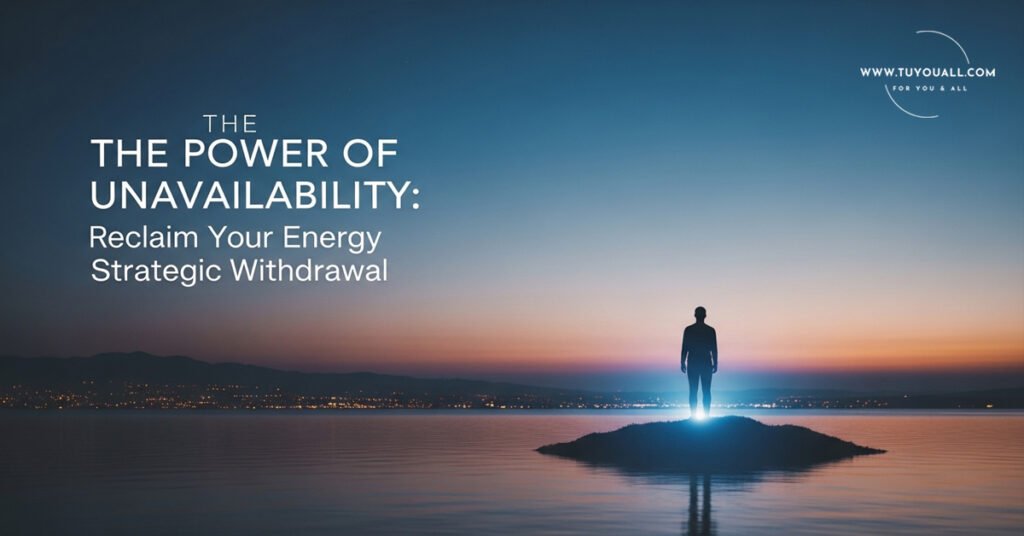
Discover how the Power of Unavailability protects your psychic energy, breaks manipulation patterns, and leads to authentic self-determination through Carl Jung’s wisdom.
Have you ever noticed how some people seem to have an almost supernatural control over the environment around them without saying a word? They don’t shout. They don’t beg. They simply withdraw. And suddenly everything changes. The energy shifts. People start to question, to chase after, to feel.
Now imagine if you did the same. If you stopped reacting immediately to everything, if you chose silence instead of the automatic response, retreat instead of explosion—what do you think would happen?
That’s exactly where the power of unavailability lies. When you stop being always available emotionally, physically, and psychologically, the world around you goes into crisis because people are used to controlling you through your reactions, through your impulses, through your predictability. But the day you choose to withdraw, the game changes. And those who thought they knew you realize they know absolutely nothing about you.

The Availability Trap: Why Being “Always On” Makes You a Tool
You have been taught to always be present, to respond quickly, to please, to say yes even when you wanted to say no. Since childhood, you have been conditioned to believe that your worth lies in how available you are to others. But here’s a truth that perhaps no one has told you with this clarity: This excessive availability is not a virtue. It is a prison.
As the original creator explains: “When you stop being available, everything changes. People are used to controlling you through your reactions.”
The Hidden Cost of Constant Access
Being always available makes you seem predictable. And everything that is predictable becomes a tool. People start to use you as an emotional emergency button—they press it when they want attention, relief, validation, and then put you back on the shelf.
For Example:
Imagine Sarah, who always responds to her friend’s “crisis” texts within minutes, even during dinner with her family or at 2 AM. Over time, these “emergencies” become daily occurrences. Sarah feels drained, but she can’t stop because she’s trapped in the belief that good friends are always available. Meanwhile, her friend has learned that Sarah’s boundaries are permeable, and the respect slowly erodes into entitlement.
The Persona Prison
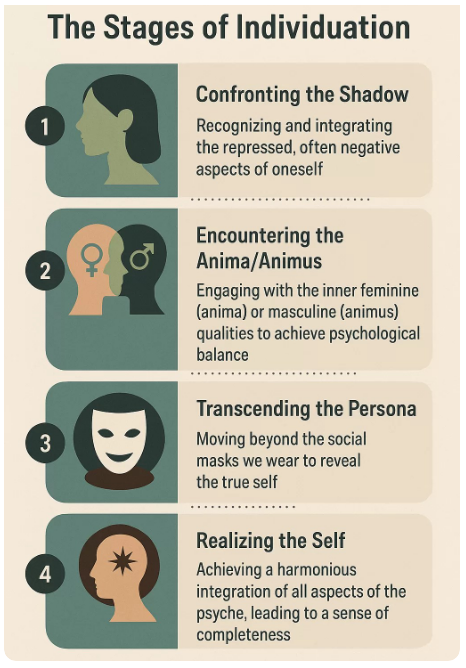
Carl Jung spoke about the persona—the mask we wear to be accepted, loved, recognized. And it is exactly this mask that keeps you overly available. You say it’s okay when you are suffocating. You respond to messages immediately even when you are exhausted. You explain yourself, justify yourself, defend yourself as if you owe something to the world.
“The more you place yourself at the center of others’ stage, the more you disappear from your own.”
Being available all the time is a subtle form of self-abandonment. It is a disguised way of seeking approval, avoiding rejection, and trying to control the image others have of you. But this control comes at a price: your peace. Your vital energy is being distributed as if it were infinite when in fact it is limited—very limited.
Understanding Psychic Energy: Your Limited Life Force
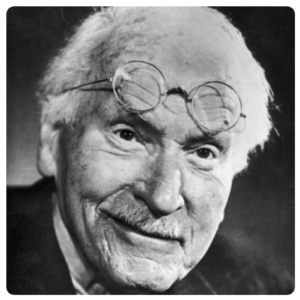
Carl Jung did not see the human psyche as an automatic machine that reacts to stimuli without consequences. For him, our mind is like an energy system, and every thought, emotion, and action consumes a part of that energy.
The question is: Are you choosing where your energy goes, or are you letting the world decide for you?
The Economics of Reaction
Every time you react impulsively, you are wasting psychic energy. Consider these common scenarios:
| Energy-Draining Behavior | Strategic Alternative | Energy Preserved |
| Defending against unworthy criticism | Observing without engagement | High |
| Responding immediately to provocations | Pausing before reacting | Medium-High |
| Participating in circular arguments | Choosing silence | High |
| People-pleasing those who don’t value you | Saying “no” without guilt | Very High |
| Ruminating on past conversations | Redirecting focus to present | Medium |
For Example: Mark spends three hours crafting the perfect response to a passive-aggressive email from a colleague. He rewrites it seven times, seeks advice from three friends, and loses sleep worrying about the fallout. By morning, he’s exhausted before the workday begins. The colleague, meanwhile, spent ten minutes sending the email and zero minutes thinking about it. Mark has donated his life force to someone who didn’t earn it.
Breaking the Cycle of Resistance
Jung was clear: “That which you resist persists.” The more you react, the more you bind yourself. People who live emotionally drained are not weak—they are misdirected. And when you are vulnerable from exhaustion, you become easy prey.
Manipulative, opportunistic, and emotionally needy people can sense this vulnerability. They notice that you do not know how to guard your energy, that you react to everything, that you’re always trying to solve the world—and they take advantage of it.
“True power is not in reacting. It is in choosing when and how to act.”
A healthy psyche knows how to keep energy within the system. This means knowing how to say no without guilt, knowing how to remain silent without feeling cowardly, knowing how to observe before acting.
Breaking Projections: How Unavailability Disarms Manipulators
You think you are in control. You believe your reactions are conscious choices. But the truth is darker: Most of your emotional responses are programmed. And those who understand this manipulate you easily.
The Psychology of Projection
Carl Jung called projection the psychological mechanism through which people project onto others what they cannot see in themselves. But there is another side to this phenomenon: While others project onto you, you become the receptacle for these images. The more emotionally available you are, the more you become a blank canvas for others’ projections.
For Example:
Lisa’s mother constantly calls her “selfish” whenever Lisa sets boundaries. In reality, the mother is projecting her own inability to respect others’ autonomy. When Lisa was always available, she absorbed this projection and believed it. When Lisa began withdrawing and becoming less available, the mother’s accusations intensified—not because Lisa changed, but because Lisa stopped being a mirror for the mother’s self-deception.
The Silence That Disturbs
Opportunistic people don’t need to raise their voices, threaten, or force situations. They just trigger the buttons you’ve left exposed—and you react, always.
The most effective manipulation doesn’t happen in shouting. It happens in the silence of guilt. When you feel that you owe something to the other, when you believe you need to be available, need to help, need to understand—even when it destroys you inside.
But when you stop reacting, the game breaks. When you start saying no, responding with silence, withdrawing instead of explaining yourself, the projections begin to crumble. The mask they put on you falls. And this leaves people unsettled because they no longer know who you are.
“Your unavailability is a threat because it forces others to confront their own emptiness.”
The Sovereignty of Silence: Strategic Withdrawal as Power
The modern world is noisy. Everyone wants to be heard, wants to respond quickly, wants to win pointless debates and prove their point—even if it costs them their own peace. But there is a power that few know and even fewer master: The power of silence.
Not the silence of passivity or cowardice, but conscious, strategic, brutally lucid silence. The kind of silence that is not absence but amplified presence.
Silence as Amplified Presence
Jung saw silence not as a void but as a fertile ground for inner transformation. When you stop reacting, you begin to observe. And by observing, you see patterns that previously went unnoticed: emotional repetitions, manipulation games, cycles of self-sabotage.
For Example:
During a heated family dinner, instead of defending himself against his father’s usual criticism about his career choice, David simply stopped responding. He didn’t argue, didn’t explain, didn’t justify. He maintained eye contact and remained silent. The father grew increasingly agitated, then confused, then quiet. The energy in the room shifted completely. David realized his silence had more power than all his previous defenses combined.
The Price of Mastery
True silence has a price. It will distance you from people who only valued you for the role you played. It will make you incomprehensible to those who only saw you through their own projections. It will make you seem cold, distant, arrogant.
But all of this is a reaction from those who never wanted to deal with your depth—only with your utility.
“Silence is uncomfortable because it forces the other to deal with their own thoughts, with their own internal noise.”
The most powerful silence is not the one that disturbs the other. It is the silence that reconstructs you from within—the silence that connects you to something beyond external approval. It is in this internal space, free from others’ demands, that you begin to recover your vital energy and reconnect with your essence.
Conscious Unavailability: Practical Steps to Reclaim Your Life
It’s no use understanding all of this intellectually if in practice you continue saying yes when you mean no, responding to messages that bother you, participating in empty conversations, and maintaining relationships that only exist out of inertia.
Awareness without action is just another form of self-deception.
The Practice of Selective Access
Conscious unavailability is not about being cold, arrogant, or indifferent. It’s about no longer being accessible to anyone at any time for any reason. It’s about taking control of your own energy, your own time, your own peace.
Here are practical steps to begin:
- Implement the “Pause Protocol”
- Wait 60 minutes before responding to non-urgent messages
- Use this time to assess: Does this deserve my energy?
For Example:
When Jessica started waiting an hour before replying to her demanding sister’s texts, she discovered that 70% of the “crises” resolved themselves without her intervention.
- Master the Art of Non-Justification
- You don’t need to explain your absence
- You don’t need to defend your silence
- Practice saying: “That doesn’t work for me” without elaboration
- Create Sacred Isolation Periods
- Schedule daily “unavailable” time—no phone, no email, no interruptions
- Treat this time as non-negotiable as a doctor’s appointment
- For Example: Marcus blocks 7-9 AM every morning for meditation and creative work. His colleagues initially resisted, but eventually learned that Marcus’s morning boundaries made him more effective when he was available.
- Audit Your Energy Expenditures
- List the top 5 people/situations that drain your energy
- Gradually reduce availability to each by 50%
- Redirect that energy to self-care or creative pursuits
The Discomfort of Growth
“Being unavailable is uncomfortable at first. You will feel guilty. You will think you are being selfish. You will hear that you are being too harsh, but this is part of the deconstruction process.”
You have spent your life being conditioned to put yourself second. It’s natural that change causes discomfort—not only in you, but in everyone who benefited from your old version.
Conscious unavailability is the foundation of self-determination. When you say no to the world, you are saying yes to yourself. When you withdraw from a toxic environment, you are reaffirming that your peace is worth more than any false connection.
The Rebirth of Solitude: Finding Wholeness in Withdrawal
When you stop being available to everyone, something profound begins to happen. First comes the silence—an uncomfortable silence that seems to scream inside you. You wonder if you did the right thing, if you are being too harsh, if you are losing people who liked you.
But gradually, this silence transforms. It begins to cleanse, to calm, to heal.
The Solitude of the Strong
Then comes solitude. But not the solitude of absence. It is the solitude of total presence—your own. The solitude of the strong, the solitude of one who no longer betrays themselves to keep others close.
And in that space where there was once confusion, clarity enters. Where there was once anxiety, peace enters. Where there was once neediness, a new kind of strength enters. The strength of being whole within yourself.
Carl Jung said that the process of individuation—becoming who you really are—requires you to distance yourself from the collective, that you disidentify from the mask, that you walk alone for a while.
“You are not fleeing the world. You are returning to yourself.”
It is at this point that you stop being a reactor and become a creator. You cease to be shaped by circumstances and begin to shape your reality from within.
The Ultimate Liberation
The people who feel uncomfortable with your absence reveal that they never wanted you—they wanted the role you played. And now that you no longer fit, they don’t know what to do with you.
And that is liberating.
You will lose people. But you will find yourself. You will distance yourself from places. But you will reconnect with your essence. You will become misunderstood. But finally, you will begin to be respected.
“When you are no longer available for anything, you become valuable, rare, unforgettable.”
This is a rebirth—a new beginning, the start of a life where you are no longer available for emotional crumbs, for mind games, for voids disguised as affection. Now you only accept what resonates with your peace, with your truth, with your wholeness.
Frequently Asked Questions
Q1: Isn’t being unavailable the same as being selfish or narcissistic?
A: Conscious unavailability is actually the opposite of narcissism. Narcissists demand constant attention and availability from others while offering little in return. Strategic unavailability is about energy conservation and authentic presence. When you choose when to be available, you can show up fully and genuinely, rather than offering depleted, resentful half-presence. It’s about quality of connection over quantity of interaction.
Q2: How do I handle the guilt that comes from saying no or withdrawing?
A: Guilt is often conditioned programming, not truth. Start by distinguishing between guilt (I did something wrong) and discomfort (I’m doing something new). Ask yourself: “Did I actually harm someone, or did I merely disappoint their expectations?” Disappointment is not damage. Start with small withdrawals and build tolerance for the discomfort. Remember Jung’s insight: individuation requires tolerating the anxiety of not pleasing everyone.
Q3: Can this approach work in professional settings without damaging my career?
A: Absolutely. In fact, strategic unavailability often enhances professional respect. The key is communication of boundaries, not disappearance. Establish clear “office hours” for your attention, respond thoughtfully rather than immediately, and focus on delivering exceptional results rather than instant availability. Leaders value those who manage their energy well; only insecure managers demand constant accessibility.
Q4: How do I know if I’m withdrawing healthily or just avoiding conflict?
A: Check your motivation. Healthy withdrawal comes from awareness and empowerment—you’re choosing to protect your energy. Avoidance comes from fear and powerlessness—you’re running from discomfort. Ask: “Am I silent because I know my words would be wasted, or because I’m afraid to speak?” If it’s the former, you’re sovereign. If it’s the latter, you may need to express yourself before withdrawing.
Q5: What if my family accuses me of changing or being “weird” when I set boundaries?
A: This is actually a positive sign. As the original content notes: “Observe who accuses you of having changed when you finally start to protect yourself. These are not signs that you are wrong. They are proof that you have begun to free yourself.” Family resistance often indicates they benefited from your lack of boundaries. Stay steady, remain consistent, and trust that healthy relationships will adapt to your authentic self.
Conclusion: The Price of Being You
The power of unavailability isn’t about isolation—it’s about intention. It’s about recognizing that every moment of immediate reaction is a moment of self-abandonment, and every strategic withdrawal is an act of return.
You have been taught that your value lies in your accessibility. But the truth is profound: Your value lies in your discernment. When you stop being the emotional emergency button for everyone else, you start being the sovereign architect of your own life.
The journey requires courage. You will be misunderstood. You will be tested. You may walk alone for a while. But in that solitude, you will discover something rare—the sound of your own voice, clear and unobstructed by the world’s noise.
What is one boundary you could set today that would protect your energy tomorrow? Are you willing to be misunderstood for a season in order to be whole for a lifetime?
The choice—and the power—is entirely yours.
Source & Credit
This blog post is based on insights from the YouTube video titled “The Power of Unavailability” by an original creator exploring Jungian psychology and personal sovereignty.
The original content has been translated, expanded, and repurposed for educational purposes.