This blog post is based on insights from Dr. Sweta Adatia’s YouTube video: “मेरी दिनचर्या | My Daily Routine for Brain Success” from the Limitless Brain Lab channel.
Introduction: Why Your Brain Needs a Daily Investment Plan
Have you ever wondered why some people seem to effortlessly achieve success while others struggle to maintain focus? The secret isn’t willpower—it’s neuroscience.
Dr. Sweta Adatia, a neurologist and founder of Limitless Brain Lab, treats her daily habits like a “Systematic Investment Plan” (SIP) for her brain. Just as we carefully plan our financial investments, she argues we should invest in daily habits that compound into long-term mental clarity, happiness, and success.
“We understand financial SIPs perfectly, but do we have a Systematic Daily Investment Plan of habits? Things you continuously do so that success and happiness come faster and more consistently?” — Dr. Sweta Adatia
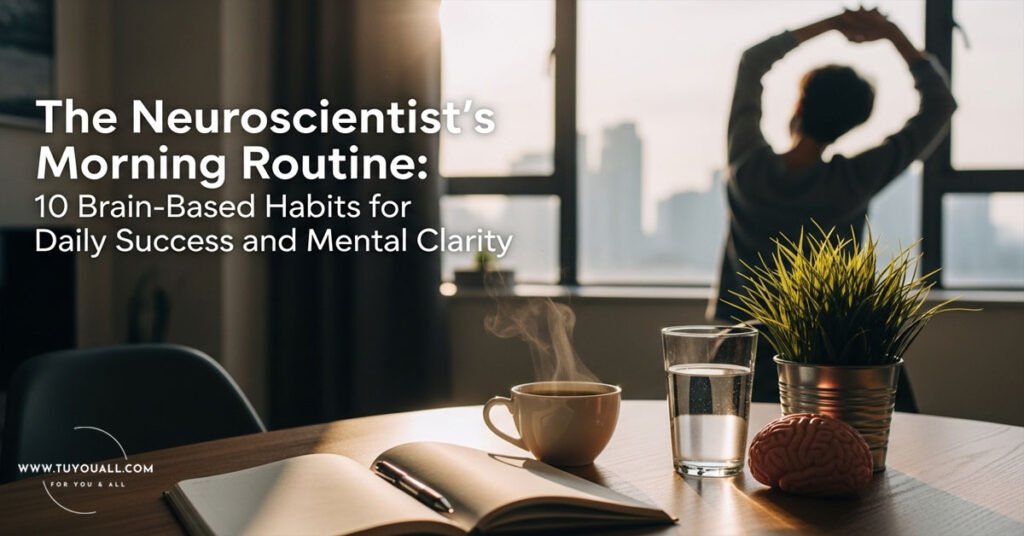
In this post, you’ll discover 10 evidence-based habits that align with your brain’s natural rhythms, backed by neuroscience research and clinical practice. Whether you’re a student, professional, or anyone seeking better mental performance, these strategies are designed for real life—not perfect conditions.
Understanding Your Brain’s Natural Clock (Circadian Rhythms)
Why Harsh Alarms Damage Your Brain
Your brain doesn’t wake up instantly—it transitions through specific wave patterns:
| Brain Wave | State | Function |
| Delta | Deep sleep | Restoration, healing |
| Theta | Drowsy waking | Creativity, intuition |
| Alpha | Relaxed alertness | Calm focus, learning |
| Beta | Fully awake | Active thinking, problem-solving |
When a loud alarm jolts you from deep delta sleep straight to beta state, it creates neurological whiplash. Dr. Adatia explains: “If an alarm clock wakes you with a harsh sound, you jump directly from delta to beta. I always say: never wake up with an alarm clock.”
Practical alternatives:
- Ask a family member for a gentle wake-up
- Use soft, gradual music instead of jarring beeps
- Allow your body to wake naturally when possible
The 5-Minute Sunlight Rule
Within your first 5 minutes of waking, get outside. Here’s why this matters:
Your brain contains a suprachiasmatic nucleus—essentially your body’s master clock. Morning sunlight activates this nucleus, which then:
- Regulates your circadian rhythm (sleep-wake cycle)
- Optimizes hormone release timing
- Improves alertness and cognitive function throughout the day
For Example:
Dr. Adatia acknowledges that not everyone wakes at sunrise. “But if you wake at 9 or 10 AM, going outside for just 2-3 minutes won’t cause heat problems. When you take in sunlight, your suprachiasmatic nucleus activates, creating a quick circadian rhythm format in your brain functions.”
Psychological Priming for Peak Performance
The Mirror Conversation Technique (5 Minutes)
One of Dr. Adatia’s non-negotiable habits is a 5-minute mirror conversation every morning. This isn’t vanity—it’s neuroscience-based confidence building.
What she does:
- Gratitude practice: Thanks her body, mind, and physiology for serving her
- Confidence installation: Repeats that nothing is impossible
- Fear elimination: Programs her mind that she can fight any challenge
The science behind it:
Mirror neurons in your brain help you recognize yourself and build self-awareness. Dr. Adatia notes: “When you look at yourself in the mirror, you’re facing yourself. There are even patients who cannot look at themselves in mirrors—they get scared because they can’t recognize themselves. This is called mirror agnosia.”
Leadership experiment:
Try staring at yourself in the mirror for 1 minute continuously. Something interesting happens (test it and share your experience in the comments).
Understanding Your Chronotype for Productivity
Not all brains work best at the same times. Dr. Adatia references Dr. Michael Breus’s four chronotypes:
| Chronotype | Peak Activity Time | Characteristics |
| Lion | Early morning (6-10 AM) | Natural early risers, proactive |
| Bear | Mid-morning (9-11 AM) | Follows solar cycle, most common |
| Wolf | Evening | Night owls, creative late |
| Dolphin | Erratic | Light sleepers, anxious |
Dr. Adatia identifies as a Bear—her peak focus occurs between 1-2 PM, not early morning. This self-knowledge allows her to schedule demanding tasks during her natural high-performance windows.
Action step: Discover your chronotype and structure your day around your biological peaks, not arbitrary schedules.
Protecting Your Cognitive Resources
The 30-Minute Digital Detox Rule
Here’s a counterintuitive truth: checking emails or WhatsApp first thing in the morning drains your attention currency for the day.
Dr. Adatia’s rule: “I never answer emails in the morning. I don’t touch my phone for at least 30 minutes.”
Why this works:
- Morning cortisol levels are naturally high (optimal for focus)
- Digital notifications trigger reactive stress responses
- Early decisions fatigue your prefrontal cortex before important work
For Example:
When you see a WhatsApp message, your brain automatically thinks “I need to respond to this”—even if it’s not urgent. This scatters your attention when it should be sharpest.
Strategic Caffeine Use (Not Abuse)
Coffee can be protective for brain health—studies show it reduces risks of Alzheimer’s, dementia, and Parkinson’s disease. However, Dr. Adatia warns: “Just as it gives a boost, it also gives a crash.”
Guidelines:
- Limit to 300-400mg of caffeine daily (about 3-4 cups of coffee)
- Time it after your natural cortisol peak (after 9-10 AM for most)
- Avoid using it to compensate for poor sleep
Emotional Regulation Through Daily Practices
The Dual Journal System
Dr. Adatia maintains two journals with specific purposes:
Green Journal (Input):
- Ideas and inspirations
- Affirmations
- Passions and joys
- Gratitude entries (daily, weekly, monthly reviews)
Red Journal (Output):
- Anger and frustrations
- Worries and troubles
- Emotional processing
The neuroscience:
“When you thank something, you also achieve emotional detachment. You’re resetting your brain and preparing it for good things to happen next. Gratitude is deep science.”
Dr. Adatia has created a simple gratitude journal template available through the comments section—filling out the form gets you started immediately.
Converting Obstacles into Opportunities
Stuck in traffic? That’s not lost time—it’s alpha wave generation time.
Dr. Adatia shares her Dubai traffic strategy: “I could cry or react, but I convert it into opportunity. I do all my breathing practices and sit with eyes closed for at least 10 minutes, which gives alpha waves in our brain. Through alpha, we can become peaceful and relaxed.”
Alpha waves (8-12 Hz) are associated with:
- Reduced anxiety
- Enhanced creativity
- Better stress management
- Improved learning capacity
Lifestyle Habits for Long-term Brain Health
Intermittent Fasting (14-16 Hours)
Dr. Adatia fasts for 14-16 hours daily, but with important caveats: “Intermittent fasting has its benefits, and sometimes for some people, risks too. If you’ve been doing it, talk to your doctor first. Physiologically, nothing should be done suddenly or quickly—it should be done with understanding.”
Potential benefits:
- Autophagy (cellular cleaning)
- Improved insulin sensitivity
- Enhanced BDNF (brain-derived neurotrophic factor) for neuroplasticity
Warning:
Not suitable for everyone—pregnant women, those with eating disorders, or certain medical conditions should consult healthcare providers first.
Daily Acts of Kindness
The final “DO” in Dr. Adatia’s routine: intentional kindness. This isn’t just feel-good philosophy—it activates reward pathways and oxytocin release.
Simple examples:
- Saying “thank you” genuinely
- Apologizing when you’ve made a mistake
- Small gestures of appreciation
The “Don’ts”—What to Avoid for Brain Health
Never Discuss People, Only Ideas
Gossip isn’t just unkind—it’s neurologically harmful.
Dr. Adatia explains: “When you start personal discussions—’he did this to me, she did that’—your prefrontal cortex disengages. It can’t rationalize, and you get stuck in an emotional limbic loop.”
The limbic system (your emotional brain) can hijack rational thinking when triggered by personal drama. Protect your cognitive resources by discussing ideas, not people.
Transform Reaction into Response
Related to avoiding limbic loops: practice the pause. When something triggers you, the goal is response (thoughtful, prefrontal) rather than reaction (emotional, limbic).
Mindful Eating (No Screens)
Dr. Adatia’s household rule: “When we eat, we don’t touch mobile phones.”
The chain of transformation:
The food you eat → becomes the thought you think → becomes the action you take → becomes your character → becomes your destiny
“What’s served in your plate isn’t just food—it’s you. You are that food.” — Dr. Sweta Adatia
Mindful eating improves:
- Digestion and nutrient absorption
- Satiety signals (preventing overeating)
- Emotional relationship with food
- Present-moment awareness
Eliminate Procrastination Completely
Dr. Adatia calls procrastination a disease: “The brain is a very lazy organ. It enjoys doing nothing and keeps pushing things away. For those seriously stuck in procrastination, extracting themselves requires tremendous struggle and strength.”
Her anti-procrastination system:
- Boxing pattern scheduling: Specific days for specific activities
- One day: Only community interaction/content creation
- One day: Only patient consultations
- One day: Only personal growth and passion projects
- Time boxing: Dedicated chunks for single tasks (no multitasking)
“I don’t believe in pushing things. What I have is today, and my today is very golden.” — Dr. Sweta Adatia
FAQ: Your Questions About Brain-Based Daily Routines Answered
Q.1. What if I can’t wake up without an alarm?
Start by moving your bedtime earlier by 15 minutes every few days. Use gradual light alarms that simulate sunrise instead of sound alarms. Consistency trains your circadian rhythm over time.
Q.2. Is 14-16 hour fasting safe for everyone?
No. While research shows benefits for many, pregnant women, children, those with eating disorders, diabetics on medication, or people with certain medical conditions should consult doctors before starting.
Q.3. How long until I see results from mirror affirmations?
Neuroplasticity requires repetition. Most people report increased confidence within 2-3 weeks of daily 5-minute practice, but the “leadership experiment” (1-minute self-gazing) can show immediate self-awareness shifts.
Q.4. Can I check my phone if I’m expecting important news?
Dr. Adatia’s 30-minute rule is a guideline, not dogma. If true emergencies exist, set specific notification filters. The goal is eliminating habitual checking, not necessary communication.
Q.5. What’s the best chronotype for success?
There’s no “best” type—only alignment with your natural patterns. Lions excel at morning execution, Wolves at creative night work, Bears at collaborative daytime tasks, and Dolphins at detail-oriented analysis despite anxiety.
Conclusion: Your Brain Deserves a Daily Investment Plan
Dr. Sweta Adatia’s routine isn’t about perfection—it’s about physiological alignment. By working with your brain’s natural rhythms rather than against them, you create compound interest on your cognitive investment.
Key takeaways:
- Wake gently without harsh alarms to preserve brain wave transitions
- Get morning sunlight within 5 minutes to activate your circadian clock
- Use mirror affirmations to build neural confidence pathways
- Identify your chronotype and schedule peak tasks accordingly
- Protect morning focus with a 30-minute digital detox
- Use caffeine strategically, not as a crutch
- Process emotions through dual journaling (input/output)
- Convert waiting time into alpha-wave meditation
- Practice mindful, screen-free eating
- Eliminate procrastination through boxing-pattern scheduling
Which of these habits will you experiment with first? Share your chosen “brain investment” in the comments below, and let’s build a community of neuroscience-informed daily routines.
Source & Credit
This blog post is based on insights from Dr. Sweta Adatia’s YouTube video: “मेरी दिनचर्या | My Daily Routine for Brain Success” from the Limitless Brain Lab channel.
The original content has been translated, expanded, and repurposed for educational purposes.
About the Original Creator: Dr. Sweta Adatia is a neurologist and founder of Limitless Brain Lab, specializing in neuroscience-based approaches to daily performance and cognitive optimization.