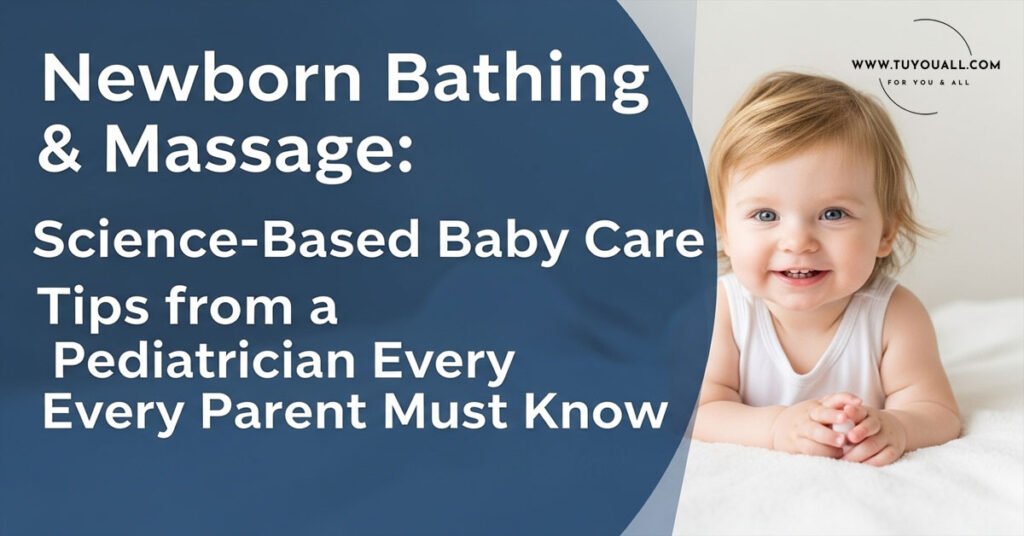
This blog post is based on insights from Dr. Mahesh Hiranandani‘s YouTube interview on the Sehat Naya channel: “Newborn Baby Care Part 2: Bathing, Massage & Hygiene Myths”
Why Your Grandmother’s Advice Might Be Harmful (And What Science Says Instead)
Have you ever been told that bathing your newborn in the first month will give them a cold? Or that slathering your baby in mustard oil will make their bones “strong as steel”?
You’re not alone. For generations, well-meaning family members have passed down newborn care traditions that feel comforting but might actually put your baby at risk. The problem? Many of these practices have zero scientific backing—and some can cause lifelong harm.
I recently came across an eye-opening interview with Dr. Mahesh Hiranandani, a senior pediatrician who’s made it his mission to separate dangerous myths from medical facts. His approach isn’t about dismissing culture; it’s about protecting your baby’s health with evidence-based care.
“Just because we’ve done something for centuries doesn’t make it right. When science clearly shows harm, we must change.” — Dr. Mahesh Hiranandani
Let’s dive into what modern pediatrics actually recommends for newborn hygiene—and why it might completely change your baby’s daily routine.
The Bathing Truth: Yes, You Should Bathe Your Newborn Daily
Busting the “No Bath for 30 Days” Myth
One of the most persistent myths in newborn care is the belief that babies shouldn’t be bathed for the first month of life. The reasoning usually sounds logical: “Baby will catch a cold,” or “Their immune system is too fragile.”
Here’s the reality check: Dr. Hiranandani asks a simple question that cuts through the confusion: “If you didn’t bathe for three days, how would you feel?”
Now imagine being a newborn—nature’s most delicate creation—who depends entirely on you for care. This tiny human soils themselves 10+ times daily, sweats in their swaddle, and lives in a diaper. Why wouldn’t we keep them clean?
The 24-Hour Rule: When to Start
Science has evolved on this. While babies were once bathed immediately after birth (which hospitals did for decades), we now know better:
| Timing | Recommendation | Scientific Reason |
| First 24 hours | Sponge bath only | Baby needs to stabilize body temperature, establish feeding, and adapt to life outside the womb |
| After 24 hours | Daily bathing begins | Baby has stabilized; hygiene prevents infections and discomfort |
The golden rule: Wait for the first 24 hours, then bathe every single day—whether it’s summer or winter.
Global Perspective: Cold Climates Bathe Babies Too
Still worried about winter bathing? Consider this: Parents in Russia, Canada, and Scandinavia—where temperatures drop far below anything India experiences—bathe their newborns daily.
If they can do it in sub-zero temperatures, you can do it in your heated home.
Bathing Safety 101: The Temperature Protocols That Matter
The “Lukewarm” Sweet Spot
Getting the water temperature right isn’t guesswork. While “lukewarm” sounds vague, science gives us a precise number:
Target temperature: 32°C (90°F)
How to check without a thermometer? Dip your elbow or inner wrist in the water. It should feel neutral—neither hot nor cold. If you have to think about whether it’s too warm or too cool, it’s probably perfect.
Location Matters: Bedroom vs. Bathroom
This might surprise you: Never bathe your newborn in the bathroom.
Bathrooms are cold, poorly lit, and often slippery. Instead, set up your bathing station in:
- The bedroom (warmest room in most homes)
- On a sturdy table or changing station
- Near a heat source in winter
Winter bathing pro-tip: Run one or two room heaters until the temperature feels uncomfortably warm for adults. Only then undress your baby. Yes, it should feel almost stuffy to you—that’s when it’s safe for your newborn.
The Two-Person Rule
Newborns are slippery when wet. Always have two people present:
- The bather (applies soap/water)
- The supporter (holds baby steady, hands supplies)
The “No Direct Pour” Principle
Here’s a bathing technique most parents get wrong: Never pour water directly on your baby’s face or head.
Instead:
- Cup water in your palm first
- Transfer gently to baby’s body
- Use a soft washcloth for the face
This prevents the startle reflex and keeps water out of sensitive ears and eyes.
What NOT to Put on Your Baby’s Skin (This Could Save Their Life)
The Deadly Protein Myth: Milk, Ghee, and Curd
This is where Dr. Hiranandani gets passionate—and for good reason. Many traditional practices involve bathing babies in:
- Milk (doodh)
- Ghee (clarified butter)
- Curd (dahi)
- Malai (milk cream)
Why this is dangerous: Your skin isn’t a digestive system, but it does have immune cells. When you apply edible proteins (which contain complex proteins) to a baby’s skin, you’re essentially sensitizing them to develop allergies later in life.
Think about it: Would you crush a pill and rub it on your skin expecting it to work? Of course not. Every substance has its proper route of entry. When proteins enter through the skin instead of the gut, the immune system freaks out—and that early exposure can trigger lifelong allergies to milk, dairy, and other foods.
The rule: If you can eat it, don’t bathe in it.
Soap Bars vs. Body Wash: The Hygiene Factor
Those cute baby soap bars? They might be dirtier than you think.
The problem: Where do you store that soap bar after bathing? Is it sitting in a wet dish, growing bacteria? That “clean” soap might be contaminating your baby’s skin.
Better solution: Use a gentle, liquid baby body wash.
- Cost: Same as soap bars
- Usage: Just 2-3 drops for the entire body
- Hygiene: No bacterial buildup
Shampoo Strategy: Timing Is Everything
For baby hair care:
- Frequency: 2-3 times per week (not daily)
- Critical sequence: Oil before shampoo, never after
- Why: Shampoo removes oil, dead skin, and buildup. Applying oil after shampoo defeats the entire purpose and leaves hair sticky and dirty
The “oily head” tradition: Many grandmothers insist on heavy post-bath oiling. Dr. Hiranandani is blunt: “Nobody else in the world does this. Let’s follow what actually works.”
Massage Reality Check: It’s About Bonding, Not Bones
The Sentimental Trap
Massage is emotionally loaded in many cultures. When Dr. Hiranandani questions certain practices, he often hears: “But we’ve done this for centuries!”
His response? “Yes, and that emotional attachment is exactly why we need to examine it carefully.”
What Massage Actually Does (And Doesn’t Do)
Let’s break down the claims vs. reality:
| Claim | Scientific Truth |
| “Oil strengthens bones” | False. No oil penetrates skin to reach bones. |
| “Massage improves circulation” | Partially true. But gentle touching does this—heavy oiling isn’t required. |
| “Oil moisturizes skin” | False timing. You moisturize before bathing, then wash it off with soap. Where’s the benefit? |
| “Massage creates mother-baby bonding” | TRUE. This is the real, proven benefit. |
The Bonding Over Product Principle
Here’s what transforms an ordinary massage into developmental gold:
What matters:
- Mother looking into baby’s eyes
- Gentle talking, singing, or cooing
- Soft touches and caresses
- Responsive interaction (stopping if baby cries)
What doesn’t matter:
- Whether you use expensive almond oil or coconut oil
- Whether you use “baby strengthening” mustard oil
- The duration of the massage
- How “forceful” the rubbing is
“If you simply undress your baby, hold them gently, move their limbs softly, and talk to them lovingly—you’ve achieved everything massage promises. The oil is irrelevant.” — Dr. Mahesh Hiranandani
The Third-Party Problem
Here’s a question that stumps many families: If you hire a maalishwali (professional massager) to massage your baby, whose bonding are you prioritizing?
The massage lady and your baby? Or you and your baby?
The science is clear: Infant massage benefits come from parent-child interaction. If someone else is doing the massaging, you’re outsourcing the most valuable part.
Oil Recommendations (If You Must Use Them)
Can’t imagine massage without oil? Here’s the pediatrician-approved approach:
- Best choice: Gentle baby lotions or creams specifically formulated for infant skin
- Acceptable: Coconut oil (but watch for rashes in summer)
- Avoid: Mustard oil, heavy mineral oils, or any “heating” oils
Warning signs to stop: Redness, rashes, or baby discomfort. No tradition is worth your baby’s skin health.
Post-Bath Care: Moisturizers, Powders, and Reality
The “As Needed” Rule
Science has a simple guideline: Only apply what the skin actually needs.
| Season | Skin Condition | What to Apply |
| Winter | Dry, flaky skin | Thin layer of gentle baby lotion/cream |
| Summer | Normal or sweaty skin | Nothing. Powder and moisturizers trap heat and cause rashes. |
| Any season | Redness or irritation | Consult pediatrician—don’t self-treat |
The powder myth: Baby powder is unnecessary in modern care. It can be inhaled (dangerous for lungs) and creates a paste when mixed with sweat that actually causes rashes.
The 5-Minute Bath Rule
Speed matters in newborn bathing. Here’s why:
- Newborns don’t get “dirty” in the adult sense—they have surface sweat and milk residue
- Temperature exposure is the real risk (every second undressed is a heat loss opportunity)
- Goal: Complete the bath as quickly as safely possible
Ideal duration: 5-10 minutes maximum.
Practical Bathing Setup: Modern Solutions
The Traditional Method (Still Valid)
Grandmothers often used a brilliant technique: bathing baby on their outstretched legs. This:
- Keeps baby’s head elevated (crucial for breathing)
- Provides a warm, human surface
- Allows constant skin-to-skin contact
Modern Alternatives
Today, specialized baby bathing chairs and supports exist that:
- Maintain the head-up position
- Free up both of the bather’s hands
- Often include safety straps
For nuclear families: If you’re parenting alone (just mom and dad), these tools become essential. Search for “newborn bathing support” or “baby bath chair” to find options that work for your space.
FAQ: Your Newborn Hygiene Questions Answered
Q1: Can I bathe my baby if they have a cold or fever?
Yes, absolutely. A lukewarm bath can actually help regulate body temperature during fever. Just ensure the room is warm and the bath is quick. Never skip hygiene due to minor illness.
Q2: What if my baby cries during every bath?
Check three things: water temperature (too hot/cold?), room temperature (too chilly?), and handling technique (too rushed?). Some babies take time to adjust—keep sessions brief and soothing. The crying usually resolves within the first two weeks of consistent bathing.
Q3: Is it safe to use antiseptic liquids in bath water?
No routine antiseptics needed. For healthy newborns, plain lukewarm water and gentle baby wash are sufficient. Antiseptics can disrupt the skin’s natural protective barrier and cause irritation.
Q4: My mother insists on applying ghee to my baby’s skin for “glow.” Is this harmful?
Yes. Ghee (like all edible proteins) can sensitize your baby to dairy allergies through skin exposure. The “glow” comes from healthy skin care, not food products. Stand firm on this—it’s a proven risk factor for allergies.
Q5: How do I handle family pressure to follow harmful traditional practices?
Share scientific sources, involve your pediatrician in the conversation, and remember: you’re the parent protecting your child. Dr. Hiranandani advises: “Research it yourself. Dr. Google is available to everyone. The evidence is clear.”
Conclusion: Gentle Science Over Blind Tradition
Caring for a newborn doesn’t require abandoning your cultural roots—it requires choosing which roots to keep. The science of newborn hygiene is clear:
- Daily bathing after 24 hours of life is safe, necessary, and beneficial in all climates
- Temperature control (room and water) matters more than bathing frequency
- Edible products (milk, ghee, curd) on skin can trigger lifelong allergies—avoid completely
- Massage benefits come from bonding and gentle touch, not oils or forceful rubbing
- Post-bath products should match actual skin needs, not tradition
Your baby depends entirely on you to separate helpful practices from harmful ones. That responsibility might feel heavy, but it’s also empowering. You have access to medical knowledge that previous generations didn’t—and the courage to use it.
What’s one tradition you’re questioning after learning the science behind newborn care? Share your thoughts or ask questions in the comments below—let’s keep this conversation going for healthier, happier babies everywhere.
Source & Credit
This blog post is based on insights from Dr. Mahesh Hiranandani‘s YouTube interview on the Sehat Naya channel: “Newborn Baby Care Part 2: Bathing, Massage & Hygiene Myths”
The original content has been translated from Hindi, expanded with additional context, and repurposed for educational purposes.