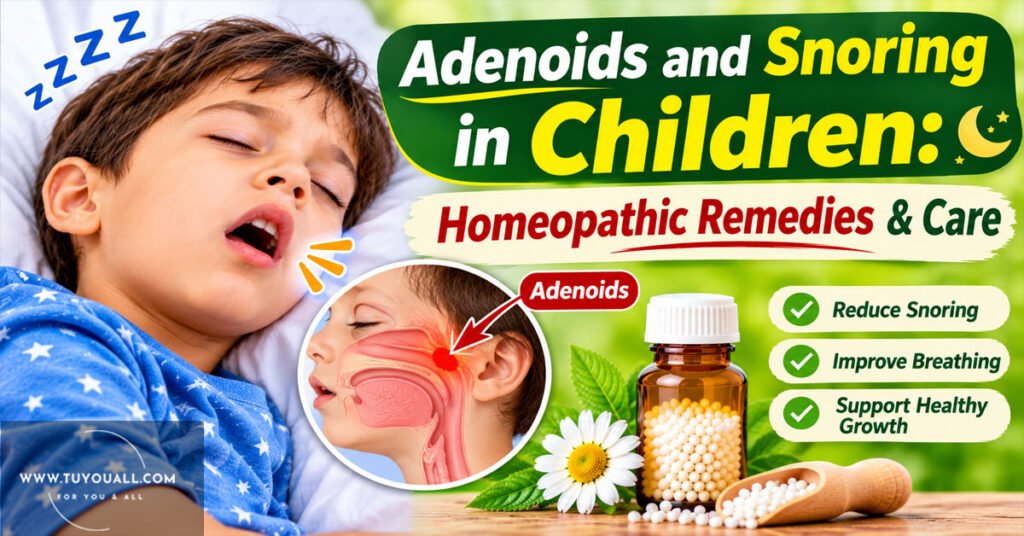
Learn About Adenoids And Snoring In Children, Including Hypertrophy Symptoms, ENT Evaluation, Mouth Breathing, And Homeopathic Remedies Like Agraphis Nutans.
Is your child snoring like a little truck every night? Do you notice them breathing through their mouth instead of their nose, even when they are healthy? If these sound familiar, you are not imagining things. Many parents worry when sleep becomes noisy and breathing seems strained, wondering if something deeper is affecting their child’s rest and growth.
The culprit might be enlarged adenoids. Adenoids and snoring in children often go hand in hand, creating a cycle of poor sleep, nasal blockage, and even hearing issues. While doctors sometimes recommend surgery, many families first explore gentler approaches to reduce swelling and support healthy breathing.
In this guide, we will walk through what adenoid hypertrophy looks like, when to seek medical help, and how certain homeopathic medicine for adenoids is traditionally discussed alongside conventional care to support your child’s comfort.
Important Medical Disclaimer: Persistent snoring and breathing difficulties in children require professional evaluation by a pediatrician or ENT specialist. Sleep apnea and hearing problems need urgent medical attention. The information below is educational and does not replace qualified medical advice.
What Are Adenoids and Why Do They Matter?
Adenoids are small patches of tissue located at the back of the nasal cavity. They are part of the immune system and help trap germs entering through the nose. In young children, adenoids are naturally larger. However, when they become too enlarged, they block airflow and create a chain of uncomfortable symptoms.
Common Signs of Enlarged Adenoids
Parents often notice a cluster of telltale signs before receiving a formal diagnosis:
- Mouth breathing – The child defaults to breathing through the mouth, even when awake.
- Snoring – Noisy, labored breathing during sleep.
- Nasal blockage – Difficulty breathing through the nose, often with a chronically stuffy sound.
- Hearing reduction – Muffled hearing or frequent ear infections due to blocked Eustachian tubes.
- Adenoid facies – A characteristic facial appearance with open mouth, elongated face, and dull expression from chronic mouth breathing.
If your child shows three or more of these symptoms, an ENT examination is the right next step. Early assessment prevents complications and guides treatment choices.
The Most Probable Diagnosis: Adenoid Hypertrophy
Doctors call enlarged adenoids adenoid hypertrophy. This condition often overlaps with chronic allergies, frequent infections, or even enlarged tonsils. The diagnosis comes from physical examination and imaging studies that measure how much airway space remains open.
Understanding this diagnosis matters because it explains why your child snores, sleeps restlessly, or struggles to hear clearly. It also helps you weigh treatment options carefully.
Essential Medical Steps Before Exploring Alternatives
Responsible parents always begin with proper medical evaluation. Your ENT specialist will likely recommend several standard steps before considering any complementary approaches.
1. ENT Examination and X-Ray
A specialist examines the nasal cavity and throat. An X-ray of the nasopharynx (the space behind the nose) reveals adenoid size and airway obstruction level.
2. Evaluation of Nasopharynx
This assessment checks how severely the enlarged tissue blocks the airway. Severe blockage increases the risk of sleep apnea and may push toward surgical consideration.
3. Dietary Adjustments
Some children improve when dairy products are reduced. Dairy can thicken mucus in sensitive individuals, worsening nasal blockage. Your doctor may suggest a trial elimination to observe any changes.
4. Surgery If Severe
When adenoids cause sleep apnea, significant hearing loss, or growth delays, adenoidectomy (surgical removal) becomes the recommended standard. This decision follows failed conservative management.
These conventional foundations remain essential. No alternative approach should replace proper medical diagnosis and monitoring.
Homeopathic Remedies for Adenoids: A Traditional Overview
Homeopathy approaches adenoid hypertrophy by treating the whole child, not just the swollen tissue. Practitioners select remedies based on symptom patterns, temperament, and physical constitution. For homeopathic medicine for adenoids, several remedies appear frequently in traditional literature for children with chronic nasal blockage and snoring.
The following table summarizes remedies traditionally discussed for this condition, along with their common indications.
| Homeopathic Remedy | Potency & Dosage | Traditional Symptom Picture & Indications |
| Agraphis Nutans | 30; 4 pills TDS for 8 weeks | Considered specific for adenoids; used for chronic nasal blockage, snoring, and deafness from enlarged tissues. |
| Calcarea Phos | 6X; 4 tablets QID for 8 weeks | For growing children with weak constitution, delayed development, and tendency toward glandular swellings. |
| Baryta Carb | 200; 4 pills weekly for 8 weeks | Used when adenoids occur alongside recurrent tonsillitis and delayed physical or mental development. |
| Calcarea Iod | 200; 4 pills weekly for 8 weeks | For hard, enlarged glands; suits children with metabolic tendencies toward gland overgrowth. |
| Tuberculinum | 1M; 4 pills monthly | Constitutional remedy for children with recurrent infections and family history of tuberculosis. |
| Sambucus | 30; 4 pills TDS | Specifically for nasal blockage in infants; helps with sudden suffocative attacks at night. |
| Ammonium Carb | 30; 4 pills TDS | For mouth breathing and sleep apnea symptoms; suits children who snore heavily and wake gasping. |
Abbreviations: QID = four times daily; TDS = three times daily.
Understanding the Remedies in Action
Agraphis Nutans 30 stands out as the most frequently mentioned remedy specifically for adenoids and snoring in children. Traditional texts describe it as particularly suited for chronic cases where nasal blockage leads to hearing difficulties and restless sleep.
For Example:
Imagine Kabir, a 5-year-old who snores loudly every night and breathes through his mouth constantly. His teacher mentions he seems tired in class and sometimes does not respond when called. An ENT X-ray confirms enlarged adenoids blocking his airway. His parents want to delay surgery and explore alternatives. They consult a homeopath who prescribes Agraphis Nutans 30 three times daily, alongside ENT follow-ups. After eight weeks, his nasal breathing improves slightly and his sleep becomes quieter—though his adenoids remain enlarged and under monitoring.
This scenario illustrates how homeopathic support fits within a medical care plan, not as a replacement.
Matching Remedies to Specific Symptom Patterns
Different children present different pictures. Understanding these nuances helps explain why multiple remedies exist for seemingly similar conditions.
For Recurrent Infections and Weak Constitution
Tuberculinum 1M serves as a constitutional remedy. Practitioners select it when a child never fully recovers between illnesses, has a family history of tuberculosis, or shows general susceptibility to respiratory infections. Taken monthly, it aims to strengthen overall resilience.
For Infants With Sudden Blockage
Sambucus 30 addresses dramatic episodes where infants wake suddenly, gasping for air with blocked noses. These frightening moments respond well to acute dosing in traditional practice.
For Sleep Apnea Symptoms
Ammonium Carb 30 targets the specific breathing pattern of sleep apnea—loud snoring, mouth breathing, and brief pauses in breath. This remedy suits children who look drowsy despite sleeping.
Why Enlarged Adenoids Worry Doctors (and Parents)
Beyond disrupted sleep and noisy nights, untreated adenoid hypertrophy can lead to serious complications.
Possible Complications
| Complication | What It Means | Why It Matters |
| Sleep apnea | Brief breathing stops during sleep | Leads to poor oxygenation, behavioral issues, and growth delays |
| Otitis media | Middle ear infections from blocked drainage | Causes pain, hearing loss, and repeated antibiotic use |
| Speech problems | Altered resonance and articulation from chronic mouth breathing | Affects communication development and confidence |
| Dental issues | Malocclusion and facial structure changes from tongue position | Requires orthodontic correction later |
These risks explain why doctors monitor adenoid size carefully. Sometimes, despite all efforts, surgery becomes necessary. However, many families successfully manage the condition through combined medical care, lifestyle adjustments, and homeopathic immune support.
Practical Prevention and Management Tips for Parents
Whether you use homeopathy or not, certain habits reduce adenoid-related discomfort:
- Reduce allergen exposure – Dust, pet dander, and pollen trigger nasal inflammation.
- Humidify bedroom air – Dry air irritates nasal passages and worsens blockage.
- Elevate the head during sleep – Extra pillows help gravity keep airways open.
- Trial dairy reduction – Some children improve noticeably when milk is limited.
- Nasal saline rinses – Gentle rinsing clears mucus and reduces infection risk.
These steps cost little but can meaningfully improve your child’s comfort.
Frequently Asked Questions (FAQ)
Q1: Can homeopathy shrink enlarged adenoids completely?
There is no guarantee of complete shrinkage with any non-surgical approach. Homeopathy aims to reduce inflammation, improve symptoms, and strengthen constitution. Some children improve significantly; others may eventually need surgery.
Q2: How long should my child take Agraphis Nutans for adenoids?
Traditional protocols suggest 8-week courses with monthly evaluations. Your homeopath adjusts duration based on symptom response and ENT monitoring.
Q3: Is mouth breathing always a sign of adenoid problems?
Not necessarily. Children may mouth breathe due to allergies, colds, or habit. Persistent mouth breathing—especially with snoring and hearing issues—warrants ENT evaluation.
Q4: What is the best age for adenoid surgery if needed?
Adenoidectomy is typically considered from ages 3 to 7, when adenoids are largest and impact is greatest. However, timing depends on symptom severity, not age alone.
Q5: Can enlarged adenoids affect my child’s school performance?
Yes. Poor sleep from snoring and apnea leads to daytime drowsiness, attention problems, and learning difficulties. Hearing reduction also affects classroom participation.
References & Further Learning:
For additional clinical insights, materia medica explanations, and practical perspectives on homeopathic management, the information in this article/page has been cross-referenced with educational resources shared by qualified homeopathic practitioners and researchers in their YouTube Channel (Links given Below). Readers seeking deeper guidance on remedy selection, potencies, and holistic care may explore video lectures and case discussions by established homeopathic doctors as listed below with their YouTube Channel Link :
| SL No. | Channel / Doctor Name | Primary Focus & Clinical Background | YouTube Link |
| 1 | Dr. Kirti Vikram Singh | Covers disease-specific remedies, mother tinctures, German combinations, and daily live Q&A sessions. | https://www.youtube.com/drkirtivikramsingh |
| 2 | Dr. Pranjali Srivastava | Registered BHMS physician and certified nutritionist focusing on holistic disease management and lifestyle care. | https://www.youtube.com/@drpranjalihomeopathy
|
| 3 | Dr. Swapnil Sagar Jain | BHMS consultant at Niramay Homeopathy offering remedy guides for acute and chronic conditions. | https://www.youtube.com/@DrSwapnilSagarJain-NIRAMAY |
| 4 | Dr. Umang Khanna | Focuses on natural homeopathic treatments, chronic illness management, and educational health guides in Hindi. | https://www.youtube.com/@drumangkhanna |
| 5 | Shree Radhey Homeopathy | Hosted by Dr. Chakshu; features remedy explanations, patient case stories, and live consultation Q&As. | https://www.youtube.com/@ShreeRadhey |
| 6 | Dr. P.S. Tiwari | Senior D.M.S. homeopath with 36+ years of experience explaining classical Materia Medica and therapeutics. | https://www.youtube.com/@DrPSTiwari |
| 7 | Dr. Varun Kanwadia | BHMS, DNHE consultant sharing practical homeopathic solutions for skin, hair, respiratory, and digestive issues. | https://www.youtube.com/@varunkanwadia |
| 8 | Dr. Arpana Samanta | Gold Medalist BHMS (Delhi) & PGD (London) with 20+ years of experience covering chronic diseases like thyroid, PCOS, and skin disorders. | https://www.youtube.com/@dr.arpanasamanta |
| 9 | Dr. Rukmani Choudhary | Focuses on root-cause homeopathic treatments, comparative remedy selection, and live Q&A sessions. | https://www.youtube.com/@Dr.Rukmani-HomeopathyClinic |
| 10 | Dr. Santosh Kumar Padhy | Provides accessible homeopathic remedy suggestions and general health guidance for everyday ailments. | https://www.youtube.com/@dr.santoshkumarpadhy8888 |
Medical Disclaimer:
This article is for educational purposes only. It does not replace professional medical advice, diagnosis, or treatment. Always consult a qualified healthcare provider or licensed homeopath before starting any new remedy, especially if you have underlying health conditions.