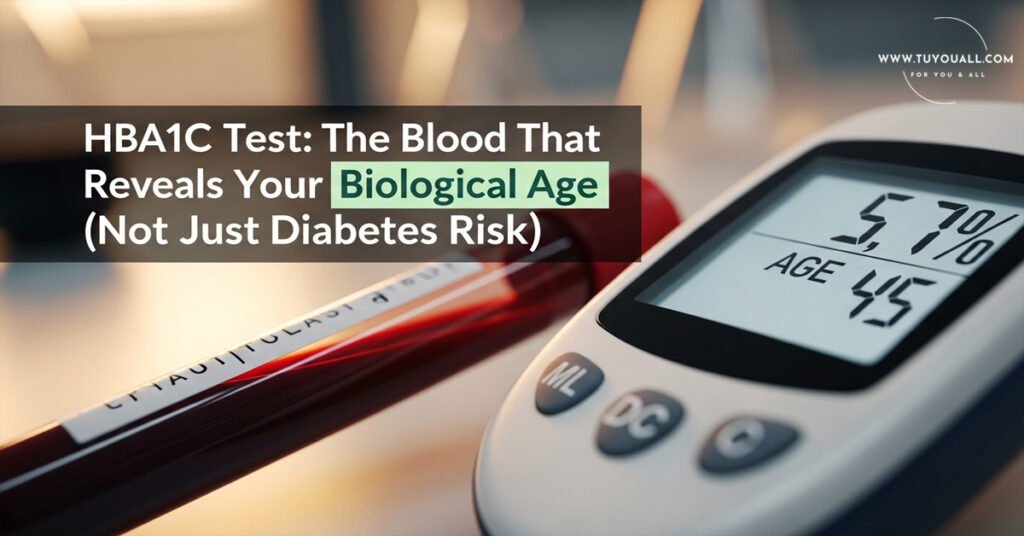
Discover why the HbA1C Test reveals your body’s true age, not just diabetes risk. Learn the science, decode your numbers, and follow a 5-step natural protocol to lower your HbA1C and reverse biological aging.
Have you ever wondered why some people look and feel decades younger than their birth certificate suggests, while others seem to age faster than time itself? The answer might be flowing through your veins right now—and a simple blood test called HbA1C could reveal your body’s biological age rather than just telling you whether you have diabetes.
Most people think of the HbA1C test as nothing more than a diabetes screening tool. But here’s what doctors rarely explain: this single number reflects how fast your organs, blood vessels, and nervous system are aging from the inside out.
It’s like a speedometer for your metabolic health, showing whether your body is cruising smoothly or racing toward premature aging.
In this guide, we’ll decode what your HbA1C numbers actually mean for your longevity, bust the dangerous myths keeping people sick, and walk through a practical, step-by-step plan to lower your levels naturally—without immediately reaching for medication.
What Is HbA1C? Understanding the Science in Simple Terms
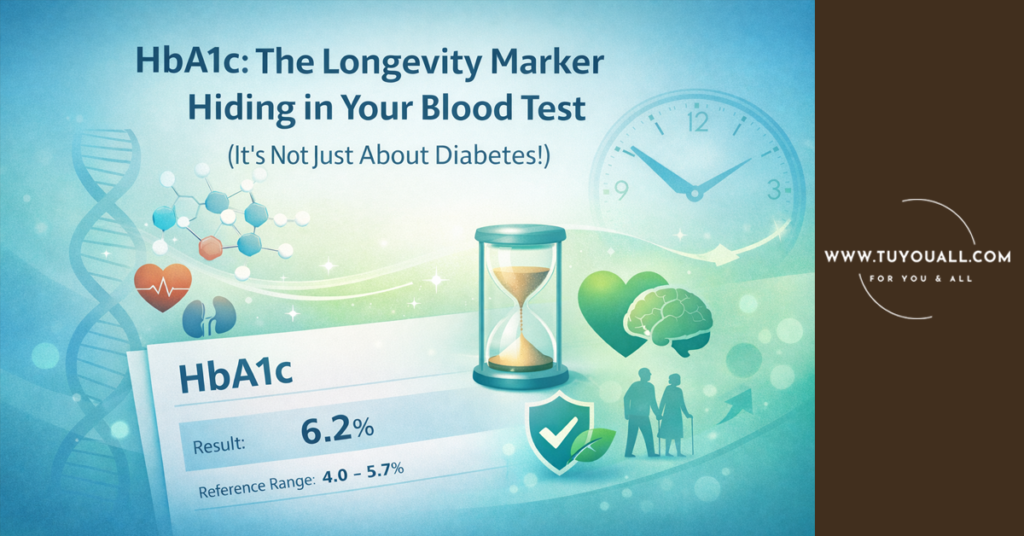
HbA1C (hemoglobin A1C) measures the percentage of your red blood cells that have glucose stuck to them. Here’s how it works:
Your red blood cells live for about 90 to 120 days (roughly 3-4 months). During their lifespan, these cells constantly travel through your bloodstream. When blood sugar levels stay high, glucose molecules chemically bind to hemoglobin proteins inside these cells—a process called glycation.
The higher your blood sugar over time, the more glucose “sticks” to your hemoglobin. Since red blood cells stick around for months, your HbA1C reading captures your average blood sugar exposure over the past 3 months—not just what you ate for breakfast yesterday.
“The reality is that HbA1C tells you about your metabolic health—how your blood vessels, your nervous system, and your other organs are aging, and what your biological age actually is.” —
This chemical binding happens without needing insulin or enzymes—it’s a direct reaction between sugar and protein. That’s why even people with “normal” insulin function can have elevated HbA1C if their diet consistently spikes blood sugar.
Why HbA1C Is Your Biological Age Clock
Here’s where things get fascinating—and slightly alarming.
High HbA1C doesn’t just mean “you have sugar in your blood.” It means sugar is sticking to your body’s tissues and slowly damaging them. This process, called advanced glycation end products (AGEs) formation, is one of the primary drivers of biological aging.
When glycation levels rise:
| Body System | What Happens | Long-term Risk |
| Blood Vessels | Lose elasticity, become stiff and brittle | Heart disease, stroke, hypertension |
| Nerves | Signal transmission slows, nutrition delivery decreases | Neuropathy, cognitive decline |
| Kidneys | Must work harder to filter blood | Chronic kidney disease |
| Heart | Ages faster than chronological age | Cardiovascular disease, heart failure |
Think of it like this: high HbA1C turns your blood vessels into old, cracked rubber pipes instead of flexible, healthy tubes. Your heart has to pump harder against stiff arteries. Your nerves don’t get proper nourishment. Your organs age faster than they should.
That’s why we say high HbA1C accelerates biological aging—making you “old” on the inside even if you feel fine on the outside.
Decoding Your HbA1C Numbers: The Complete Range Guide
When you get your HbA1C report, you’ll see a percentage. Here’s exactly what each range means for your health and longevity:
5.0% – 5.3%: The Optimal Zone ✅
This is your metabolic sweet spot. It means:
- Your insulin is working efficiently
- Your metabolism is running smoothly
- Your body is relatively “young” internally
- Lowest risk of cardiovascular complications
Goal: Stay here through consistent lifestyle habits.
5.4% – 5.6%: The Warning Margin ⚠️
Not an emergency, but don’t get complacent. This is where your safety margin starts shrinking. The good news? Lifestyle changes at this stage show results quickly and clearly.
Action needed: Implement dietary changes now before crossing into prediabetic territory.
5.7% – 6.4%: Prediabetes (The Dangerous Misconception) 🚨
Medical terminology calls this “prediabetes,” which sounds like “diabetes hasn’t happened yet.” This is misleading and dangerous.
“Prediabetes is not a warning—it’s already the beginning stage of disease. The only difference is that at this stage, reversing the damage is comparatively easier. But thinking ‘I don’t really have a problem’ is a huge mistake most people make.” —
At this range:
- Organ damage is already occurring
- Blood vessel stiffness is increasing
- Risk of heart disease rises 1.5x
- Without intervention, 15-30% of people develop full diabetes within 5 years
6.5% and Above: Diabetes Territory ⛔
Once you hit 6.5% on two separate tests, you’re in the diabetes range—regardless of whether you have symptoms.
This means:
- Significant metabolic dysfunction
- Accelerated aging across all organ systems
- Immediate need for medical management + lifestyle overhaul
For those already diagnosed: The American Diabetes Association recommends keeping HbA1C below 7% to minimize complications.
Some people can achieve remission (HbA1C below 6.5% without medication) through intensive lifestyle changes.
3 Dangerous Myths That Keep People Sick
After years of clinical practice, the creator of this content hears these misconceptions constantly. Let’s destroy them:
Myth #1: “I Don’t Eat Sweets, So My Sugar Must Be Fine”
The Reality: Your body doesn’t care whether you think you’re eating sugar. It cares whether you’re consuming foods that turn into glucose rapidly.
Foods that spike blood sugar despite tasting “savory”:
- White bread and bakery items
- Biscuits and crackers
- Packaged namkeen (savory snacks)
- Fruit juices (even “natural” ones)
- White rice and refined flour (maida)
For Example: A plate of white rice raises blood sugar just as aggressively as a candy bar—sometimes faster. Your HbA1C reflects the end result, not the source.
Myth #2: “I’m Thin, So Diabetes Can’t Affect Me”
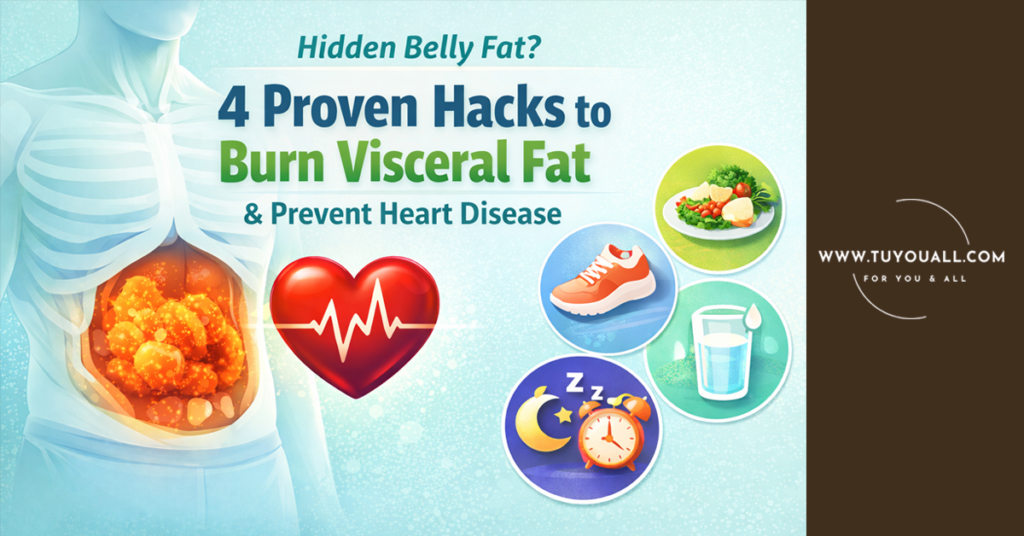
The Reality: This is perhaps the most dangerous misconception in India. Many people are “thin outside, fat inside”—a condition called TOFI (Thin Outside Fat Inside) or having high visceral fat.
Visceral fat is the dangerous padding around your internal organs (liver, pancreas, intestines). It:
- Disturbs insulin function
- Raises blood sugar silently
- Pushes you toward diabetes without warning
- Increases heart disease risk regardless of clothing size
You can look slim in clothes while your organs are wrapped in inflammatory fat tissue.
Myth #3: “Up to 6.5% Is Fine—No Need to Worry”
The Reality: “Okay” and “healthy” are not the same thing. “Okay” means you’re not in immediate danger of hospitalization. “Healthy” means your body isn’t being damaged.
Most people relax when they hear “your report is fine.” But your goal shouldn’t be staying out of the danger zone—it should be reversing the trend and getting as close to 5.0% as possible. The lower your HbA1C (within normal range), the slower your biological aging.
The 5-Step Natural Protocol to Lower HbA1C and Reverse Biological Aging
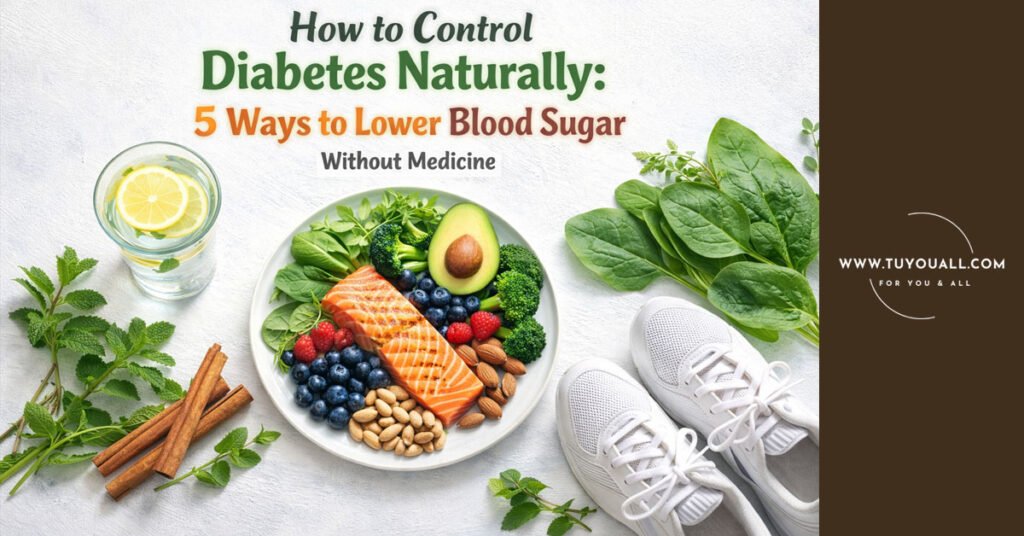
Remember: HbA1C reflects 3 months of blood sugar history. You can’t fix it overnight, but you can definitely improve it with consistent action. Here’s the evidence-based protocol:
Step 1: Eliminate Refined Carbs (Not Just Sugar)
Stop focusing only on “sweet” foods. Target these rapid glucose converters:
- White bread, biscuits, and bakery items
- Refined flour (maida) products
- White rice
- Packaged snacks and chips
- Sweetened beverages (including “healthy” juices)
Replace with: Whole grains, legumes, vegetables, and foods in their natural form.
Step 2: Boost Protein and Fiber Intake
Protein and fiber work as your blood sugar bodyguards. They:
- Slow down digestion
- Prevent sudden glucose spikes
- Give your body time to process sugar gradually
Research shows: Consuming 25-30 grams of fiber daily can significantly lower A1C levels.
Soluble fiber (found in oats, beans, apples) forms a gel that slows glucose absorption.
Practical tip: Start every meal with a salad or vegetables, then eat protein, and finish with carbohydrates if needed.
Step 3: Walk 30-40 Minutes Daily
You don’t need a gym membership or marathon training. A simple brisk walk is one of the most effective blood sugar lowering tools available.
Why it works: When you walk, your muscles pull glucose directly from your blood for energy—without requiring insulin.
This gives your pancreas a break and reduces insulin resistance naturally.
The research: Even 150 minutes of moderate exercise per week (just 20-25 minutes daily) improves glucose metabolism significantly.
Step 4: Move After Meals (The 10-15 Minute Rule)
This small habit delivers massive results:
Never sit or lie down immediately after eating. Instead:
- Take a 10-15 minute light walk
- Do light household chores
- Stand and move around your home
For Example: One study showed that walking for just 10 minutes after meals reduces post-meal blood sugar spikes by up to 30%. This simple practice directly contributes to lower HbA1C over time.
Step 5: Master Sleep and Stress
Poor sleep and chronic stress raise cortisol—a stress hormone that increases blood sugar.
Sleep optimization:
- Aim for 6-7 hours of deep, uninterrupted sleep
- Stop screen time (mobile/TV) 1 hour before bed
- Keep a consistent sleep schedule
Stress management:
- You can’t eliminate all stress, but you can manage your response
- Try meditation, deep breathing, or journaling
- Find activities that release “happy hormones” (endorphins) naturally
“HbA1C comes down first through lifestyle. Medication only helps when lifestyle alone isn’t enough. So if your HbA1C is elevated, start with your lifestyle first—don’t just run toward medication.” —
Frequently Asked Questions (FAQ)
Q.1. How often should I get my HbA1C tested?
If you’re over 45 or have risk factors (overweight, family history), get tested every 3 years if normal, every 1-2 years if prediabetic, and at least twice yearly if diabetic.
Q.2. Can HbA1C be lowered without medication?
Yes. Research shows lifestyle modifications alone can reduce HbA1C by several percentage points—even achieving diabetes remission in some cases. One documented case showed a drop from 14.9% to 5.1% in just 3 months through diet and exercise alone.
Q.3. Why does my HbA1C not match my daily glucose readings?
HbA1C is a 3-month average, while home glucometers show momentary snapshots. If your daily readings vary wildly (high spikes and low crashes), they might average out to a misleading HbA1C. Focus on reducing spikes through diet and post-meal movement.
Q.4. Can thin people have high HbA1C?
Absolutely. Visceral fat (hidden organ fat) affects metabolism regardless of outward appearance. Many “skinny” people have metabolic profiles worse than overweight individuals due to poor diet and visceral adiposity.
Q.5. How quickly can I lower my HbA1C naturally?
Since HbA1C reflects 3 months of blood sugar exposure, significant changes typically appear within 3-4 months of consistent lifestyle changes. Some people see improvements in as little as 6-8 weeks.
Conclusion: Your Biological Age Is in Your Hands
Your HbA1C number is more than a diabetes test—it’s a biological age indicator showing how fast your blood vessels, heart, kidneys, and nerves are aging. The good news? Unlike chronological age, biological age is reversible.
Here’s what to remember:
- Optimal HbA1C (5.0-5.3%) = Younger biological age, smooth metabolism
- Prediabetic range (5.7-6.4%) = Already damaging organs, but reversible
- Diabetic range (6.5%+) = Requires immediate lifestyle + medical intervention
The path to lower HbA1C isn’t complicated: cut refined carbs, add protein and fiber, walk daily, move after meals, and prioritize sleep. These five steps, practiced consistently, can shave years off your biological age and add healthy years to your life.