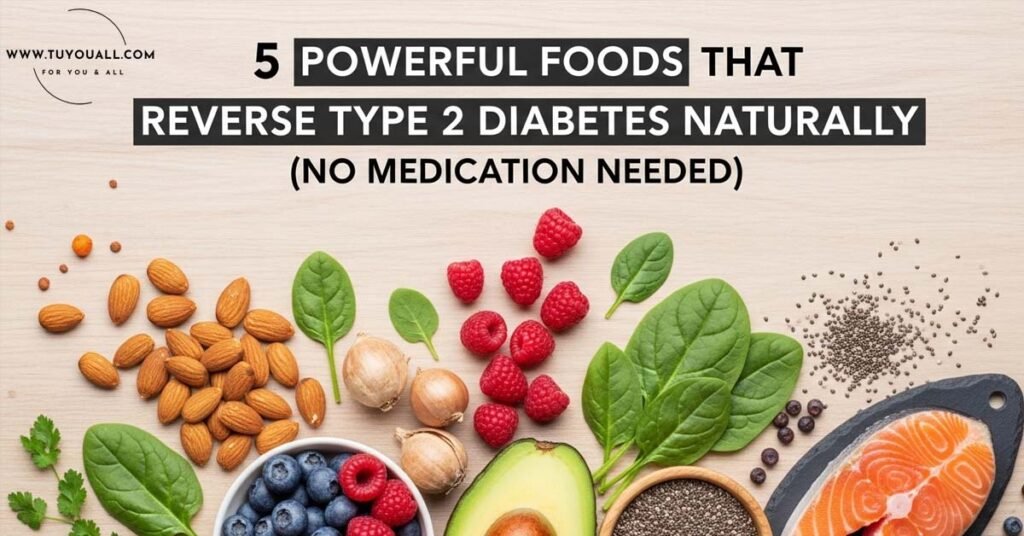
Discover 5 science-backed foods that can reverse type 2 diabetes naturally. Learn how barley, salads, and healthy fats can normalize blood sugar in weeks.
What if I told you that type 2 diabetes isn’t actually a disease, but a dietary disorder you can fix with your fork?
For years, we’ve been told diabetes is a life sentence—something you “manage” with pills for the rest of your life. But modern research tells a different story. When you understand what’s actually happening inside your body, you can begin to reverse insulin resistance and normalize your blood sugar naturally—often within just a few months.
In this guide, we’ll break down the science in simple terms and explore five everyday foods that can help you take back control of your health. This article is based on insights from the popular health channel Fit Tuber Hindi, translated and expanded for you.
Why Diabetes Happens: The “Crowded Metro” Problem
To fix something, you first need to understand how it broke. When you eat food, your body converts it into glucose (sugar) for energy. But glucose can’t enter your cells on its own—it needs a key. That key is insulin, a hormone produced by your pancreas.
As Vivek from Fit Tuber explains: “Think of it like the Delhi Metro. Imagine a coach that’s already packed to capacity with people. Now, if you try to force more people inside, what happens? The people inside push back and block the doors.”
That’s exactly what happens with insulin resistance. When you consistently eat foods that flood your blood with too much glucose, your cells become “full.” They start ignoring insulin’s signals to let more sugar in. The result? Sugar stays trapped in your bloodstream.
Why this is dangerous: Excess glucose makes your blood thick and sticky—like water mixed with mud. This thick blood can’t flow properly through tiny microscopic vessels to reach your organs. When organs don’t get proper blood supply, they get damaged. Plus, sticky glucose attaches to nerve endings, causing inflammation throughout the body. That’s why they say “diabetes is the mother of all diseases.”
But here’s the hope: If you empty the excess glucose from your cells and blood, your body starts listening to insulin again. This isn’t an Ayurvedic claim or folk wisdom—it’s backed by modern nutritional science.
“Diabetes is not a disease. It is a dietary disorder, a result of our wrong eating habits. And it can be fixed in just a few months if we correct our diet.” —Vivek, Fit Tuber Hindi
The 5 Foods That Can Reverse Your Diabetes
The strategy is simple: Eat foods that release glucose slowly and steadily, rather than flooding your system with sugar spikes. Here are the five power foods to add to your plate immediately.
1. Raw Salads: The Pre-Meal Game Changer

If you do just one thing from this list, make it this: Eat a full plate of raw salad before lunch and dinner.
Studies show that eating salad before your main meal can reduce blood sugar spikes by up to 47%. Here’s why this works:
- Low Glycemic Index: Raw vegetables have the lowest glycemic index of any food category. They don’t cause sudden sugar jumps.
- Fiber Fill-Up: The fiber fills your stomach partially, so you eat less of the heavier main course and stay full longer.
- Slow Release: The roughage ensures any subsequent food releases its sugars slowly.
- How to do it:
- Before Lunch: Mix cucumber, carrots, cabbage, and beetroot. Dress with lemon juice, black salt, and pepper. If you can’t eat it raw, lightly steam or sauté the vegetables—but keep the fiber intact.
- Before Dinner: Eat 100g of raw red onion salad. Research on 84 diabetic patients showed that eating 100g of raw onion before dinner reduced blood sugar by 40 points within just 4 hours. Onions contain compounds that actively lower blood glucose.
For example, imagine your bloodstream is a highway. Eating wheat roti alone is like rush hour traffic—everything bottlenecks. Adding salad first is like opening an express lane, allowing sugar to move smoothly and steadily instead of jamming up.
2. Barley (Jau): The Ancient Grain That Beats Wheat and Rice
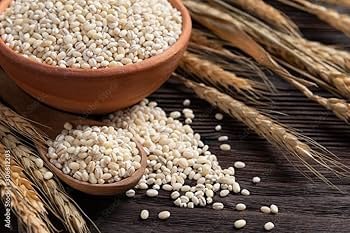
Our modern diet relies heavily on wheat and white rice, but these are diabetes triggers in disguise. Wheat has been heavily hybridized since the 1960s Green Revolution, making it high in gluten and harsh on blood sugar. White rice? It’s essentially pure starch that skyrockets glucose levels.
Enter barley (jau). This ancient grain is making a comeback for good reason.
The Science: In a comparative study, people eating oats saw their blood sugar drop by 36%. But those eating barley saw a 65% reduction. Why? Barley has the lowest glycemic index of all grains.
| Grain | Glycemic Index | Diabetes Impact |
| Barley | Low (25-30) | Excellent – Stabilizes sugar |
| Millets | Low-Medium | Very Good – High fiber |
| Wheat | High (70+) | Poor – Causes spikes |
| White Rice | Very High (70-90) | Very Poor – Rapid glucose flood |
How to use it: Replace your wheat roti with barley roti for a few weeks. If you eat rice, switch to millets (ragi, jowar, bajra). Soak millets for 6-8 hours before cooking to make them soft. You can cook them exactly like rice—make pulao, biryani, or khichdi.
3. Whole Fruits: Nature’s Sweet Medicine (Juice is the Enemy)
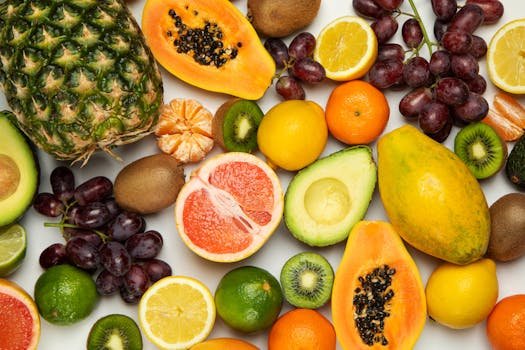
There’s confusion about fruits and diabetes. Here’s the truth: Yes, you can eat fruit. No, you cannot drink fruit juice.
Whole fruits contain natural sugars bound with fiber. The fiber ensures the sugar enters your bloodstream slowly. Plus, fruits contain fructose, which is metabolized in the liver without requiring insulin.
Best choices: Jamun (black plum), apples, oranges, grapefruit, pineapple (in moderation), and peaches. Limit these: Very sweet fruits like bananas, mangoes, dates, watermelon, and chikoo (eat small portions occasionally).
The Rule: Eat one seasonal fruit at a time, and eat the whole fruit—never juice it. When you juice a fruit, you strip away the fiber, leaving behind liquid sugar that hits your bloodstream like a soda.
For example, think of an orange as a timed-release capsule. The fiber is the coating that slowly releases medicine into your system. Juice is like crushing the capsule and taking everything at once—too much, too fast.
Pro tip: Try having only fruits for breakfast. If you’re still hungry after 30 minutes, have oats or porridge. This “fruit first” approach gives your digestion a gentle start.
4. Healthy Fats: The Blood Sugar Stabilizers
Here’s a counterintuitive truth: To lower your blood sugar, you need to eat more fat. Not junk food fat, but healthy, natural fats.
Look at this simple comparison of how different macronutrients affect blood sugar:
- Carbohydrates: Cause sharp spikes and crashes
- Proteins: Cause moderate, manageable rises
- Fats: Cause almost zero spike—just a flat, steady line
Why this matters: When you add healthy fats to a meal, they slow down the absorption of carbohydrates, preventing sugar spikes. This is why Ayurveda recommends adding a spoon of ghee to your vegetables—it actually lowers the meal’s glycemic index.
Your fat toolkit:
- Nuts & Seeds: Almonds, walnuts, peanuts (roasted), flaxseeds, chia seeds, sunflower seeds
- Oils: Switch to cold-pressed oils (kachhi ghani). Refined oils damage your pancreas—the very organ making your insulin. Use mustard oil, sesame oil, coconut oil, or peanut oil.
- Evening Snack: When hunger strikes at 5 PM, skip the chips. Eat a handful of soaked nuts, coconut pieces, or roasted peanuts.
5. Whole Pulses (With Skin): The Fiber Powerhouses
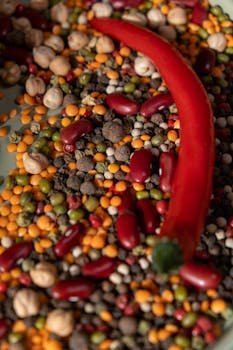
Most households cook with “washed” (dhuli) lentils—yellow moong dal without the green skin, white urad dal without the black coat. But that skin is where the magic lives.
Whole pulses (with skin) contain significantly more fiber and protein than their washed counterparts. This fiber-protein combo ensures that glucose enters your bloodstream slowly and steadily.
Make the switch:
- Replace yellow moong with green moong (with skin)
- Use black chana (whole Bengal gram) instead of split chickpeas
- Regularly eat rajma (kidney beans) and lobia (black-eyed peas)
Timing matters: Since whole pulses are heavier to digest, eat them at lunch. For dinner, lighter whole lentils like green moong dal work well.
Snack hack: Roasted black chana (with skin) makes an excellent crunchy snack. Or try sattu (roasted gram flour) mixed in water with lemon—a refreshing summer drink that stabilizes blood sugar.
Your Day-to-Day Diabetes Reversal Meal Plan
Putting it all together, here’s what an optimal day looks like:
| Time | Meal | What to Eat |
| Morning | Breakfast | Seasonal fruits (only), or fruits + oats/daliya |
| 12:30 PM | Pre-Lunch | Large plate of raw vegetable salad (cucumber, carrot, cabbage) |
| 1:00 PM | Lunch | Barley roti OR millet rice + 1 bowl whole pulse (black chana/rajma/green moong) + cooked vegetable + ghee |
| 5:00 PM | Snack | Soaked almonds/walnuts, OR roasted peanuts, OR coconut pieces, OR sattu drink |
| 7:30 PM | Pre-Dinner | Raw onion salad (100g) |
| 8:00 PM | Dinner | Jau (barley) roti OR millets + whole lentils (green moong/chana dal) + veg |
The promise: Do this for just one week, and you’ll see your blood sugar readings drop. Do it consistently for 2-3 months, and you may hear those magic words from your doctor: “You don’t have diabetes anymore.”
Frequently Asked Questions
Q.1. Can type 2 diabetes really be reversed, or just managed?
Yes, it can be reversed. Type 2 diabetes is not a permanent disease but a dietary disorder. When you remove the cause (high glycemic foods) and add low glycemic whole foods, your cells empty of excess glucose and start responding to insulin again. Many people have normalized their HbA1c levels permanently through diet alone.
Q.2. Why does eating salad before meals help so much?
Raw vegetables have the lowest glycemic index of any food. When you eat them first, they create a fiber mesh in your stomach that slows down the absorption of everything you eat afterward. Studies confirm this can reduce post-meal blood sugar spikes by up to 47%.
Q.3. Are fruits safe for diabetics since they contain sugar?
Whole fruits are safe and beneficial because their sugar is bound with fiber, which slows absorption. The fructose in fruits is processed by the liver without needing insulin. However, fruit juices remove the fiber and should be avoided as they cause immediate sugar spikes.
Q.4. What’s wrong with wheat and white rice?
Modern wheat is highly hybridized and has a high glycemic index (70+), causing sharp sugar spikes. White rice is stripped of fiber and nutrients, acting essentially as pure starch. Both contribute to insulin resistance when eaten regularly.
Q.5. How long until I see results?
Most people see lower blood sugar readings within the first week of switching to these foods. Significant improvements in HbA1c typically occur within 2-3 months of consistent dietary changes.
Conclusion: Your Kitchen Is Your Pharmacy
Type 2 diabetes doesn’t have to be a life sentence of medication and worry. It’s a dietary disorder with a dietary cure. By understanding that the problem is excess glucose flooding your system, you can choose foods that release energy slowly and steadily.
The five foods we covered—raw salads, barley, whole fruits, healthy fats, and whole pulses—aren’t expensive supplements or exotic superfoods. They’re simple, traditional ingredients your grandmother would recognize. Start with the salad-before-meals habit, swap wheat for barley, and embrace whole foods over refined ones.
Your body has an incredible ability to heal when you stop harming it and start supporting it. The power to reverse your diabetes isn’t in a pill bottle—it’s on your plate.