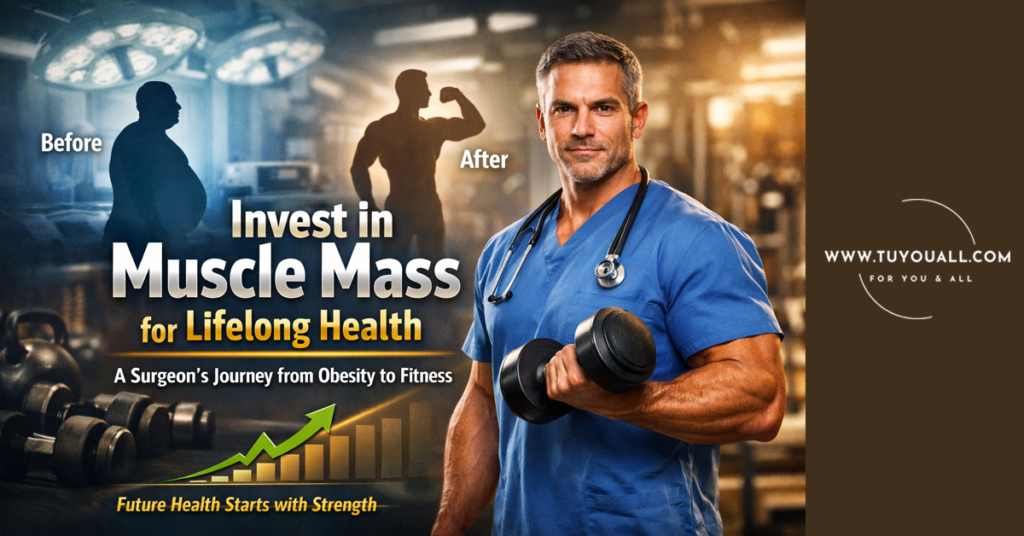
A surgeon’s journey from obesity to fitness shows why building muscle mass is your best health investment for preventing diabetes, back pain, and age-related decline.
What if I told you that the most dangerous thing you could do for your body isn’t lifting heavy weights or sprinting on a track—but rather, not moving at all?
Meet Dr. Santhosh Jacob, an orthopedic surgeon who once weighed 150 kilograms (330 pounds) and watched his health spiral out of control. Today, at 43 years old, he has the energy of someone decades younger, has reversed his diabetes without medication, and performs complex surgeries while maintaining 16% body fat. His secret isn’t a miracle drug or an extreme diet. It’s muscle mass.
“I was an obese child,” Dr. Jacob recalls. “By the time I joined medical college, I was 150 kilos. The weighing machine at the hospital showed an error because it couldn’t measure beyond that.” His wake-up call came when he learned he was going to be a father at age 39. That moment sparked a transformation that changed not just his body, but his entire medical practice.
If you’re someone who thinks exercise is too risky, or that you’re “too old” to start, Dr. Jacob’s message is clear: You either choose the discomfort of exercise now, or the disability of disease later. Here’s everything you need to know about building muscle mass for long-term health, based on his years of medical expertise and personal experimentation.
The Real Danger Isn’t Exercise—It’s Not Moving
We’ve all heard the warnings: “Be careful, you might get hurt!” But according to Dr. Jacob, this fear is completely backwards. “Exercise is very dangerous if you do it wrong,” he admits. “But I am a sports surgeon—ask me. Most people who get injured are young people with a ‘3-month transformation’ mindset. They want to look like a movie star in 90 days.”
This short-term thinking ignores a fundamental truth: We don’t exercise to lose weight or look good. We exercise so our body adapts. When you rush the process, you miss the five crucial adaptations that happen when you train properly:
- Neural adaptations – Your brain builds more connections to your muscles, improving coordination and reducing dementia risk
- Muscle adaptations – Your muscle fibers grow larger and stronger
- Endocrine adaptations – Your hormones balance and optimize
- Connective tissue adaptations – Your tendons and ligaments become resilient
- Cardiac adaptations – Your heart becomes more efficient at pumping blood
For example, when you strength train regularly, your cerebral representation actually increases. “Every muscle cell can have one motor neuron or 50,” Dr. Jacob explains. “When you’re constantly exercising, your muscle asks for more nerves, and your brain activates. That’s why exercising reduces the depth of brain cell loss as you age.”
Strength Training for Diabetes: A Doctor’s Personal Proof
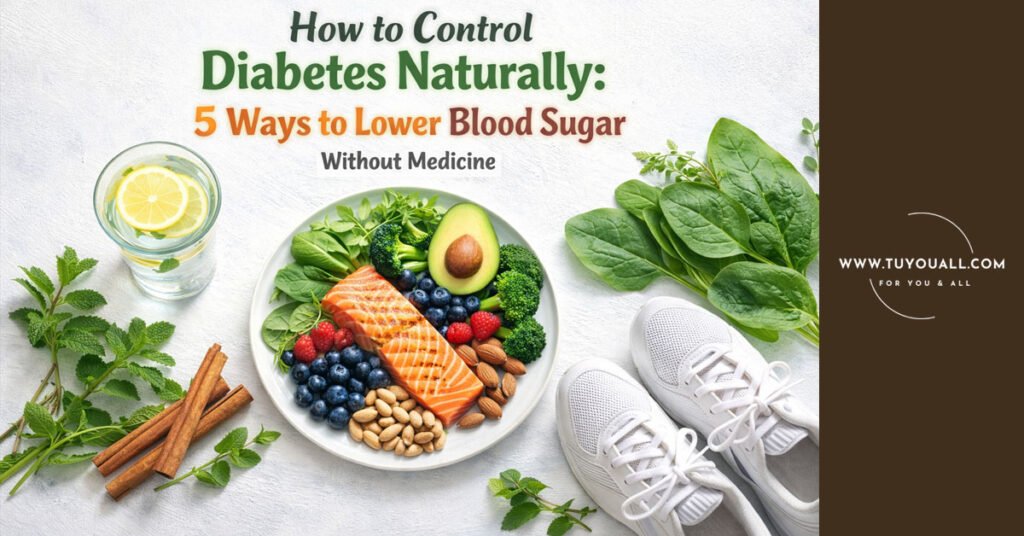
One of the most powerful muscle mass health benefits is its impact on blood sugar control. Dr. Jacob was diabetic. Now he’s not—and he takes no medication for it.
“I was a diabetic. I am well-controlled now just with exercise and lifestyle modification,” he shares. Here’s how it works: All your blood vessels run through your muscles. When you have larger muscle mass, glucose has a higher chance of being stored as glycogen in the muscle tissue rather than floating around in your bloodstream as excess sugar.
“There is no single disease in the world where having muscle mass is a disadvantage,” Dr. Jacob states firmly. “Just like there is no disease in the world where having an obese body structure is an advantage.”
Think of muscle mass like a good mutual fund investment. The deposits you make in your 20s, 30s, and 40s pay dividends when you’re 70, 80, or even 90. Without it, simple tasks like standing up from a chair become maximum-effort events that strain your heart. With it, your heart barely has to work to keep you moving.
Prevent Lower Back Pain Naturally by Building Your “Natural Brace”
If you’re over six feet tall with a waist above 34 inches (or under six feet with a waist above 32 inches), Dr. Jacob has sobering news: “You are going to have low back pain at some point in time.”
Why? Because between your rib cage and your pelvis, you have no bones—only five lumbar vertebrae and four layers of core muscles. These muscles are supposed to act as a natural brace, being “as strong as bone when you need them, and flexible as muscle when you don’t.”
When your core is weak, you can’t maintain proper pressure inside your abdomen while lifting or twisting. The impact goes straight to your spinal discs, causing them to tear or bulge. Then you rest, the muscles waste away further, you gain weight from inactivity, and the cycle worsens.
“Everybody thinks knee pain means the problem is in the knee,” Dr. Jacob explains. “No. It’s like a traffic jam at a main junction. Most probably, the problem is at a junction ahead or behind.” The same applies to back pain—often, the issue stems from weak hips, tight ankles, or a disconnected core.
The solution isn’t surgery—it’s strength. Dr. Jacob recommends starting with:
- Planks (holding a push-up position)
- Farmer’s carries (walking while holding weights)
- Functional core exercises that teach you to “brace” your midsection
HIIT Workouts for Beginners: Maximum Results in Minimum Time
You don’t need to spend hours in the gym. Dr. Jacob follows a simple system of 12 exercise sessions per week, with each session lasting just 20 minutes minimum. His secret weapon? High-Intensity Interval Training (HIIT).
“Research is very clear that whenever you exercise at a heart rate higher than your normal for more than 9 minutes, benefits are seen,” he notes. His favorite 20-minute protocols include:
| Exercise Type | Work Interval | Rest Interval | Total Sets | Total Time |
| Shadow Boxing | 90 seconds | 60 seconds | 8 sets | 20 minutes |
| Sprinting | 50 meters (full speed) | Walk back | 10 sets | 14-16 minutes |
| Bodyweight Circuits | 45 seconds | 15 seconds | 20 rounds | 20 minutes |
The magic of HIIT workouts for beginners isn’t just the time saved—it’s the afterburn effect (EPOC). Excess Post-exercise Oxygen Consumption means you continue burning calories at an elevated rate for hours after you stop moving. “That gives you more bang for your buck,” Dr. Jacob says. “People who are able to direct their physical activity with precision and efficiency will achieve more.”
Exercise After 40: Training Smart, Not Just Hard
As we age, our approach to fitness must evolve. “From 20 to 35, we can recover from lots of injuries,” Dr. Jacob explains. “From 40 to 50, you can recover from two injuries. From 50 to 60, one injury. After that, you shouldn’t get injured.”
This doesn’t mean stopping—it means getting smarter about exercise after 40. The key is balancing strength with mobility. If you get stronger but lose flexibility, that’s when injuries happen.
Dr. Jacob breaks his 12 weekly sessions into:
- 30% Mobility and flexibility (yoga, stretching, joint circles)
- 20% Speed and agility (running, jumping, quick direction changes)
- 40% Weight training (progressive overload with compound movements)
- 10% Bodyweight exercises (pull-ups, push-ups, dips)
“Strength can be developed at any time,” he emphasizes. “But as you are increasing your strength, make sure you’re increasing your joint mobility and flexibility. They should go hand in hand.”
Why You Should Fear the Nursing Home, Not the Gym
Here’s the mindset shift that changed Dr. Jacob’s life: “Don’t be afraid of injuries. Be afraid of not being able to cook your own food if God gives you the life of 90 or 100 years old.”
He explains it as choosing your hard: “You either choose at 45: ‘I’ll get arthritis and low back pain,’ or you choose to work out. Exercise—you will get some injuries. But remember this: We always adapt to what we recover from. Even if it’s an injury, if you recover from it, you’re going to become stronger. But a degenerative disease? Once you get it, it’s a downhill battle.”
The men and women he admires in their 70s and 80s—the ones still living independently and joyfully—all have something in common: “They have had at least 10 to 15 injuries in their life because they have been doing things which were harder every day.”
Getting Started: Your 3-Step Action Plan
Ready to build your muscle mass health benefits? Dr. Jacob simplifies it to three non-negotiables:
- Progressive Overload Your muscles only grow when you challenge them. Whether it’s adding 2 more pounds to your dumbbell or running 30 seconds longer, you must do slightly more than last time.
- Adequate Recovery “You don’t get stronger in the gym—you get stronger when you sleep,” Dr. Jacob reminds us. Aim for 7-9 hours of quality sleep, especially after strength training.
- Essential Nutrition Focus on:
-
- Protein (for muscle repair)
- Fiber and antioxidants (for inflammation reduction)
- Healthy carbohydrates (for energy)
- Good fats (for hormone production)
For example, instead of obsessing over cutting out foods (which Dr. Jacob tried and failed at), focus on adding movement first. When he started boxing, his desire to perform well naturally reduced his alcohol consumption from weekend binges to occasional social drinks—without forced deprivation.
Frequently Asked Questions
Q.1. Can I build muscle after 60, or is it too late?
Absolutely. “The beauty about muscle is it can be stimulated to grow at any age,” Dr. Jacob confirms. “Research clearly shows that somebody who hasn’t exercised at all up to age 70—when they start, their muscle responds better than someone who has been exercising moderately.” He regularly has 92-year-old patients lift weights after hip surgeries.
Q.2. Will lifting weights make women look bulky?
No. “Women are biologically designed to have more body fat and less testosterone,” Dr. Jacob explains. “I am trying very hard to look like Arnold Schwarzenegger, and nothing is happening! Women who lift weights become strong, toned, and significantly reduce their risk of osteoporosis and fractures after menopause.”
Q.3. Is walking enough exercise for health?
Walking is excellent for recovery and basic cardiovascular health, but it’s not enough to build the muscle mass that protects you from diabetes and back pain. You need resistance—whether that’s weights, bands, or bodyweight exercises—to trigger the adaptations that keep you independent in old age.
Q.4. How do I know if my core is strong enough?
Try this: Stand up from a chair without using your hands. If you struggle, or if your waist measurement exceeds 34 inches (for men) or 32 inches (for women), you need dedicated core work. Start with planks and farmer’s carries before moving to crunches or sit-ups.
Q.5. What’s the best exercise for lower back pain?
Prevention is better than cure. Focus on exercises that build intra-abdominal pressure like planks, dead bugs, and bird-dogs. If you already have pain, see a physiotherapist first, then gradually add strength training while cutting processed sugars that increase inflammation.
Conclusion
Building muscle mass for long-term health isn’t about vanity—it’s about maintaining your dignity and independence as you age. Dr. Jacob’s transformation from a 150-kilogram, diabetic medical student to a thriving surgeon and father proves that your body can adapt at any stage of life.
The choice is yours: Will you borrow happiness from your future self through inactivity, or invest in your 90-year-old self today through consistent strength training? Start with just 20 minutes. Your future self will thank you.
What’s one small movement you can add to your routine this week to start building your “metabolic armor”? Share in the comments below!