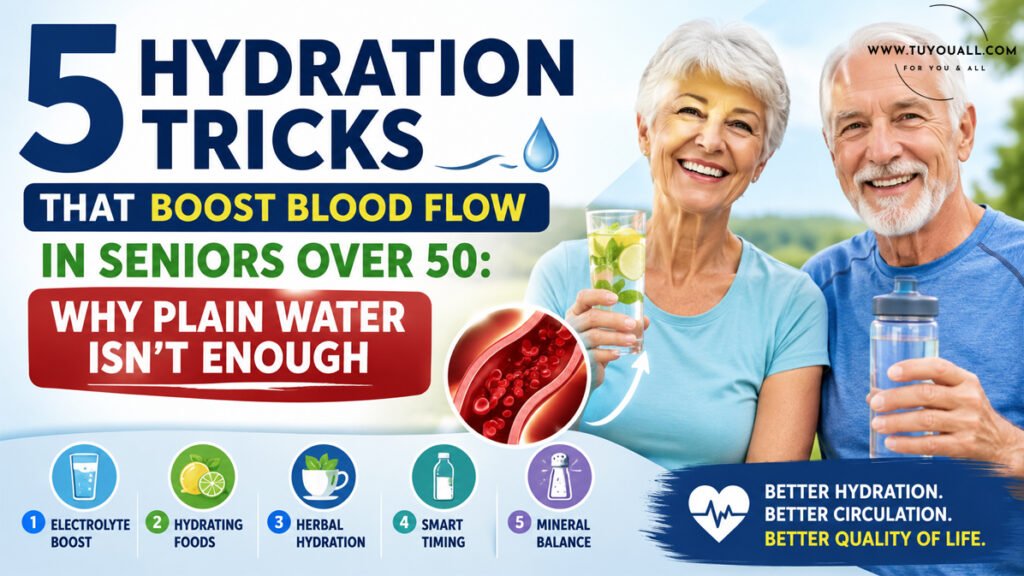
Discover Why Plain Water Fails Adults Over 50 And 5 Simple Hydration Tricks To Boost Circulation, Brain Fog, And Energy Naturally. Doctor-Approved Guide!
Here is a quiet truth most seniors never hear in a doctor’s office: after age 50, drinking plain water can slow effective blood flow by as much as 79% compared to optimized hydration methods. Sounds impossible, right? We have spent our entire lives believing that water automatically improves circulation. But the science tells a very different story.
Once the body ages past 50, blood behaves differently. Plasma volume drops, nitric oxide production falls sharply, and red blood cells become less flexible. When plain water enters this system without the right signals, it can temporarily dilute electrolytes, reduce vascular response, and fail to trigger the blood vessel relaxation needed for proper flow. That is why so many seniors drink water all day and still experience cold hands, heavy legs, dizziness, brain fog, and fatigue. The water is there, but the circulation response is not.
What stunned researchers is that small changes to how water is consumed increased blood flow by measurable amounts within 5 to 30 minutes—sometimes outperforming pharmaceutical vasodilators in short-term testing. These changes affected blood viscosity, endothelial function, and oxygen delivery almost immediately. No pills. No prescriptions. Just smarter hydration for seniors over 50.
In this guide, I will walk you through five simple but rarely discussed water-based tricks shown to boost blood flow naturally in adults over 50. We rank them from least to most powerful. Some are so simple they feel almost too obvious, but the mechanism behind them is anything but. Stay with me for all five, because the number one trick on this list is the one almost nobody does correctly, and it takes less than 60 seconds.
Why Plain Water Fails Your Circulation After 50
Before we dive into the five tricks, you need to understand what is actually happening in your bloodstream after 50. Once you see it, everything that follows will make perfect sense.
Your blood is not simply liquid. It is a complex suspension of cells, proteins, minerals, and hormones moving through a network of vessels whose inner walls—the endothelium—are biologically active. Healthy endothelial cells produce nitric oxide, the molecule that signals blood vessels to relax and dilate. When nitric oxide production is robust, vessels open wider, blood flows easily, and oxygen delivery to muscles, organs, and the brain is efficient.
After 50, three things change simultaneously:
- Nitric oxide synthase—the enzyme that produces nitric oxide—becomes less active. Vessels dilate less readily, and blood pressure tends to rise because the vessels cannot relax properly.
- Blood viscosity (the thickness of your blood) increases slightly with age as red blood cells lose some of their deformability. Thicker blood requires more cardiac effort to push through the capillary network, particularly in the hands, feet, and brain.
- Total plasma volume decreases. You have proportionally less fluid volume in the circulatory system, the kidneys become less efficient at retaining water, and the thirst mechanism becomes blunted. Many seniors are in a state of mild chronic dehydration without ever feeling thirsty.
Plain water addresses only the third problem. It adds fluid volume, but it does nothing for nitric oxide production. It does nothing for blood viscosity beyond dilution. And when consumed without the right accompanying minerals, it can actually dilute the electrolytes—sodium, potassium, and magnesium—that govern how well your vascular smooth muscle contracts and relaxes.
The result? Hydrated by volume, but not by function. The water is going in, but the circulation response is not following.
The 5 Best Hydration Tricks to Boost Blood Flow Naturally
Trick #5: Temperature-Timed Water Consumption
This is the entry point: simple, completely free, and more physiologically significant than most people realize. The temperature of water and the timing of when you drink it relative to meals and activity directly affects how quickly it is absorbed into the bloodstream and how rapidly it affects plasma volume and vascular response.
Research on water absorption rates found that room temperature water (approximately 20 to 22°C) is absorbed significantly faster than cold water. Cold water triggers a mild vasoconstriction response in the gastrointestinal tract, slowing absorption and temporarily reducing blood flow to peripheral vessels. For seniors already dealing with reduced circulation, this transient vasoconstriction is counterproductive.
More importantly, the timing matters as much as the temperature. Drinking water in the 15 minutes before physical activity—even light walking—maximizes the plasma volume expansion effect. When plasma volume is higher before activity, cardiac output is more efficient, vessels dilate more readily, and circulation to the extremities improves measurably.
Studies on pre-exercise hydration in older adults showed that drinking 250 to 300 ml of room temperature water 15 minutes before activity produced measurable increases in peripheral blood flow compared to drinking the same amount immediately before or during activity.
For Example:
Imagine you are about to take a 20-minute walk after lunch. Instead of sipping ice-cold water during your stroll, drink a glass of room-temperature water 15 minutes before you lace up your shoes. That single change costs nothing and takes no preparation, yet it primes your circulation for better oxygen delivery to your legs and brain.
Trick #4: Mineral-Enhanced Water
This is where the real mechanism shift begins. Plain water consumed in large amounts dilutes serum electrolyte concentrations—specifically sodium, potassium, and magnesium. These three minerals are not optional extras. They are the electrical signals that govern vascular smooth muscle function.
Potassium and magnesium are direct vasodilators. They activate the same pathways that pharmaceutical calcium channel blockers activate, through entirely natural mechanisms. When these minerals are diluted by plain water intake without replacement, vascular tone increases. Vessels stay slightly contracted rather than relaxing fully, and the endothelium becomes less responsive to flow-mediated dilation signals.
This is the mechanism behind why some seniors feel worse, not better, after increasing their water intake.
The solution is simple: add a small pinch of high-quality sea salt (not table salt, which is stripped of trace minerals) to each liter of water you drink. Sea salt contains trace amounts of over 80 minerals, including potassium, magnesium, calcium, and zinc, alongside the sodium. This is not about adding large amounts of sodium—a single pinch per liter raises mineral content by a small but physiologically meaningful amount.
Alternatively:
- Add a slice of lemon, which contributes potassium and triggers a mild alkalizing response that improves endothelial function.
- Dissolve a small amount of coconut water into your daily water to add potassium naturally.
For Example:
A 68-year-old man starts drinking 2 liters of water daily but notices his afternoon leg cramps and cold feet actually get worse. He switches to mineral-enhanced water with a pinch of sea salt and lemon slices. Within two weeks, his peripheral circulation improves because his vascular smooth muscle finally has the electrolytes it needs to relax.
Research published in the Journal of Applied Physiology found that electrolyte-enhanced water produced significantly better improvements in vascular conductance and exercise blood flow in older adults compared to plain water over a two-week period. The vessels responded more readily; peripheral circulation improved. The difference was not in how much water people drank—it was in what the water contained.
Trick #3: Hibiscus Infused Water
Hibiscus tea is one of the most extensively studied natural vasodilators in clinical literature, but almost nobody drinks it for circulation. And almost nobody knows that drinking it as an infused water (cooled, lightly diluted) rather than as a hot tea dramatically changes its bioavailability and effect speed.
The active compounds in hibiscus flowers—anthocyanins and organic acids, particularly hibiscic acid—directly stimulate nitric oxide production in endothelial cells. This is the missing piece in the senior circulation equation. Plain water does not stimulate nitric oxide. Hibiscus water does. It activates the same mechanism that many prescription vasodilators attempt to replicate.
A randomized controlled trial published in the Journal of Nutrition found that three cups of hibiscus tea daily reduced systolic blood pressure by an average of seven points in prehypertensive adults over an 8-week period. The mechanism confirmed was endothelial nitric oxide stimulation—the same pathway compromised by aging. A separate study found acute blood flow improvements within 30 minutes of consumption.
How to make hibiscus water for maximum circulatory benefit:
- Steep 4 to 5 dried hibiscus flowers (available in most health food stores or online) in 500 ml of boiling water for 10 minutes.
- Allow to cool to room temperature.
- Add a pinch of sea salt and half a teaspoon of raw honey if desired.
- Drink 1 to 2 glasses per day—not hot, not iced, at room temperature for maximum absorption.
The deep red color indicates anthocyanin concentration. The deeper the color, the higher the active compound content. Aim for a rich burgundy, not a pale pink.
For Example:
A 75-year-old woman with mildly elevated blood pressure replaces her afternoon plain water with room-temperature hibiscus water. Within 30 minutes, she notices her hands feel warmer. Over 8 weeks, her morning blood pressure readings drop by an average of 6 points—without changing her medication.
Trick #2: Morning Warm Water with Lemon and Ginger
This combination, consumed specifically within 10 minutes of waking, has a disproportionate effect on morning circulation that makes it the second most powerful trick on this list.
Here is why morning timing is critical: the cardiovascular system is at its most vulnerable in the first 60 to 90 minutes after waking. Cortisol surges, blood viscosity is at its highest after 7 to 8 hours without fluid, and platelet aggregability (the tendency of platelets to clump together) peaks in the morning hours. This combination produces the highest cardiac event risk window of the 24-hour cycle. Most senior-related circulatory events—strokes, heart attacks, DVT episodes—cluster between 6 and 10 in the morning for these exact reasons.
Warm water immediately upon waking begins thinning the blood and restoring plasma volume before cortisol peaks. The addition of fresh lemon juice adds vitamin C, a direct co-actor in nitric oxide synthesis, and citric acid, which improves iron absorption and supports red blood cell health. Fresh grated ginger adds gingerols and shogaols—compounds with documented antiplatelet activity comparable to low-dose aspirin in some studies, without the gastrointestinal side effects.
Research published in Thrombosis Research found that ginger consumption significantly reduced platelet aggregation in healthy adults. The effect was dose-dependent and rapid, occurring within 90 minutes of consumption.
The protocol is specific: immediately upon waking, before coffee, before food, before anything else—drink 250 ml of warm (not hot, not cold) water with the juice of half a fresh lemon and half a teaspoon of freshly grated or powdered ginger. Drink it slowly over 5 minutes.
This is not a detox ritual. This is targeted vascular pharmacology using compounds your body already knows how to use.
For Example:
A 70-year-old retiree who wakes up with stiff fingers and foggy thinking starts this morning ritual. Within 90 minutes, his mental clarity improves, and his hands feel looser. Over a month, his morning blood pressure spikes become less pronounced because he is addressing viscosity and platelet clumping at their daily peak.
Trick #1: Nitrate-Rich Water Timing Paired with Breathing
This is the most powerful trick on the list, the least known, and the one that most directly addresses the nitric oxide deficiency that drives poor circulation after 50.
Dietary nitrates found in specific foods are converted in the body to nitric oxide through a two-step process involving oral bacteria and stomach acid. The key insight from recent research is that this conversion is dramatically enhanced when combined with deep diaphragmatic breathing—specifically slow nasal breathing that activates the paranasal sinuses, which themselves produce nitric oxide and contribute to circulatory regulation.
Here is the specific protocol:
- Dissolve a small amount of beetroot powder (one teaspoon) into a glass of room temperature water with a pinch of sea salt.
- Drink it slowly over 5 minutes.
- Immediately after drinking, perform five cycles of slow nasal breathing: inhale through the nose for 4 counts, hold for 2 counts, exhale through the nose for 6 counts.
This breathing pattern stimulates sinus nitric oxide production simultaneously with the dietary nitrate pathway, creating a synergistic vascular effect.
A study published in Hypertension found that dietary nitrate supplementation via beetroot juice reduced blood pressure and improved peripheral blood flow within 2.5 hours in older adults. When combined with slow nasal breathing—documented in separate research to increase nasal nitric oxide output by up to 15 times compared to mouth breathing—the combined vascular effect is substantially greater than either intervention alone.
The timing for maximum effect is 30 minutes before physical activity or mid-afternoon, when circulation typically dips. This is the window when the combined nitrate-breathing protocol produces its peak vasodilatory effect.
You do not need expensive beetroot juice products. A bag of beetroot powder costs a few dollars and lasts weeks. The breathing pattern takes 2 minutes. The combined effect on peripheral circulation in hands, feet, and brain is measurable within 30 minutes.
For Example:
A 65-year-old with chronically cold feet and afternoon fatigue drinks beetroot water with sea salt at 3 PM, then performs the nasal breathing protocol. Within 30 minutes, she feels a warming sensation in her toes. Over 6 weeks, her afternoon energy crashes disappear because her body is finally producing the nitric oxide it needs to dilate vessels and deliver oxygen efficiently.
Real-World Proof: Henrietta’s Story
Let me tell you about a patient I will call Henrietta. Henrietta was 72 years old, a retired librarian, meticulous about her health. She drank eight glasses of plain water every single day without fail—tracked it in a notebook. She came to me because of symptoms her GP had been unable to explain for two years:
- Her hands and feet were perpetually cold, even in warm rooms.
- She experienced afternoon fatigue so severe she needed to lie down after lunch.
- She had persistent mild brain fog that made reading—her lifelong love—feel effortful.
Her blood pressure was fine. Her standard blood work was unremarkable. Everyone told her she was healthy. When I reviewed her hydration habits in detail, I saw the problem within minutes: she was volumetrically hydrated and functionally under-circulated. Her water intake was adequate; her vascular signaling was not.
We introduced trick #4 (mineral-enhanced water every day) and trick #2 (morning warm lemon ginger water). She later added trick #3 (hibiscus water three days per week) out of curiosity. She did not change her medications, her diet, or her exercise routine in any significant way.
Six weeks later, she came back for a follow-up. The cold hands and feet that had plagued her for two years were gone—not improved, gone. Her afternoon fatigue had reduced so significantly that she had stopped the daily rest entirely. She told me she had read for four consecutive hours, three days in a row—something she had not been able to do in years.
She said, “I drank water every day for two years and nothing changed. You changed three things about how I drank it, and my whole body changed in six weeks.”
That is the gap. The information exists. The research is published. But the 15-minute clinical appointment is not structured to explain the difference between volumetric hydration and functional vascular hydration to an older adult. That is what this guide is for.
Quick Comparison: Plain Water vs. Optimized Hydration
| Feature | Plain Cold Water | Optimized Hydration for Seniors |
| Absorption Speed | Slower (vasoconstriction) | Faster (room temperature) |
| Electrolyte Support | Dilutes sodium, K, Mg | Replenishes minerals |
| Nitric Oxide Boost | None | Hibiscus, beetroot, ginger |
| Morning Viscosity | No effect | Warm lemon-ginger thins blood |
| Cost | Free | Free to very low cost |
| Time to Effect | Hours (if any) | 5–30 minutes |
Frequently Asked Questions (FAQ)
Q1: Can I just drink more plain water to improve my circulation?
No—especially after 50. Plain water adds fluid volume but does not address the nitric oxide deficiency, electrolyte dilution, or blood viscosity changes that drive poor circulation. Without the right minerals and vascular signals, you may be hydrated by volume but under-circulated by function.
Q2: Is sea salt safe if I have high blood pressure?
A small pinch (about 1/8 teaspoon) of high-quality sea salt per liter of water is generally safe for most people and provides trace minerals that support vascular relaxation. However, if you are managing hypertension, kidney disease, or heart failure, consult your physician before changing your sodium or fluid intake.
Q3: How quickly will I feel results from these hydration tricks?
Some effects are measurable within 5 to 30 minutes—particularly temperature-timed water and beetroot powder with nasal breathing. Structural improvements in circulation, energy, and mental clarity typically become noticeable within 2 to 6 weeks of consistent practice.
Q4: Can I use beetroot juice instead of beetroot powder?
Yes, but beetroot powder is more convenient, cost-effective, and easier to dose consistently. If using juice, aim for roughly 250 ml of pure beetroot juice, though powder allows you to mix it into room-temperature water with sea salt for the complete protocol.
Q5: Do I need to do all five tricks at once?
No. Start with whichever one feels easiest. One change consistently applied is worth more than five changes attempted once and abandoned. Even switching from cold to room-temperature water and adding a pinch of sea salt changes the functional hydration equation in your body.
Conclusion: Give Your Blood the Right Signals
Here is what it all comes down to: hydration for seniors over 50 is not about how much water you drink. It is about how that water supports your body’s ability to circulate it. After 50, your blood vessels need more than volume—they need minerals, nitric oxide stimulation, and the right temperature at the right time.
The five tricks, ranked by impact:
- Room-temperature water timed 15 minutes before activity.
- Mineral-enhanced water with sea salt or lemon daily.
- Hibiscus water—1 to 2 glasses per day, room temperature.
- Morning warm water with lemon and ginger within 10 minutes of waking.
- Beetroot water with slow nasal breathing—30 minutes before activity or in the mid-afternoon dip.
Start with whichever one feels easiest. If the only thing you do after reading this is switch from cold to room-temperature water and add a pinch of sea salt, you have already changed the functional hydration equation in your body. Your circulation is carrying life to every cell in your body every second of every day. Give it the right signals, and it will respond.
Which of these five tricks will you try first? Think about it, choose one, and give your body the hydration it actually needs after 50.
Source & Credit
This blog post is based on insights from Dr. Favor Adeyemi‘s YouTube video: “5 Simple Water Tricks to Boost Blood Flow Fast in Adults Over 50”.
The original content has been translated, expanded, and repurposed for educational purposes.